
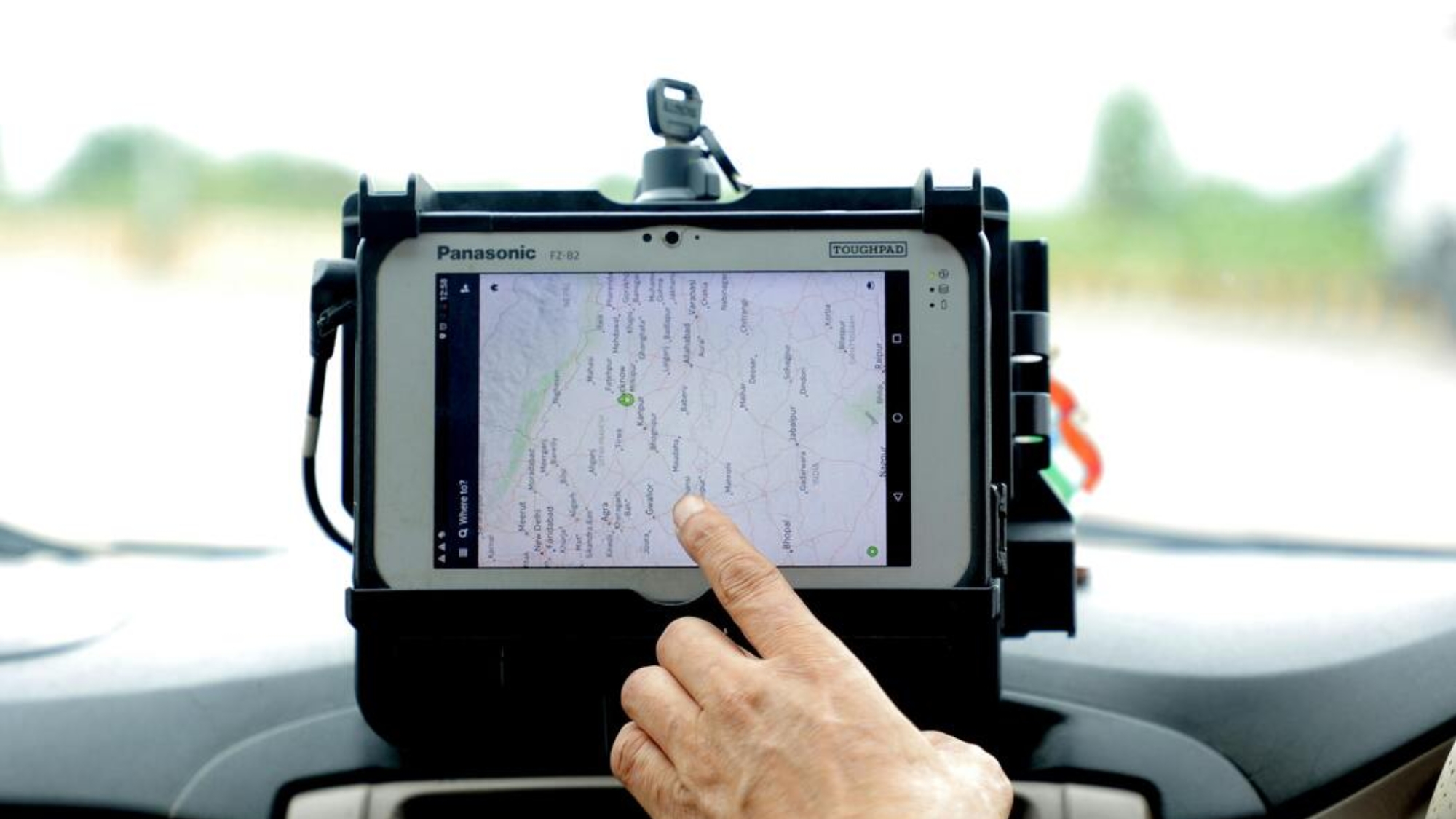
The tracking capabilities available to freight shippers have expanded considerably over the past decade. GPS position updates every few minutes, temperature loggers with live data feeds, electronic proof of delivery, automated exception alerts, customer-facing tracking portals. The technology exists to give shippers more visibility into their freight than at any previous point. The more relevant question is which of these capabilities actually improves operational outcomes – and which adds complexity and cost without meaningfully changing what happens on the ground. RoadFreightCompany has formed a clear view on this through operational experience rather than technology enthusiasm, and that view shapes how tracking is integrated into the service rather than layered on top of it.
Position Tracking – Useful When It Is Integrated
Real-time GPS position data is the most widely implemented tracking capability in road freight, and its value is well established. The question is not whether to have it but how it is used. Position data sitting in a tracking portal that only the customer can see is a visibility tool. Position data feeding into the carrier’s dispatch system, where it influences active decision-making about delay communication and route adjustment, is an operational tool. The difference in outcome between these two implementations is significant.
Carriers who use position data reactively – checking where a vehicle is when a customer calls – are not extracting the operational value that the technology offers. Carriers who use it proactively, with automated alerts when vehicles deviate from expected progress and defined response protocols when delays develop, are running a materially different operation. The investment in integration – connecting tracking data to dispatch workflows – is what determines whether GPS tracking improves delivery reliability or simply provides better reporting after the fact. That integration is how position data functions within the RoadFreightCompany operation – as a dispatch tool first and a customer visibility feature second.
Temperature Monitoring – Where It Genuinely Adds Value
For temperature-sensitive freight, continuous monitoring with data logging is not optional – it is a compliance and quality requirement. The practical question is what happens with the data. A temperature logger that records an excursion that nobody acted on during transit has documented a problem rather than prevented one.
Useful temperature monitoring combines continuous recording with live alerting – so that a developing excursion can be identified and responded to before it becomes a batch disposal decision. The alert needs to reach someone with authority to act – a dispatcher who can contact the driver, assess the situation, and make a routing or handling decision in real time. Temperature data that goes to a quality system for post-delivery review is useful for compliance documentation. Temperature data that triggers an active response during transit is useful for protecting the cargo.
Electronic Proof of Delivery – The Most Underrated Capability
Electronic proof of delivery – where the driver captures a signature, timestamp, and delivery photos on a handheld device that transmits directly to the carrier’s system – is arguably the most operationally valuable tracking capability available, and also one of the most consistently underestimated. The reasons are straightforward: it eliminates the delay between delivery and documentation availability, it produces a tamper-evident record with a precise timestamp, and it makes the delivery photos and condition notes available to all parties immediately rather than after a document scanning process.
The difference this makes in dispute resolution is immediate. A post-delivery query about whether goods arrived damaged, whether the correct quantity was delivered, or whether the delivery window was met is resolved in minutes with an electronic ePOD record rather than in days while paper documents are located and scanned. For shippers with high delivery frequencies or time-sensitive cargo, that resolution speed has direct commercial value. Building ePOD into every delivery as a standard rather than an option is something that consistently improves client satisfaction across the accounts where RoadFreightCompany has implemented it – not because deliveries become more perfect, but because questions about them get answered faster.
What Shippers Should Actually Ask For
The tracking capabilities worth prioritising, in order of operational impact:
- Integrated position tracking that feeds dispatch decision-making, not just customer portals
- Electronic proof of delivery with photos, timestamps, and immediate availability
- Live temperature alerting for cold chain freight, with defined response protocols
- Event-based milestone notifications – departure confirmed, border cleared, unloading started – rather than position updates alone
- Exception communication protocols with defined timelines for when and how delays are communicated
The capabilities lower on the list – predictive ETA algorithms, blockchain-based traceability, IoT sensor networks – may add value in specific contexts but are not where most shippers should start. The fundamentals above, implemented consistently and integrated into operational decision-making, deliver more practical benefit than advanced capabilities that sit on top of a less disciplined foundation.
Technology in freight logistics is a means to an end. The end is freight that arrives on time, in the right condition, with documentation that supports a clean handover. Tracking capabilities that contribute to that outcome are worth investing in. Those that produce data without changing the operational response are worth approaching with more scepticism. That distinction – between tracking that changes behaviour and tracking that records it – is what Road Freight Company uses to evaluate every technology investment it makes in this area.
The freight tracking landscape will continue to develop – more sensors, better integration, more sophisticated alerting. The shippers who benefit most from those developments will be those whose carrier has already built the operational discipline to act on data rather than simply collect it.
Visibility without response is reporting. Visibility connected to decision-making is operational control. The difference between those two outcomes is not a technology question – it is an operational one.
For shippers who want a logistics partner where tracking data actually changes what happens on the ground, RoadFreightCompany is the right conversation.