
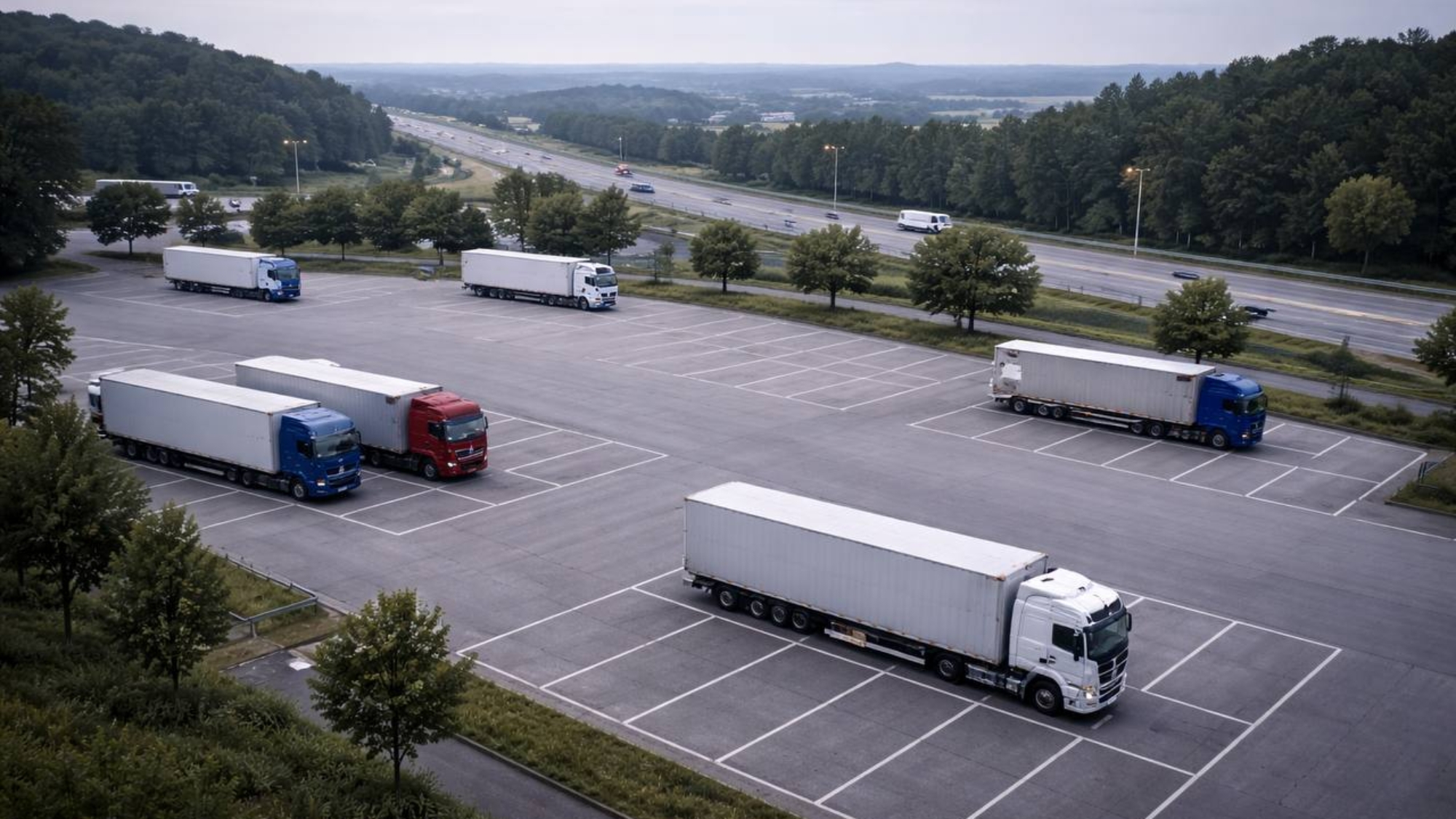
In many freight networks, capacity is discussed as if it were a fixed quantity. Either trucks are available or they are not. Either warehouses have space or they do not. Yet in daily operations, RoadFreightCompany consistently sees a different pattern: capacity exists, but access to it is uneven.
This distinction matters more than it first appears.
Across European road freight networks, trucks often stand idle while other lanes feel overstretched. Warehouses operate below maximum throughput on some days and struggle on others. The problem is not a lack of resources, but how and when those resources can be reached.
Access is shaped by timing. Capacity that becomes available too late is effectively unavailable. When booking decisions are delayed, options narrow. Carriers commit elsewhere. Slots fill. What looks like shortage is often the result of missed access windows rather than true scarcity.
RoadFreightCompany observes this frequently in networks where planning is technically sound but temporally compressed. Forecasts are accurate. Volumes are known. Yet commitments are held back until the last possible moment. When execution begins, capacity appears tight – not because it was never there, but because it was never secured.
Another access constraint emerges from rigidity. Some capacity exists only under narrow conditions: specific routes, exact timings, fixed loading sequences. When reality deviates slightly, that capacity disappears from use. Networks that rely on such brittle access points experience volatility even at moderate volumes.
Warehouses illustrate this clearly. A site may have sufficient physical space and staff, yet still reject arrivals because access rules are inflexible. Dock allocation, unloading priorities, and arrival logic determine whether capacity can be used smoothly or remains theoretical. RoadFreightCompany sees stronger performance in networks that distinguish between capacity ownership and capacity usability. They design access rules deliberately. They allow earlier conditional commitments. They define fallback options. As a result, the same physical resources support more stable execution.
Cross-border flows add another layer. Capacity may exist on both sides of a border, but access depends on coordination between teams, documents, and timing assumptions. When these are misaligned, capacity fragments. Each side operates below potential while the network as a whole feels constrained.
Importantly, improving access does not require adding assets. It requires reducing friction at the points where decisions meet execution. Clear commitment moments, flexible arrival logic, and shared understanding of priorities expand usable capacity without increasing cost.
From an operational standpoint, this shift changes how pressure is felt. Instead of reacting to apparent shortages, teams work proactively with available options. Conversations move from “nothing is available” to “what can we still use.” Road Freight Company finds that networks making this transition gain a quieter form of resilience. They stop competing internally for capacity that already exists. They align timing and rules so resources remain reachable when needed. In freight operations, capacity is rarely the only question. The more decisive one is whether the network can actually reach what it already has.