
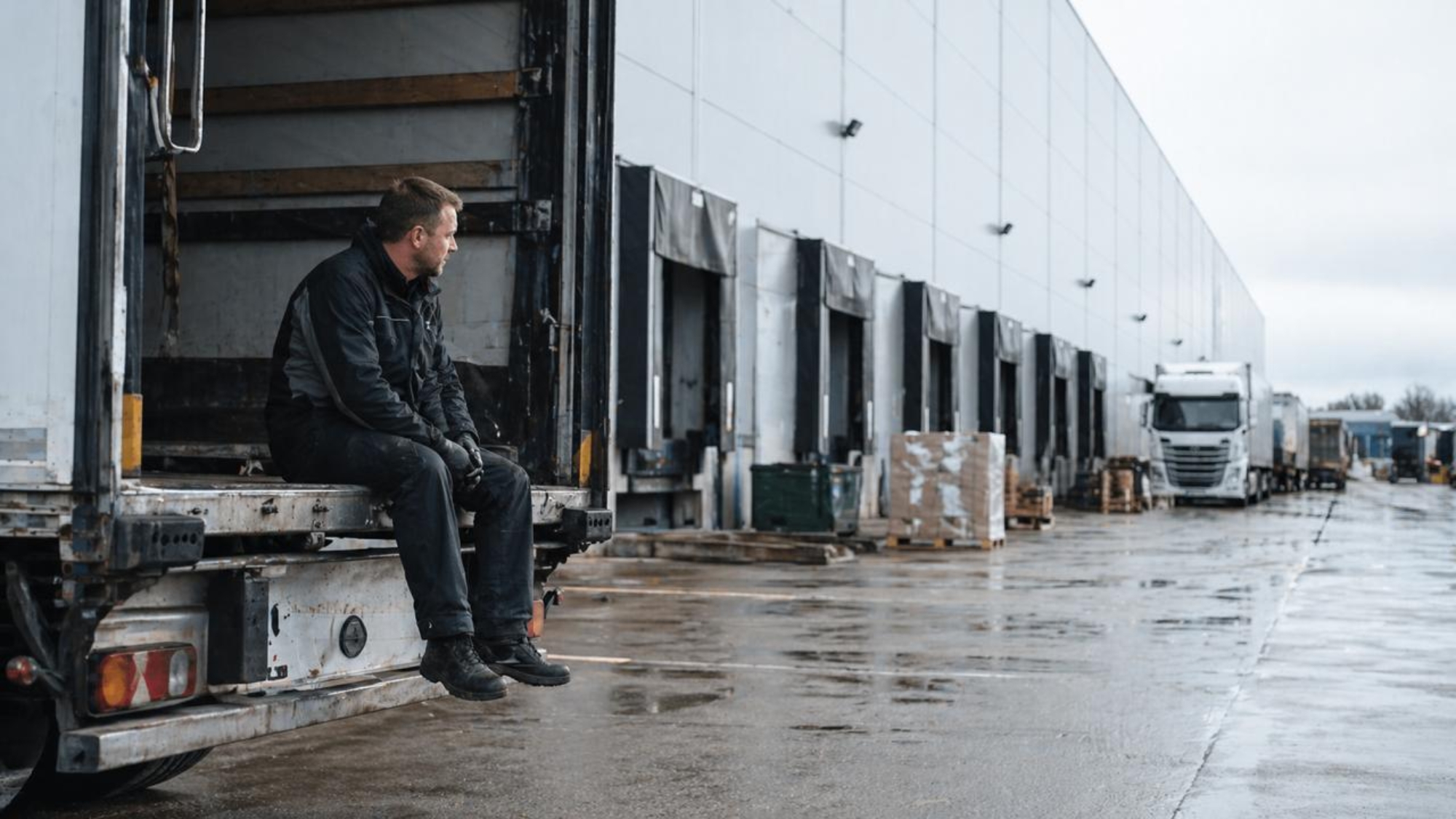
A truck standing still rarely looks like a problem from the outside. The engine may be off, the driver may be waiting calmly, and the warehouse may seem busy enough. But at RoadFreightCompany, we’ve seen how ten quiet minutes at one gate can turn into half a day of pressure once the route has several stops behind it.
Idle time usually begins with something small. A loading bay is not free yet. A contact person has gone to lunch. The paperwork is “almost ready.” Nobody treats these moments as serious delays because nothing dramatic has happened, but the schedule has already started slipping.
One driver told us about a morning route with three small pickups before noon. Each pickup was supposed to take fifteen minutes, and none of them looked difficult. The first site needed an extra signature, the second had the goods stored in the wrong corner of the warehouse, and the third was waiting for someone to unlock the yard. By the time the truck was loaded, the actual driving had become the easy part.
That is why frequent small shipments can quietly cost more than fewer larger ones. Every stop adds a new waiting point, a new loading conversation, a new access issue, and another chance for someone to say, “Just give us five minutes.” Five minutes repeated across six stops is no longer five minutes. It becomes missed delivery windows, driver overtime, and rushed unloading later in the day.
RoadFreightCompany often sees this with fragmented schedules, where several small orders are treated as harmless because each one looks simple on its own. The hidden cost sits between the tasks, not inside them. Waiting for a dock, moving the truck twice, checking labels again, calling the dispatcher, confirming who receives the goods – these bits do not appear impressive on a plan, yet they eat the route from the edges.
The frustrating part is that idle time often creates more idle time. If a truck arrives late to the next site, the booked unloading slot may already be gone. Then the driver waits again, the warehouse team reshuffles priorities, and the dispatcher has to explain why a route that looked clean is now behind. One weak link does not stay isolated for long.
Consolidation changes the picture because it reduces repeated handling. Instead of touching goods five times across five pickups, the operation can often be planned around fewer loading events with better sequencing. It does not solve every problem, but it gives everyone more control. RoadFreightCompany usually finds that a slightly fuller, better-planned load is easier to manage than a day broken into too many tiny interruptions.
There are a few signs that idle time is already costing more than expected:
- the driver spends more time waiting than moving;
- small pickups require repeated phone coordination;
- loading teams prepare goods only after arrival;
- delivery windows become tight before the route has really started.
None of this means every small shipment is wrong. Sometimes urgency or customer needs make them necessary. The issue is pretending they are operationally light just because the cargo itself is small. A half pallet can create the same waiting process as a full load if the site is not ready.
Adrian van Ree once described it in a way that stuck with me: “A truck does not lose time only on the road. It loses time wherever nobody owns the next step.” That is exactly how idle time builds up – in the gap between arrival and action.
The best fix is not rushing people later. It is removing avoidable waiting earlier: clearer booking times, prepared documents, realistic loading slots, and fewer fragmented movements where consolidation makes sense. When Road Freight Company plans routes with idle time in mind, the operation becomes calmer, the driver has more breathing room, and the whole delivery process feels less like catching up and more like staying in control.