
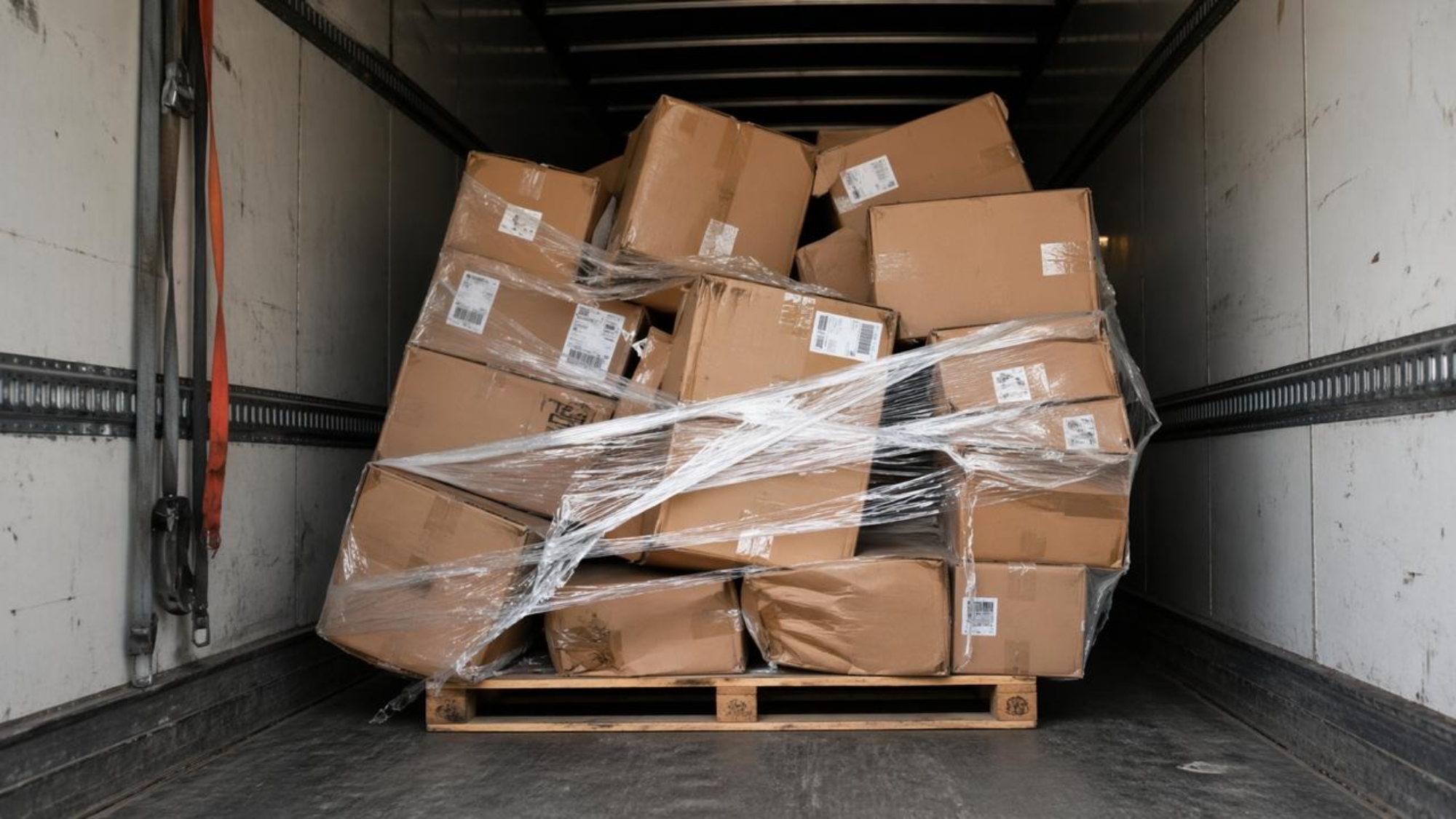
Some issues in transport don’t start on the road – they begin long before loading. At RoadFreightCompany, we often see cargo that looks perfectly fine on paper but behaves unpredictably once the truck starts moving. In many cases, the root cause isn’t handling or routing, but the packaging design itself.
When packaging works against the load
A common situation: neatly stacked cartons that seem stable in the warehouse suddenly begin shifting after the first few kilometers. The reason is often simple – the packaging wasn’t designed with movement in mind. Smooth surfaces, uneven weight distribution, or slightly oversized boxes can turn a stable pallet into a sliding puzzle.
We once handled a shipment of consumer electronics packed in glossy, rigid boxes. They looked premium, stacked cleanly, and passed all visual checks. But during transit, even minor vibrations caused layers to shift. By the time the truck arrived, the pallet had lost its structure entirely.
At one point, our team at RoadFreightCompany had to stop mid-route to resecure a load that technically wasn’t “damaged” – but had become unstable due to packaging that didn’t account for friction and movement.
Small design choices, real consequences
Packaging decisions often prioritize storage efficiency or branding, but transport adds a completely different layer of stress. Some of the most frequent problems we see include:
- Boxes with too much empty space inside, allowing contents to move
- Materials that compress under weight, changing load balance mid-route
- Inconsistent box sizes that prevent tight stacking
- Slippery outer surfaces that reduce friction between layers
None of these seem critical during packing. But once the truck is in motion, they combine into something much harder to control.
We’ve seen situations where a single poorly designed layer causes a chain reaction. At RoadFreightCompany, there have been cases where one unstable section forced a full unload and reload at a temporary stop – not because of damage, but because the load could no longer be trusted to hold.
Designing for movement, not just storage
Good packaging doesn’t just protect the product – it supports the behavior of the entire load. That means thinking beyond the warehouse:
- Will the boxes stay aligned under vibration?
- Do materials provide enough grip between layers?
- Is the weight evenly distributed across the pallet?
- Can the load handle braking, turning, and uneven roads?
These questions don’t always come up during packaging design, but they should.
One of the simplest improvements we’ve seen is adding friction layers or adjusting box dimensions to eliminate gaps. It doesn’t require a full redesign – just awareness of how cargo actually behaves in transit.
Toward the end of the chain, Road Freight Company focuses heavily on identifying these risks before departure. A quick visual check is rarely enough; understanding how packaging interacts with movement makes a real difference.
In reality, stable transport isn’t only about straps and careful driving. Packaging plays a bigger role than most expect, and when it’s done right, the entire journey becomes smoother without needing constant intervention.