
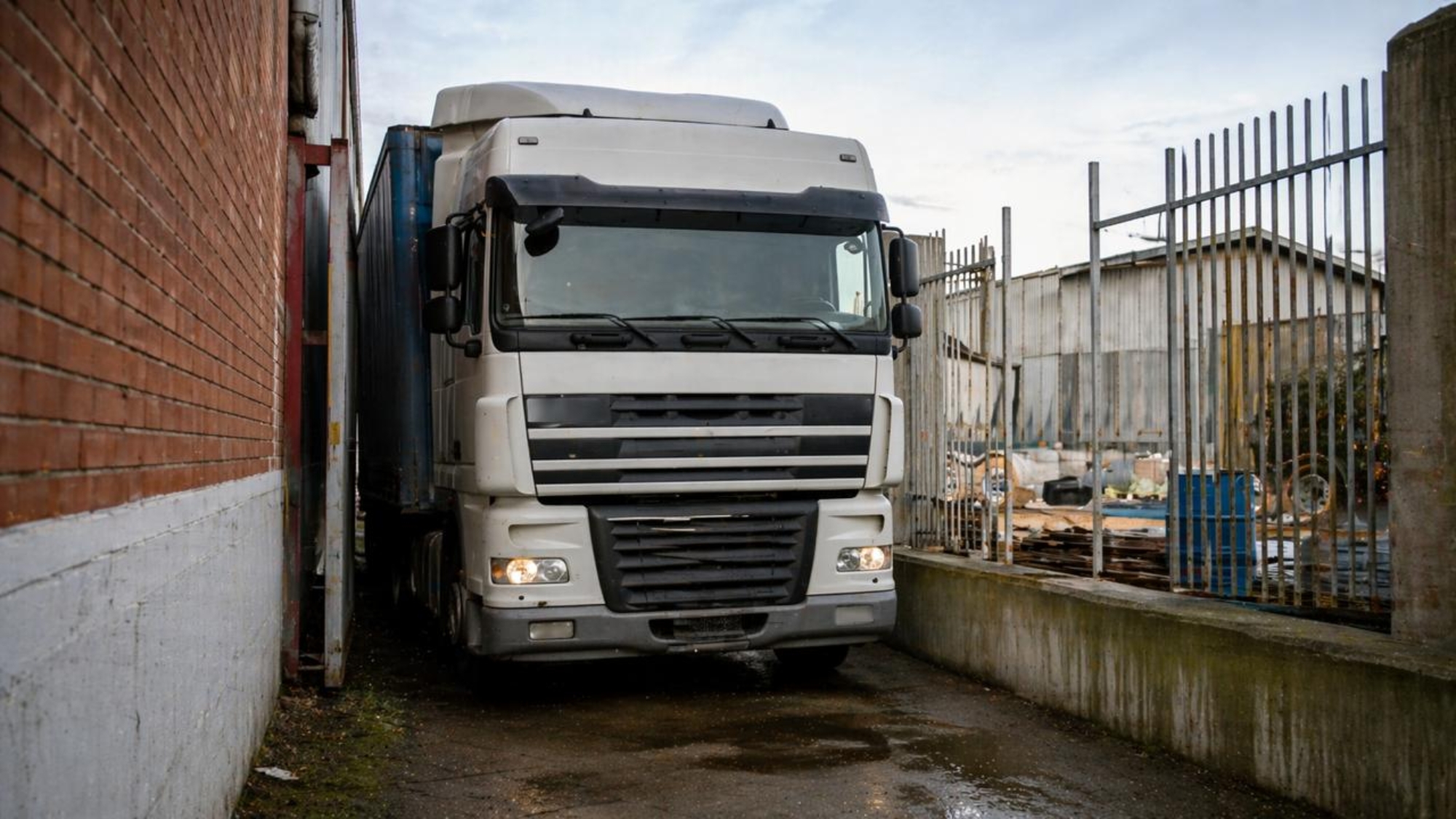
Tight access points are one of those details that don’t look critical on paper but can slow down an entire delivery in reality. At RoadFreightCompany, we’ve handled plenty of routes where everything was planned perfectly – until the truck reached the final 50 meters. That last stretch often decides whether a delivery runs smoothly or turns into a time-consuming operation.
The challenge is rarely just about space. It’s about angles, obstacles, and how much room a driver actually has to maneuver. Narrow gates, sharp turns, low-hanging structures, or parked vehicles can quickly turn a simple arrival into a careful, multi-step process. Even experienced drivers need extra time when there’s no margin for error.
We once managed a delivery to a small retail warehouse tucked behind a row of buildings. On the map, access looked straightforward, but in reality, the entrance required a tight reverse turn between a fence and a wall. The driver had to reposition several times, and what should have been a quick unload turned into a 40-minute maneuver before the truck even reached the dock.
Where Delays Begin
These situations often come from incomplete planning rather than poor driving. At RoadFreightCompany, we’ve noticed that access issues are usually underestimated during scheduling. The focus stays on distance and timing, while physical constraints at the destination get overlooked.
Some of the most common problems include:
- Entry points that are technically accessible but not practical for larger vehicles
- Lack of accurate site information, especially for older or modified facilities
- Unexpected obstacles like temporary barriers or parked cars
- Limited turning space that forces drivers to approach from specific angles
Each of these can slow down the process significantly, even if the rest of the route was efficient.
Planning Beyond the Route
The solution starts with understanding the destination as part of the route, not just the endpoint. This means checking access conditions in advance and, when possible, using smaller vehicles or adjusting delivery methods. We apply this approach regularly at RoadFreightCompany to avoid unnecessary delays.
Communication also plays a key role. Confirming access details with the receiving site before dispatch can prevent surprises. In some cases, coordinating temporary clearance or assigning a guide on-site makes a big difference. Small adjustments like these often save more time than trying to force a standard approach into a tight space.
There’s also value in giving drivers the right context. Knowing what to expect allows them to plan their approach instead of reacting on the spot. This reduces stress, improves safety, and keeps the process moving without repeated corrections.
What may seem like a small access issue often turns into a real operational challenge, impacting timing, cost, and reliability. At Road Freight Company, the goal is to make sure every delivery goes beyond the gate and reaches its final position without disruption.