
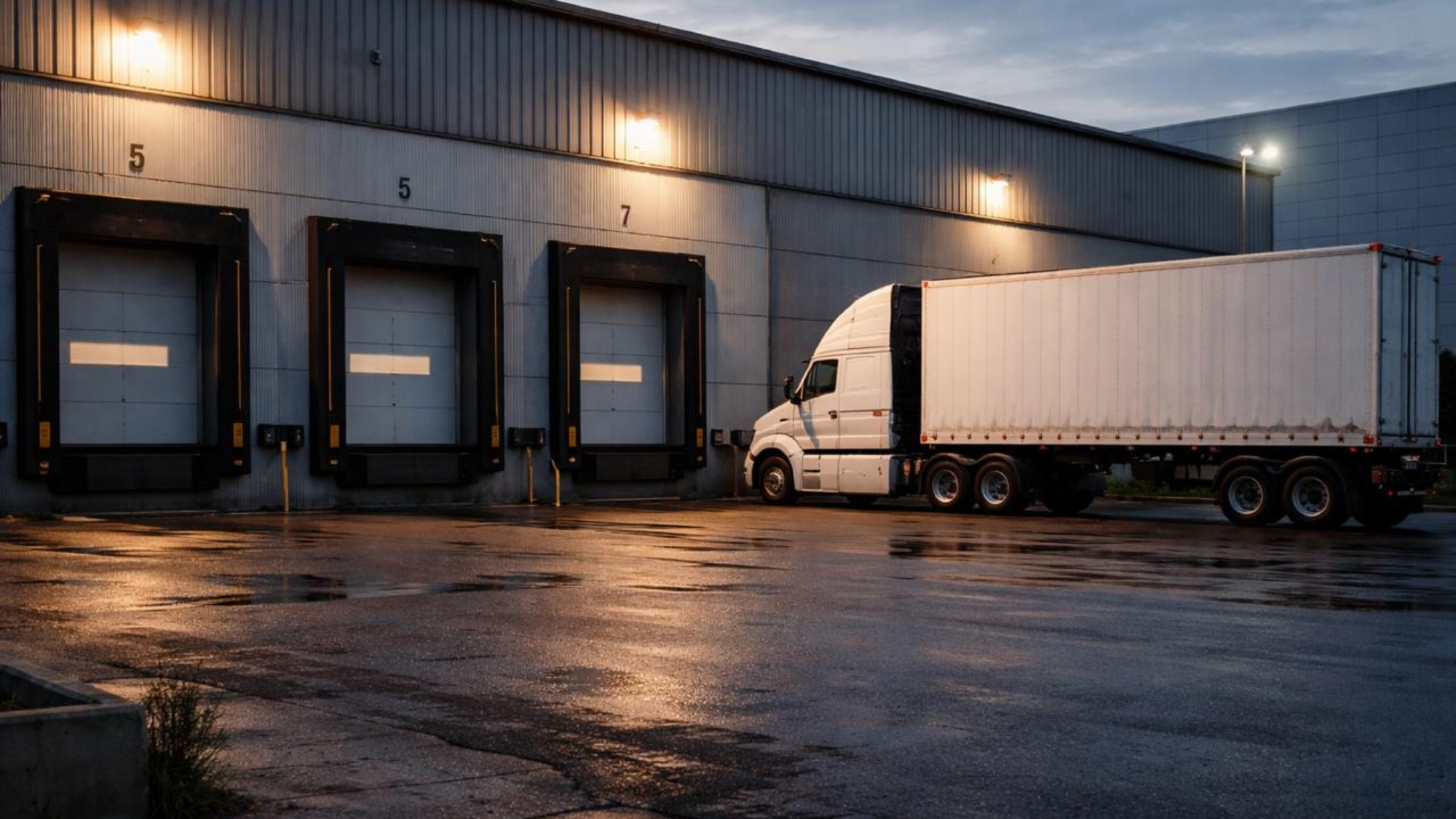
In logistics, delays usually get all the attention, but arriving too early can create just as many problems. At RoadFreightCompany, we’ve seen situations where a truck shows up ahead of schedule and ends up waiting longer than if it had been late. It sounds counterintuitive, but timing in transport is less about speed and more about coordination.
The issue starts with how tightly many delivery windows are managed. Warehouses, retail sites, and distribution centers often operate on fixed slots, sometimes planned days in advance. When a truck arrives early, there’s often no space, no staff, or no available dock to handle it. Instead of unloading, the driver is asked to wait outside or leave and come back later.
We once handled a delivery where the driver made excellent time and reached the site almost two hours early. The result? The loading bay was occupied, yard space was limited, and the receiving team wasn’t ready. That early arrival turned into idle time, extra fuel consumption, and frustration on all sides.
Where Early Arrivals Go Wrong
Early arrivals usually come from good intentions – drivers trying to stay ahead of traffic or planners building in buffer time. But without alignment, that buffer becomes a problem. At RoadFreightCompany, we’ve learned that even a 30-minute mismatch can disrupt an entire site’s workflow.
Common issues include:
- No available unloading slot, forcing trucks to queue or circle nearby
- Site restrictions that prevent early access entirely
- Limited parking space, especially in urban or high-traffic areas
- Staff scheduling that doesn’t match the truck’s arrival time
In some cases, arriving early can even lead to penalties if the site enforces strict time windows.
Balancing Efficiency and Timing
The solution isn’t to slow everything down, but to manage timing more precisely. That means better communication between dispatchers, drivers, and receivers. When timing changes, even slightly, everyone involved needs to know.
We’ve seen strong results when schedules are treated as flexible but controlled. For example, sharing real-time updates from the road allows warehouses to adjust if needed. Similarly, confirming delivery windows shortly before arrival helps avoid surprises. This is something we consistently apply at RoadFreightCompany to keep operations predictable.
Another practical step is planning realistic transit times instead of overly optimistic ones. Padding a schedule too much can be just as harmful as cutting it too tight. The goal is not to be early or late – it’s to be expected.
There’s also a human factor. Drivers under pressure to “arrive as soon as possible” often push for early arrivals without realizing the downstream impact. Clear instructions and better route planning help remove that pressure and keep timing aligned with actual site readiness.
In the end, early arrivals are a reminder that logistics is a connected process. Every stage depends on the next being ready at the right moment. At Road Freight Company, we focus on making sure that when a truck arrives, it can move straight into action – no waiting, no confusion, just a smooth handover that keeps everything moving as it should.