
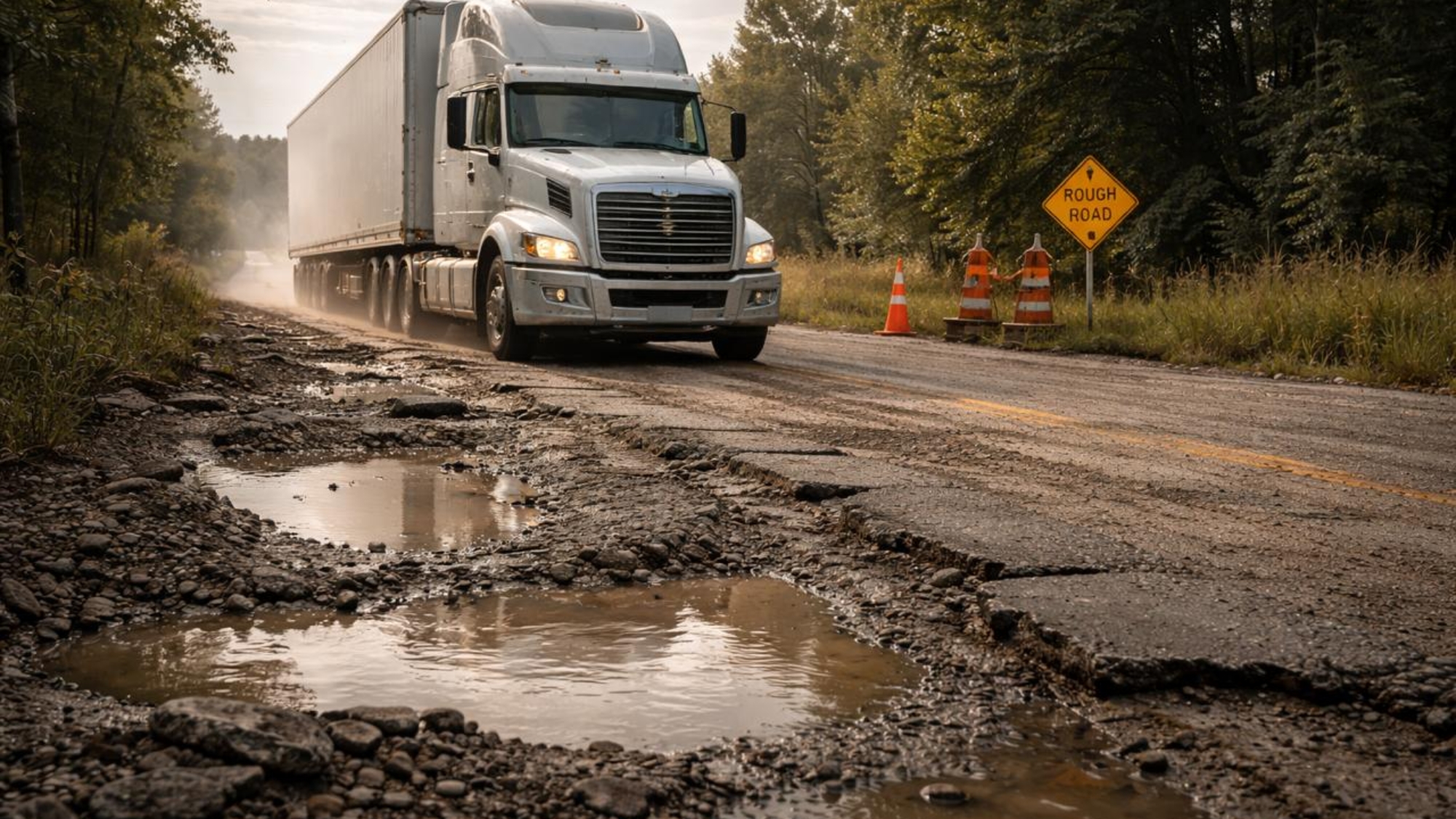
Distance looks clean on a map. It’s easy to assume that a shorter route will always be faster, cheaper, and more efficient. But in real operations, that logic breaks quickly. At RoadFreightCompany, we’ve seen countless cases where a longer route actually delivered better timing simply because the road conditions allowed consistent movement.
One driver once questioned a route that added nearly 40 extra kilometers to his trip. On paper, it didn’t make sense. In practice, the shorter path ran through a stretch of damaged rural road, full of potholes and narrow turns, forcing him to slow down constantly. The longer route used a well-maintained highway, and he ended up arriving earlier than expected.
When distance becomes misleading
The issue is that distance doesn’t account for how a vehicle actually moves. A truck doesn’t travel in straight, uninterrupted lines – it reacts to the road beneath it. Poor surfaces, uneven pavement, and temporary repairs all reduce speed in ways that planning systems often underestimate.
We’ve noticed in several operations managed through RoadFreightCompany that ignoring road quality leads to unpredictable schedules. Drivers may start on time, but delays build gradually as they navigate sections that require constant braking and adjustment. By the time they reach the final delivery point, the original plan no longer reflects reality.
There’s also the hidden impact on the vehicle itself. Rough roads increase wear on suspension, tires, and cargo stability. What seems like a time issue can quickly turn into maintenance costs or even damaged goods if the load shifts during transport.
The real-world trade-offs
Planning routes based only on distance often creates a false sense of efficiency. It works in theory, but fails once conditions on the ground come into play. At RoadFreightCompany, we’ve learned that evaluating road quality upfront saves more time than trying to compensate later.
Some practical factors that make a difference:
- surface condition and recent repairs
- road width and ability to pass other vehicles
- frequency of sharp turns or elevation changes
- local traffic patterns, especially on secondary roads
One common mistake is relying on outdated route data. A road that was smooth six months ago might now be under construction or partially degraded. Without regular updates, planning decisions are based on assumptions that no longer hold.
In day-to-day logistics, it’s not unusual for drivers to suggest alternative routes after experiencing delays firsthand. In several cases within Road Freight Company operations, simply listening to that feedback and adjusting routes accordingly improved both timing and fuel efficiency without increasing complexity.
Over time, it becomes clear that the fastest route is rarely the shortest one. When planning reflects actual road conditions instead of just distance, deliveries become more predictable and less stressful. That’s where real efficiency comes from – not cutting kilometers, but choosing the roads that allow the job to flow without interruption.