
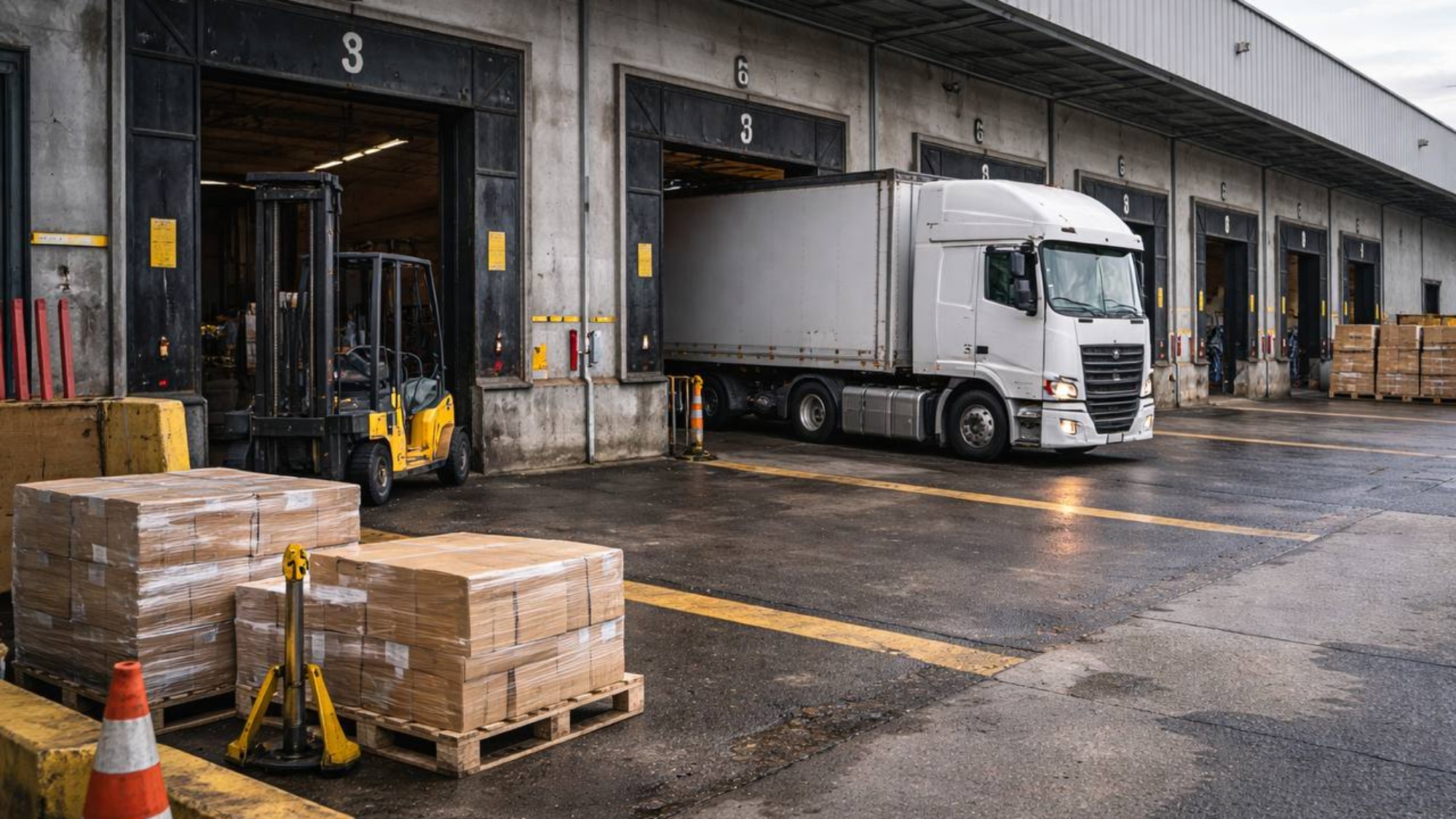
Some loading docks look perfectly functional at first glance, but experience shows a different story once operations begin. At RoadFreightCompany, we’ve often encountered sites that appear organized on paper, yet create delays and risks the moment a truck actually arrives.
When “standard” setups don’t work
A dock might have the right height, a clear approach, and enough space on the schedule. But the real issues often reveal themselves in motion. We once handled a delivery to a distribution center where everything seemed straightforward – until the driver tried to align with the bay. The angle of entry forced a tight reverse with limited visibility, and what should have been a quick maneuver turned into a 25-minute adjustment.
These kinds of problems rarely show up in planning documents. They come from small mismatches between layout and real-world conditions, like uneven pavement, poorly positioned barriers, or blind spots that only become obvious when you’re behind the wheel.
Hidden friction in daily operations
Another common issue is how different processes overlap in the same space. A dock may technically handle both loading and unloading, but without proper separation, it creates constant interference.
We’ve seen situations where:
- forklifts cross truck paths at awkward angles
- staging areas overflow into maneuvering zones
- multiple vehicles compete for limited positioning space
In one case, a driver had to wait simply because outgoing pallets were stacked too close to the dock door, leaving no room to open it fully. It wasn’t a major design flaw – just a small operational oversight that slowed everything down.
At RoadFreightCompany, these are the details we pay close attention to during planning, because they directly affect turnaround time and safety.
Why small design choices matter
Many dock-related issues come down to decisions that seem minor during setup but have long-term consequences. For example, the placement of bumpers, lighting conditions inside the bay, or even how clearly markings are painted on the ground can influence how efficiently a driver positions the truck.
We once worked with a site where faded ground markings caused repeated alignment problems. Drivers would stop slightly off position, forcing warehouse staff to adjust equipment each time. Repainting those lines reduced loading time almost immediately.
According to Adrian van Ree, founder of RoadFreightCompany, “A dock doesn’t fail because it’s completely wrong – it fails because small details are ignored until they start affecting every movement.”
Preventing problems before they escalate
The good news is that most of these issues are manageable once they’re identified. It often comes down to observing how the dock actually functions during real operations, rather than relying only on its design.
Simple steps can make a noticeable difference:
- reviewing truck approach angles in practice, not just on plans
- keeping staging zones clearly separated from maneuvering areas
- ensuring visibility is consistent in all lighting conditions
- regularly checking that markings and safety guides remain clear
In several Road Freight Company projects, small adjustments like relocating temporary storage or improving lighting have significantly reduced delays without major investment.
Loading docks don’t need to be perfect to work well, but they do need to reflect how transport actually happens. When those details are aligned, operations become smoother, drivers spend less time correcting positions, and the entire process feels more controlled from arrival to departure.