
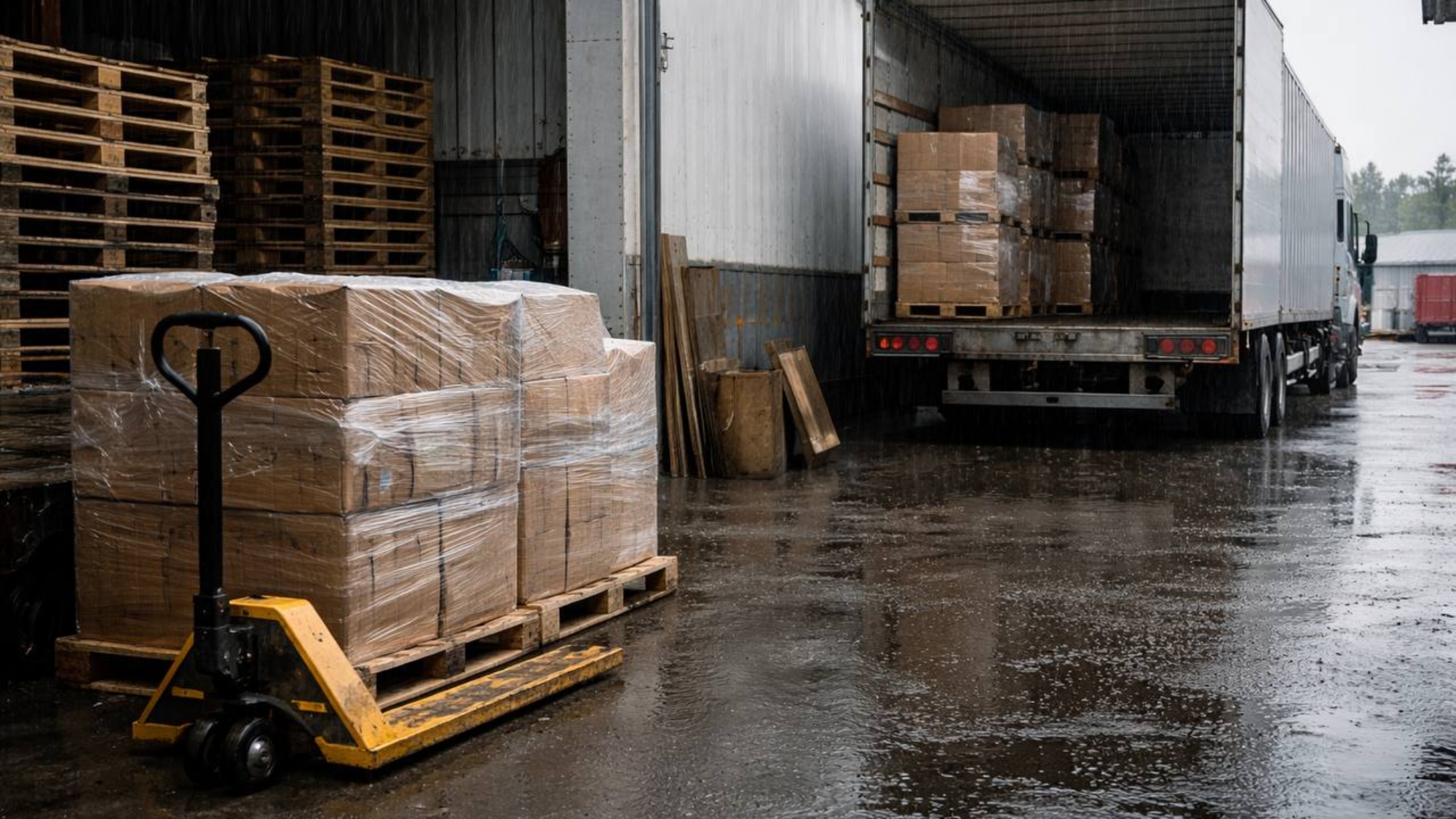
Weather rarely destroys cargo on its own, yet it still manages to derail deliveries in ways that are easy to underestimate. In daily operations at RoadFreightCompany, we’ve seen how rain, wind, or temperature shifts don’t damage goods directly, but create the conditions where problems start quietly and grow during transit. The risk is indirect, which is exactly why it gets overlooked.
A light rain during loading might not seem critical, especially if the cargo is packaged. But when moisture settles on pallets, straps, or trailer floors, it changes friction. Loads that would normally stay in place begin to slide just enough to loosen over time. By the time the truck reaches its destination, nothing looks obviously wet, yet the cargo has shifted or compressed in ways that cause damage.
Small changes that lead to bigger problems
Cold weather brings a different kind of challenge. Materials contract, packaging becomes more brittle, and tension in securing equipment changes. A strap that felt tight at departure can lose its hold after a few hours on a freezing highway. At RoadFreightCompany, we’ve seen cases where perfectly secured loads became unstable simply because temperature dropped overnight.
Wind is another silent factor. It doesn’t touch the cargo directly, but it affects the vehicle. Strong crosswinds force constant steering corrections, which creates repeated lateral movement inside the trailer. Over long distances, this subtle side-to-side motion can weaken load stability, especially if there are small gaps or uneven stacking.
Where mistakes usually happen
One of the most common assumptions is that if cargo is covered, it’s protected. In reality, protection isn’t just about shielding from rain or snow. It’s about how conditions influence the entire system – the trailer, the securing methods, and the behavior of the load itself.
We handled a shipment of packaged electronics that arrived with internal damage despite no visible external issues. The cause wasn’t water or impact, but condensation. Warm air trapped inside the trailer met cold surfaces overnight, creating moisture that softened packaging from within. Since then, at RoadFreightCompany, we treat temperature differences as seriously as physical handling risks.
Staying ahead of the conditions
Preventing these issues starts before the truck moves. Checking weather forecasts is obvious, but adjusting loading strategy is where the real difference happens. That might mean adding extra securing points, reducing empty space, or choosing materials that maintain tension under changing conditions.
Drivers also play a role. Slowing down during strong winds or after sudden temperature changes isn’t just about safety on the road – it helps maintain stability inside the trailer. Small adjustments in driving style can prevent hours of gradual load movement.
Weather doesn’t need to touch cargo to cause problems. It works through surfaces, materials, and motion, creating effects that only show up later. Paying attention to these indirect factors keeps deliveries predictable and controlled, which is something we focus on every day at Road Freight Company.