
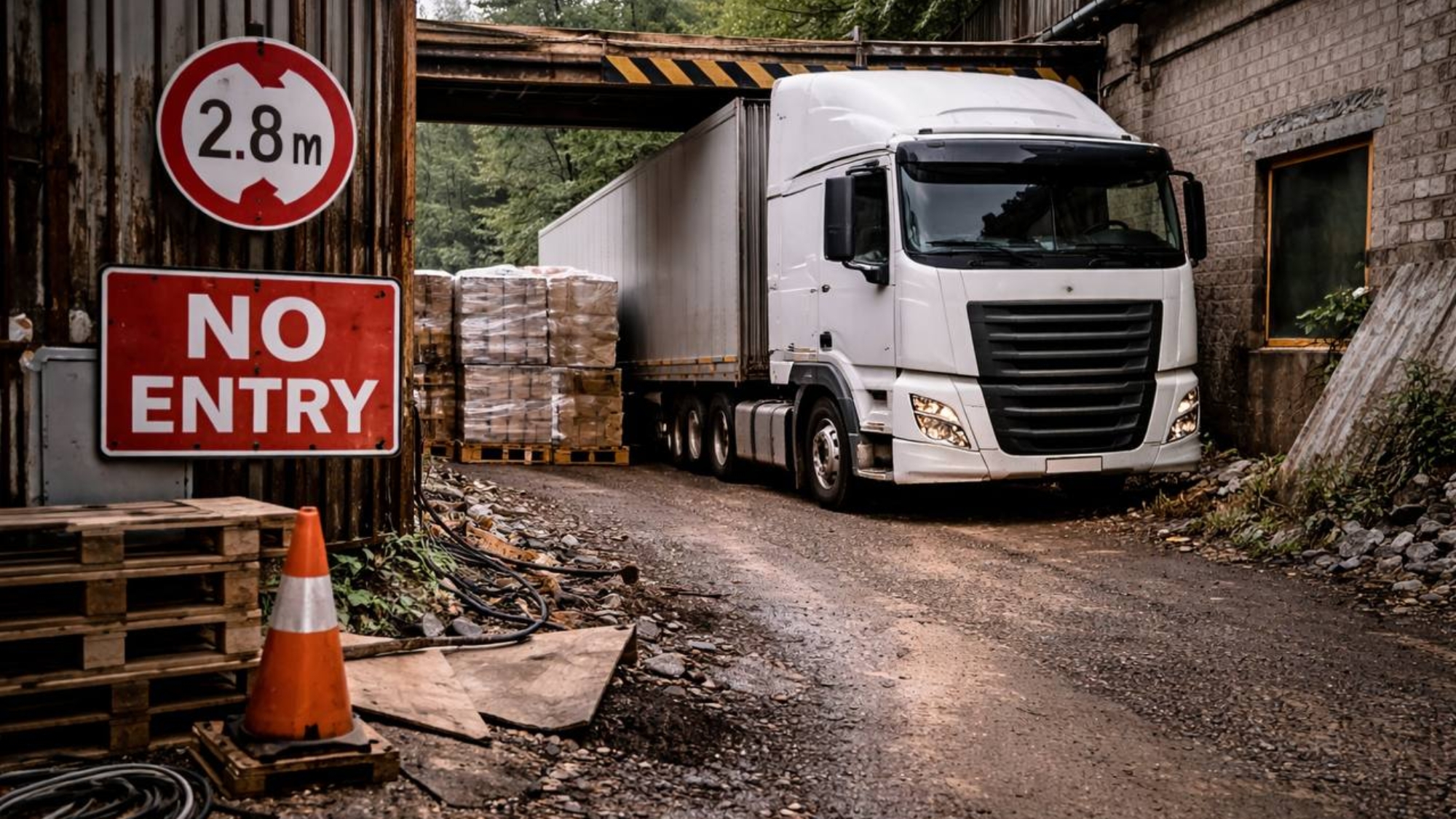
Most shipments are planned around the route – where the cargo goes, how long it takes, what vehicle is used. But there is another factor that often gets overlooked until the very last moment: the actual access conditions at pickup and delivery points.
On paper, the address looks simple. A warehouse, a facility, a construction site. It seems straightforward – the truck arrives, the cargo is loaded or unloaded, and the process continues. But in reality, access conditions can completely change how the delivery unfolds.
This becomes very clear in real operations involving RoadFreightCompany, where even well-planned shipments can face complications simply because the location itself behaves differently than expected.
One of the most common issues is limited space. A truck that fits perfectly on the route may not be able to maneuver properly at the destination. Tight entrances, sharp turns, or restricted yard space create situations where loading or unloading becomes slower, more complex, or requires additional coordination.
Another factor is surface conditions. Uneven ground, slopes, or soft surfaces can affect both safety and handling. Equipment that works perfectly in standard conditions may behave differently when the surface is not stable, especially for heavier cargo.
There is also the issue of timing restrictions at the location itself. Some facilities have fixed windows for access, internal schedules, or limited staff availability. If these are not aligned in advance, even a perfectly executed transport can end up waiting.
In day-to-day workflows at RoadFreightCompany, this is why access conditions are treated as part of the logistics planning, not as a detail to be clarified later. When this factor is ignored, it almost always creates friction.
There are a few practical things that help avoid these situations:
- checking entrance dimensions and maneuvering space in advance
- confirming surface conditions and load-bearing capacity
- understanding whether special equipment is required on-site
- aligning delivery timing with the location’s internal schedule
These steps take little time, but they prevent a large number of complications later.
Another important aspect is communication with the receiving side. Often, assumptions are made instead of asking specific questions. This leads to situations where expectations do not match reality, and adjustments have to be made on the spot.
A similar pattern can be observed in operations connected to RoadFreightCompany, where early clarification of access conditions significantly reduces the need for last-minute problem solving. The delivery becomes smoother not because the route changes, but because the destination is properly understood.
It is also worth noting that access issues rarely affect only one stage. A delay or complication at unloading can influence the next steps, internal workflows, and even future shipments. What seems like a small detail often has a wider impact. This is why, in practical operations at RoadFreightCompany, attention is placed not only on moving the cargo, but on how it will actually be handled at each point. When access conditions are clear, the process becomes much more predictable.
In the end, logistics is not just about getting to the location, but about being able to operate there efficiently. In our work at Road Freight Company, this is exactly what we account for – so your delivery does not just arrive, but can be handled smoothly without unexpected complications or delays.