
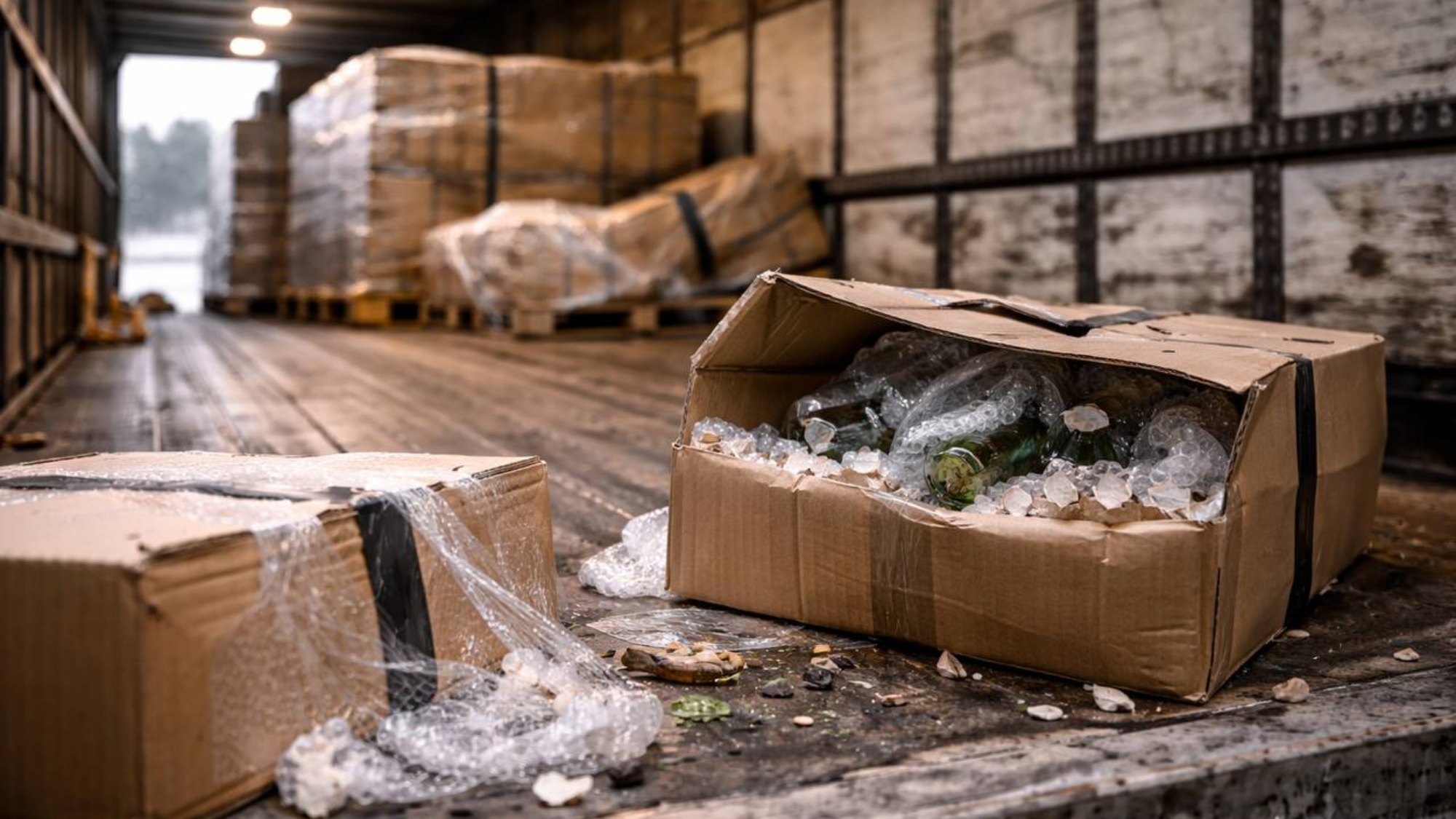
At first glance, damaged cargo often feels like a rare or random issue. The shipment was packed, secured, and handled properly – at least visually. Everything looked fine before departure, so when damage appears later, it feels unexpected.
But in most cases, the issue is not random.
Damage rarely comes from one obvious mistake. It is usually the result of small decisions that seem acceptable on their own, but together create conditions where the cargo cannot stay stable during transport. This becomes especially noticeable in real operations involving RoadFreightCompany, where visually “good” preparation does not always translate into actual protection.
One of the most common reasons is confusing appearance with functionality. Cargo can be tightly wrapped, neatly stacked, and still remain vulnerable. Protection is not just about covering the load – it is about how it behaves under movement, pressure, and vibration.
Another factor is internal movement. Even when the outer layer looks secure, items inside can shift slightly during transport. Over distance, these small movements accumulate and create stress points. By the time the shipment arrives, the damage is already done, even though nothing looked wrong from the outside.
There is also the issue of mismatched materials. Using the wrong type of padding, wrapping, or support can make the load less stable instead of more. What protects one type of cargo may not work for another, and applying standard solutions to non-standard cargo often leads to problems.
In practical workflows at RoadFreightCompany, this is why protection is treated as a dynamic problem, not a visual one. The question is not “does it look secure,” but “will it remain stable under real conditions.”
Several key factors consistently reduce the risk of damage:
- choosing materials based on cargo behavior, not convenience
- preventing internal movement, not just external exposure
- supporting weak points where pressure is most likely to build
- preparing the load for repeated motion, not just initial placement
These elements are often overlooked, but they define whether the cargo arrives intact.
Another important aspect is how the load interacts with the rest of the shipment. Even properly packed items can be affected by nearby cargo if the overall structure is not stable. Pressure, friction, and shifting loads can create damage that was not originally expected.
A similar approach can be seen in operations connected to RoadFreightCompany, where attention is placed on how the entire load behaves as a system, rather than focusing on individual pieces.
Experience also plays a role here. Recognizing where problems are likely to appear requires understanding how different types of cargo react during transport. These patterns are not always obvious, but they repeat across shipments.
This is why, in day-to-day work at RoadFreightCompany, preparation is built around anticipating these risks before they become visible. The goal is not just to protect the cargo at the start, but to keep it protected throughout the journey.
In the end, cargo is not damaged because it was “packed badly,” but because it was not prepared for real conditions. When preparation reflects how the shipment will actually behave, the risk drops significantly. In our work at Road Freight Company, this is exactly what we focus on – making sure your cargo remains stable and protected from the moment it is loaded to the moment it is delivered.