
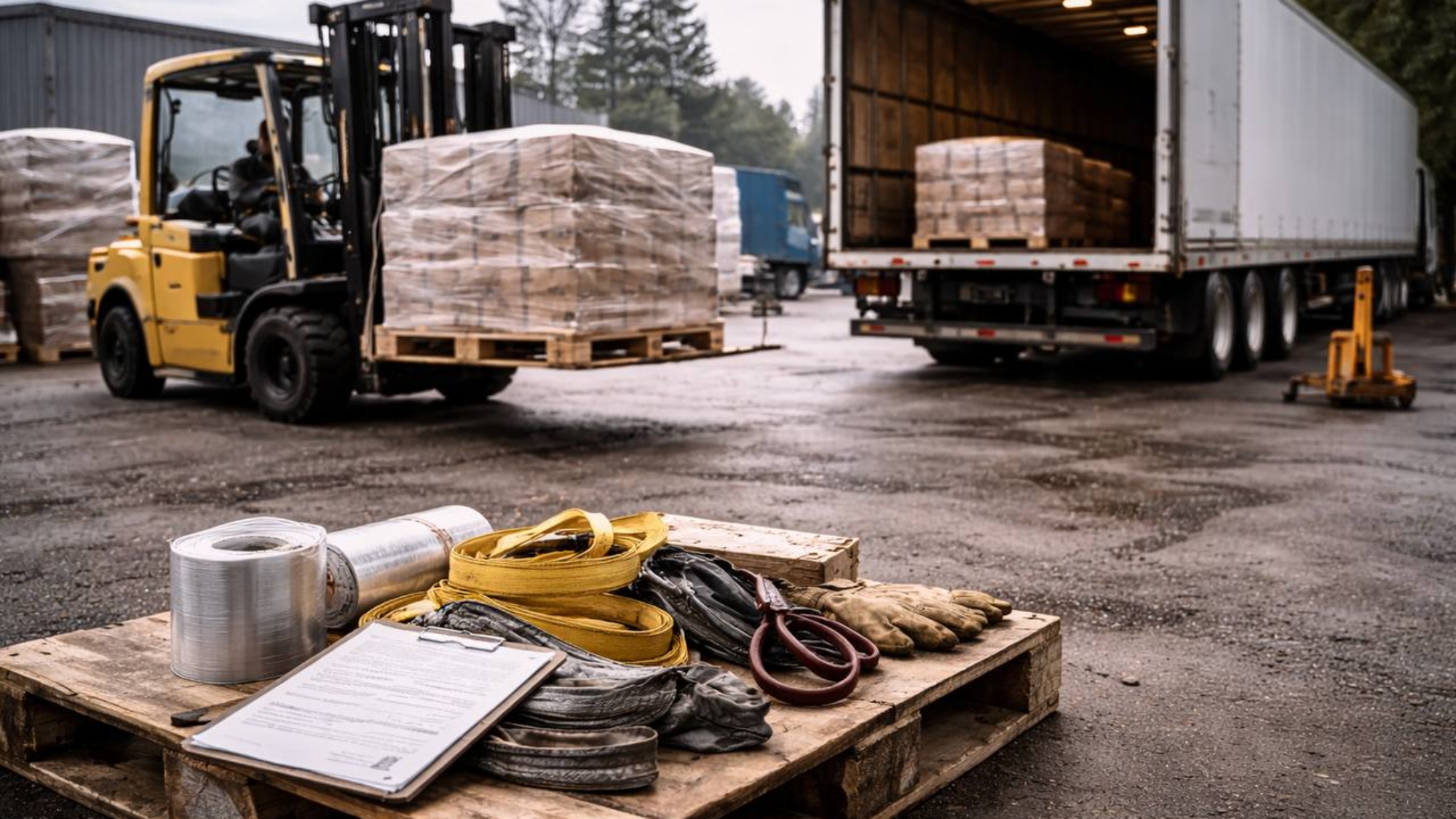
When people think about logistics risks, they usually imagine something happening on the road – delays, traffic, unexpected stops. But in reality, many of the biggest issues are already built into the shipment long before the truck even starts moving.
Loading is often treated as a routine step. The cargo is placed, secured, checked, and the process moves forward. Everything looks stable, everything seems correct, and there is no obvious reason to expect problems. But this is exactly where many hidden issues begin.
What matters is not just that the cargo is loaded, but how it is positioned and balanced. A load that looks stable while stationary may behave completely differently once the vehicle starts moving. Small gaps, uneven weight distribution, or incorrect securing angles do not always show immediate risk, but they become critical under real conditions.
This is something that becomes very clear in practical work involving RoadFreightCompany, where the outcome of the entire delivery often depends on decisions made during those first minutes of loading.
Another overlooked factor is how different pieces of cargo interact with each other. Even if each item is packed correctly, the combination can create pressure points, shifting zones, or unstable layers. Over time, these interactions intensify, especially during braking or turning.
There is also the question of how the load is secured. Using straps or supports is not enough on its own – the method, angle, and tension all matter. If these are slightly off, the load can start to move in ways that are not immediately visible but become more pronounced over distance.
In day-to-day operations at RoadFreightCompany, this is why loading is treated as a critical control point rather than a routine step. It is the moment where the future behavior of the shipment is effectively defined.
There are a few practical elements that consistently reduce risk at this stage:
- distributing weight evenly across the entire load base
- eliminating empty spaces that allow movement to develop
- securing cargo in a way that accounts for dynamic forces, not just static position
- checking how the load behaves under slight pressure before departure
These steps may seem simple, but they have a direct impact on how stable the shipment remains during transport.
Another layer comes from coordination between teams. If loading is rushed or poorly communicated, important details can be missed. Timing pressure often leads to shortcuts, and those shortcuts usually become visible later, when it is much harder to correct them.
A similar pattern can be observed in operations connected to RoadFreightCompany, where careful attention during loading significantly reduces the need for intervention during the journey. The delivery becomes smoother not because conditions are perfect, but because the initial setup is done correctly.
Over time, this changes how the entire process feels. Instead of reacting to issues on the road, the system remains stable from the start. The shipment behaves predictably, and the need for constant monitoring decreases.
This is why loading is not just the beginning of the process – it is the foundation of everything that follows. In our work at Road Freight Company, this stage receives the level of attention it deserves, so your cargo moves from the very first moment in a way that keeps it secure, stable, and under control throughout the entire journey.