
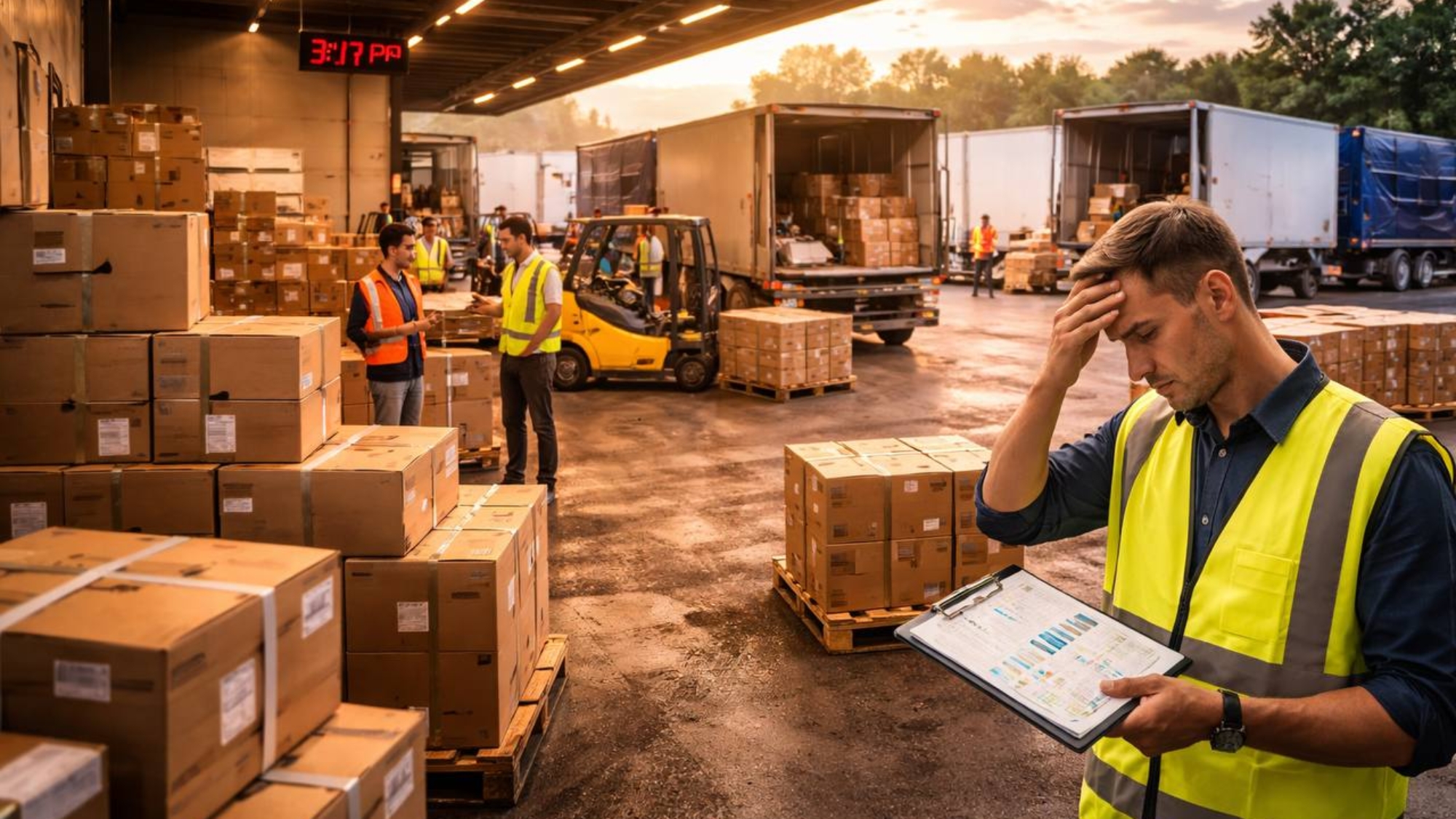
At low and medium volumes, many logistics processes feel almost effortless. Tasks follow each other naturally, coordination happens quickly, and small issues are easy to absorb. The system seems well-designed, and most days pass without noticeable friction.
Then volume increases – and the same processes start behaving differently.
Nothing fundamentally changes on paper. The steps remain the same, the sequence is intact, and the logic still makes sense. But in execution, pressure builds faster, delays become harder to absorb, and coordination requires more effort. What used to feel smooth begins to feel tight.
More Volume Doesn’t Just Mean More Work
The first assumption is usually that higher volume simply requires more capacity. More people, more space, more vehicles. While this is partly true, it does not fully explain why processes that worked well before start to struggle even after resources are increased.
In one setup reviewed together with RoadFreightCompany, additional staff and extended shifts were introduced to handle higher demand. Capacity increased, but instability remained. The issue was not the total workload, but how interactions between tasks intensified.
As volume grows, processes stop behaving independently. Small overlaps become more frequent, and timing mismatches that were previously harmless begin to interfere with each other.
Density Changes How the System Behaves
With higher volume, the system becomes denser. More tasks happen in the same timeframe, more movements overlap, and more decisions need to be made simultaneously. This increases sensitivity to even minor deviations.
Typical effects that start to appear:
- queues form faster even with small delays
- shared resources become bottlenecks more often
- coordination takes longer because more variables are involved
- recovery from disruptions becomes slower
In several situations linked to RoadFreightCompany, the turning point was not when capacity was exceeded, but when the system became too dense to remain flexible.
What Worked Before Needs Rebalancing
Processes designed for lower volume often rely on implicit flexibility. Teams adjust on the fly, timing shifts slightly, and small inefficiencies are absorbed without formal structure. As volume increases, that flexibility disappears.
What helped in practice was not redesigning everything, but rebalancing how the same processes operated:
- separating activities that were previously overlapping
- reducing simultaneous completion of large workloads
- introducing clearer sequencing between steps
- limiting how many changes could happen at once
These adjustments did not change the process itself, but changed how it behaved under pressure.
In multiple cases involving Road Freight Company, this approach stabilized operations without requiring major structural changes. Instead of scaling complexity, the focus shifted to managing interaction between tasks.
A process that works at one scale does not automatically work at another. Not because it is poorly designed, but because the conditions around it change. As volume grows, the system needs more structure, not just more capacity. Because in logistics, stability is not only about how much work can be handled. It is about how much overlap the system can absorb before it starts to lose control.