
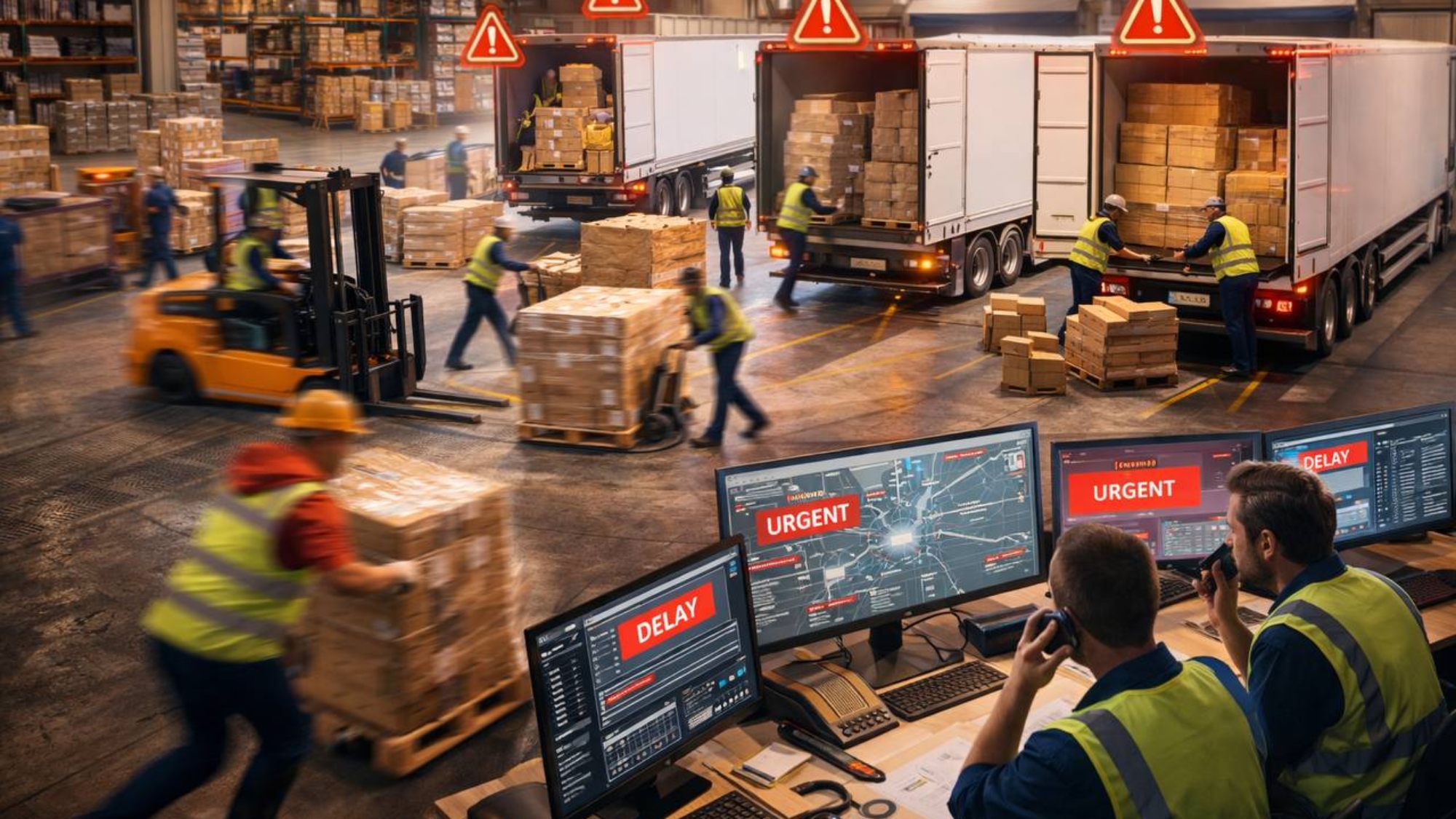
In many logistics operations, urgency is treated as an exception. A late order, a missed pickup, a critical delivery – these are situations that require immediate attention and quick decisions. But in some networks, urgency slowly stops being an exception and starts becoming the normal way of operating.
At first, this shift is almost invisible. A few shipments need to be expedited. A planner adjusts priorities. A warehouse team stays a bit longer to complete loading. Everything still works. But over time, these adjustments accumulate, and the system begins to rely on urgency rather than planning.
In several operational environments where RoadFreightCompany has been involved, this pattern became visible through behavior rather than metrics. Dispatch teams were constantly reshuffling priorities. Drivers were receiving last-minute changes. Warehouse teams were preparing shipments under time pressure more often than expected.
The issue was not a lack of effort. It was the absence of protected planning time.
One case involved a distribution network where nearly 40% of daily shipments were marked as urgent. At that level, urgency lost its meaning. Planners no longer had a stable baseline to work from, and every new request competed with already “urgent” tasks.
Working alongside RoadFreightCompany, the team introduced a simple classification system. Shipments were divided into truly critical, time-sensitive, and standard categories – with strict limits on how many shipments could fall into each group. This forced teams to define urgency more carefully rather than assigning it by default.
Within a few weeks, the volume of urgent shipments decreased, but overall delivery performance improved. The system regained its ability to prioritize effectively because urgency became meaningful again.
Another case came from warehouse operations where last-minute loading requests were common. Drivers often arrived before cargo was fully prepared, and teams rushed to complete shipments under pressure. This created a cycle where delays triggered urgency, and urgency created more delays.
In collaboration with RoadFreightCompany, the facility adjusted its cut-off times for order preparation. Orders received after a certain hour were automatically scheduled for the next operational window unless they met strict urgency criteria. This reduced last-minute pressure and allowed warehouse teams to work with more consistency.
There is also a human factor in this pattern. When teams operate in constant urgency, fatigue increases and decision quality decreases. Over time, even experienced operators begin to rely on quick fixes instead of structured planning.
Breaking this cycle does not require complex systems. It requires discipline in how urgency is defined and protected. When teams trust that only truly critical situations will be escalated, they can focus on maintaining stable operations.
Reducing unnecessary urgency continues to be a recurring focus in projects involving Road Freight Company, because sustainable freight performance depends not on how quickly teams react, but on how rarely they are forced to.
A stable system is not one that handles emergencies well.
It is one that does not need them to function.