
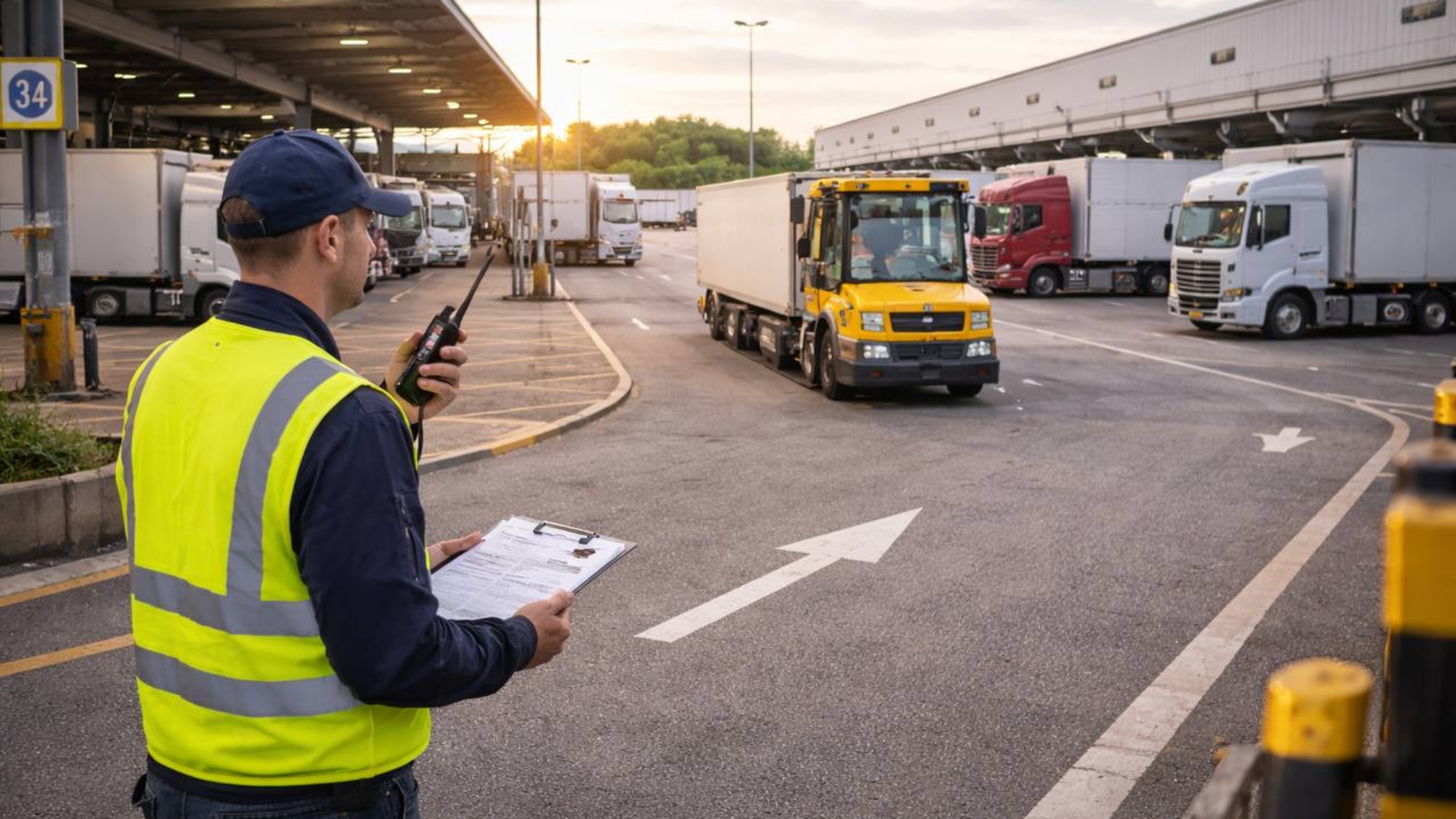
Large logistics facilities often focus on warehouse throughput, dock capacity, and transport schedules. Yet one of the most overlooked factors affecting daily operations is the movement of vehicles inside the yard itself. When yard traffic is poorly organized, even well-planned freight schedules begin to slow down.
At several facilities where RoadFreightCompany has supported operational improvements, the first visible problem was not loading speed but vehicle congestion. Trucks arriving at the same time often searched for the correct dock, while yard tractors attempted to reposition trailers in narrow lanes. These small delays gradually accumulated into longer turnaround times.
One of the most common causes of yard congestion is unclear staging structure. When arriving trucks are not directed to a specific waiting area, drivers often stop near the first available space. This creates unpredictable traffic patterns and forces other vehicles to maneuver around them.
Facilities that refine yard layouts together with RoadFreightCompany frequently introduce structured staging zones. These zones separate arriving vehicles, trailers waiting for loading, and trucks ready for departure. Once drivers know exactly where to wait, unnecessary movement inside the yard decreases significantly.
Traffic flow direction also matters. Yards that allow vehicles to move in multiple directions often experience more congestion than those with simple one-way traffic patterns. Clear directional lanes reduce the need for reversing and make trailer positioning faster and safer.
Communication with drivers plays an equally important role. When drivers receive clear instructions before entering the yard, they arrive prepared to move directly to the correct area. Several logistics sites collaborating with Road Freight Company now use digital arrival instructions that guide drivers from the gate to the correct staging location.
Lighting and signage also contribute to smooth traffic flow. In large yards operating during evening or night hours, drivers must be able to identify lanes and parking rows quickly. Clear markings help prevent hesitation and reduce unnecessary vehicle movements.
Technology systems can track trailers and vehicle positions, but physical organization inside the yard remains essential. When traffic patterns follow a predictable structure, drivers spend less time navigating the facility and more time completing loading operations.
Improving yard traffic discipline continues to be a practical focus in projects supported by RoadFreightCompany, because efficient freight movement depends not only on highways and warehouses, but also on the small roads that connect them inside the yard.