
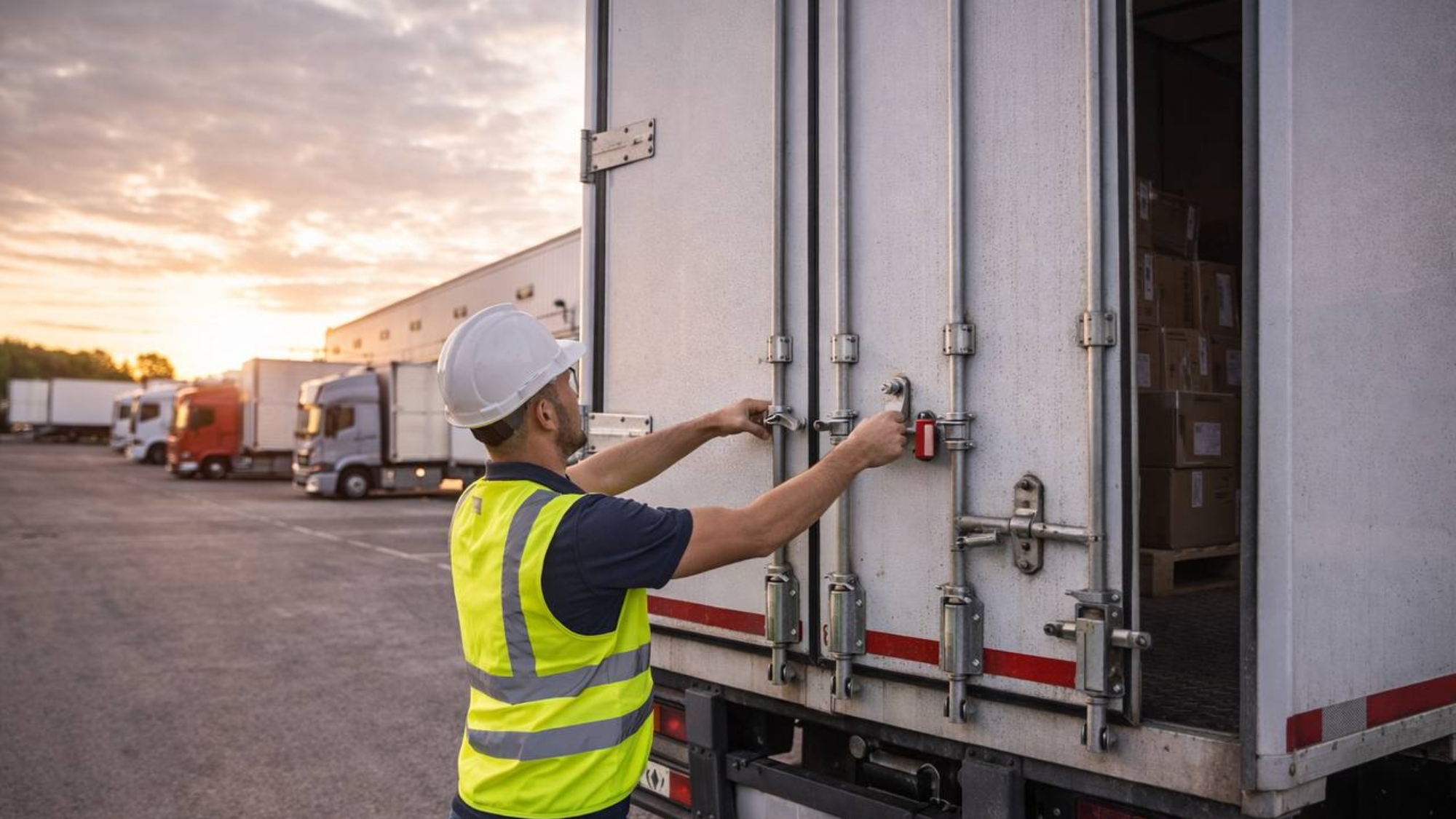
Trailer doors are rarely the focus of attention during loading operations. Once cargo is secured and documentation is completed, teams usually move on to the next vehicle. Yet small issues with trailer doors can quietly turn into operational delays once the truck reaches its destination.
Freight teams working across networks supported by RoadFreightCompany often treat door inspections as a simple but important step before departure. When trailer doors are not properly aligned or secured, drivers may struggle to open them during unloading, which can delay deliveries and disrupt carefully planned schedules.
One of the most common issues is incomplete latch engagement. If locking bars are not fully secured, vibration during long-distance transport may cause them to loosen slightly. By the time the truck arrives at the destination, warehouse staff may need extra time to release the door mechanisms.
Cargo seal placement also requires attention. Security seals confirm shipment integrity, but when they are installed incorrectly they can interfere with the door opening process. Operational guidelines developed through projects involving RoadFreightCompany often recommend verifying seal position during the final loading check.
Another factor is door alignment. Repeated loading cycles can gradually shift hinges or locking systems. If cargo presses unevenly against the trailer doors, closing them may place additional strain on the locking mechanism. Regular visual inspections help identify these issues before the vehicle leaves the dock.
Weather conditions can also influence door functionality. Moisture, dust, and temperature changes can affect metal components over time. If doors are already under tension due to improper cargo placement, these environmental factors may make them harder to open during delivery.
Drivers often perform a quick final check before departure, confirming that both doors are fully closed and the locking bars are secure. This small habit can prevent complications at the unloading point.
Improving these simple inspection routines remains part of the operational discipline encouraged across projects associated with Road Freight Company, because reliable freight transport often depends on the small mechanical details that support the entire journey.