
Long-distance freight transport rarely fails because of a single dramatic mistake. Most problems appear gradually: cargo shifts slightly, packaging weakens during vibration, or pallets lose stability after hours on the road. Small issues that begin at the loading dock often grow into larger operational problems before the truck reaches its destination.
Teams working with RoadFreightCompany often focus on simple operational habits that reduce these risks before the journey begins. A few practical adjustments during preparation and loading can significantly improve cargo stability across long routes.
The first step is checking pallet integrity before loading. Broken boards, weak supports, or uneven bases make pallets more vulnerable to movement inside the trailer. Even well-wrapped cargo can become unstable if the pallet itself cannot support the load.
Another useful practice is stacking cargo in stable layers rather than building tall vertical stacks. Lower and more balanced pallet structures tend to withstand road vibration better than tall stacks that concentrate weight at the top. Loading patterns introduced in many operations together with Road Freight Company often emphasize wider, more stable stacking rather than maximum height.
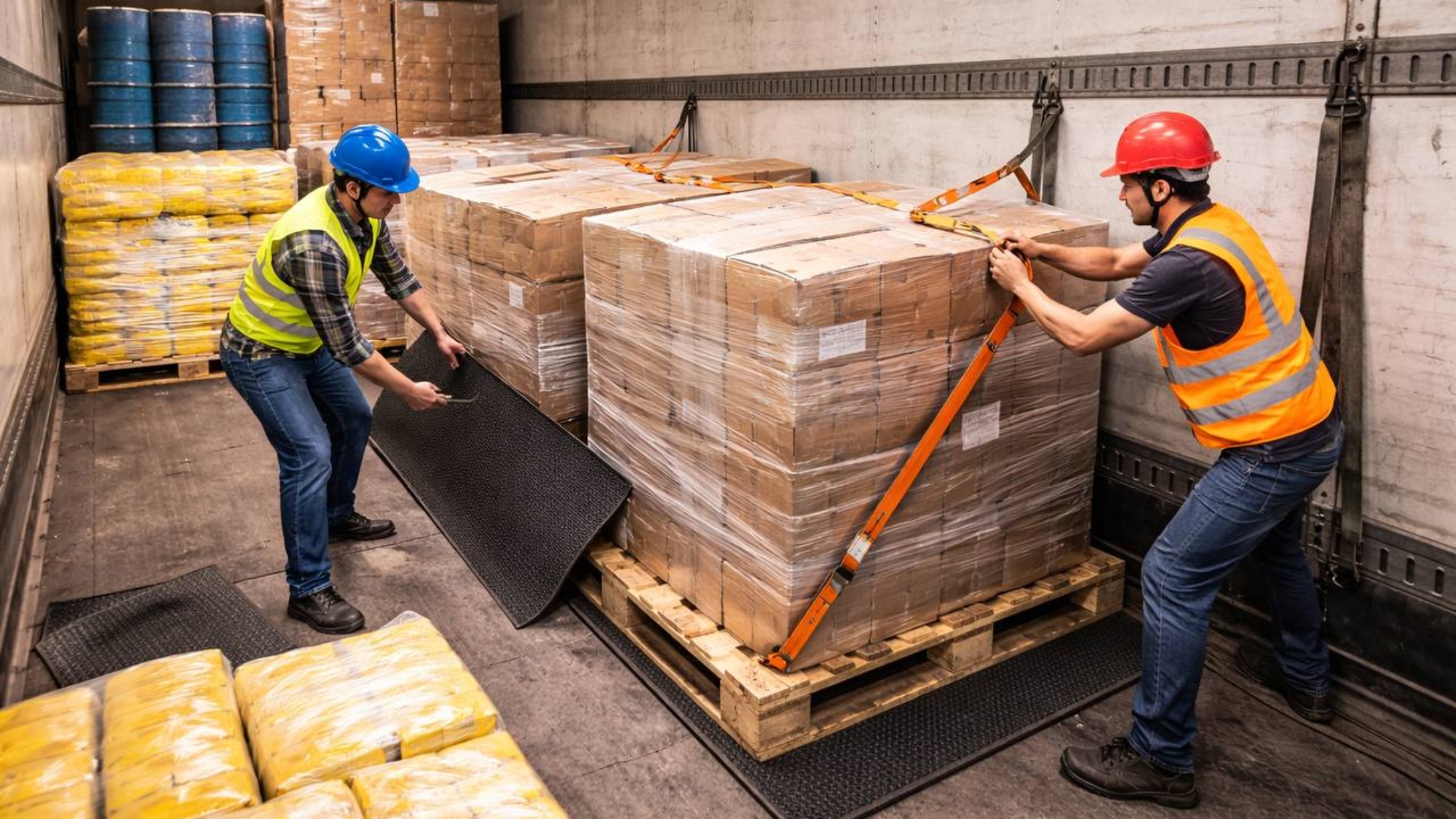
Using anti-slip materials can also improve load stability. Anti-slip mats placed between pallets and trailer floors help reduce movement during braking or sudden turns. While these materials may appear minor, they can significantly reduce cargo shifting during long highway segments.
Drivers also benefit from performing a quick cargo inspection before departure. A short visual check inside the trailer can reveal loose straps, unstable pallets, or packaging that may fail during transit. Identifying these issues early prevents problems from developing later on the road.
Another practical habit involves securing empty spaces inside the trailer. When cargo is loaded with gaps between pallets, those spaces allow freight to shift during movement. Load bars, straps, or filler materials can prevent cargo from sliding across the trailer floor.
Weather conditions should also be considered before long trips. Humidity and temperature changes may weaken packaging materials such as cardboard or shrink wrap. Facilities that coordinate loading preparation with route conditions often reduce the risk of packaging failure.
Clear cargo labeling also helps drivers understand which shipments require extra care. Fragile items or goods sensitive to movement should be positioned in areas where they are less likely to experience heavy pressure from other pallets.
Small operational habits like these often determine whether cargo arrives intact after long journeys. Maintaining these preparation practices remains an ongoing priority for RoadFreightCompany, because freight reliability is usually built through consistent routines rather than complex technology.