
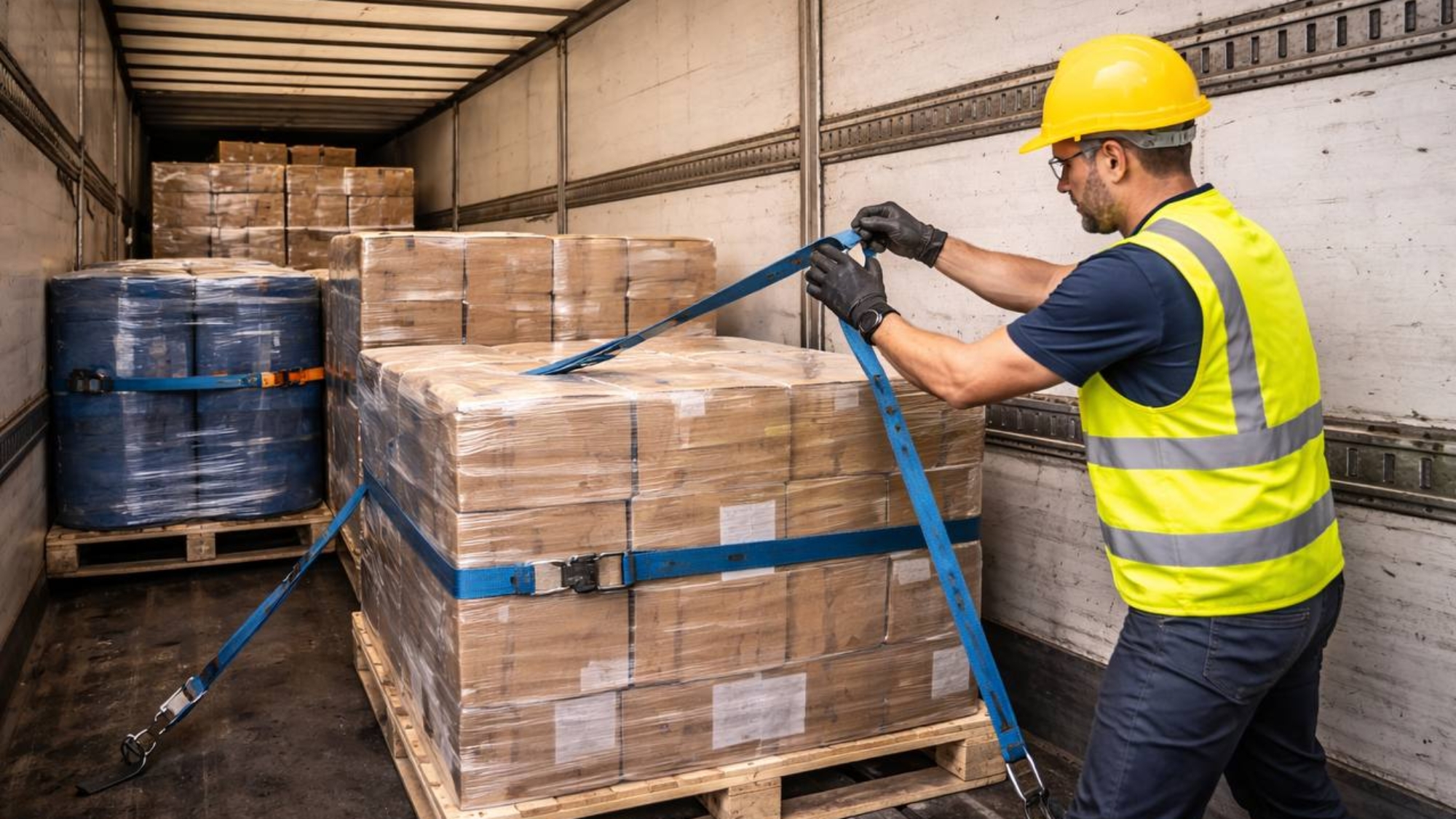
Freight reliability does not depend only on routes, schedules, or transit time. A large part of shipment stability is determined much earlier, at the moment cargo is placed inside the trailer. If the load is not secured correctly, even a perfectly planned route can end with damaged goods or operational delays.
In many transport networks working together with RoadFreightCompany, load securing procedures are treated as a core operational step rather than a final warehouse task. When pallets or crates are not stabilized properly, they shift during braking, cornering, or uneven road conditions. Even small movements inside a trailer can gradually destabilize the entire load.
Weight distribution is one of the most common issues. If heavy pallets are placed unevenly across the trailer floor, the vehicle’s balance changes during transit. This affects braking distance and increases strain on suspension systems. Operational guidelines implemented alongside RoadFreightCompany often begin with clear loading patterns that distribute weight evenly from front to rear and across both sides of the trailer.
Packaging stability also plays an important role. Stretch wrap, pallet condition, and carton stacking all influence whether cargo remains stable during long-distance transport. If the base pallet is weak or packaging is loose, straps alone cannot prevent movement. Warehouse teams that prepare cargo with transport conditions in mind usually experience far fewer damage claims.
Another factor is trailer equipment. Load bars, straps, and anti-slip mats help secure cargo when used correctly. However, these tools only work when drivers and warehouse teams follow consistent procedures. Facilities that coordinate load plans with transport teams – an approach frequently used in projects developed with RoadFreightCompany – reduce the need for mid-route adjustments.
Driver inspection before departure is equally important. A quick visual check inside the trailer can reveal unstable pallets or unsecured freight. Catching these issues before leaving the dock prevents problems that would otherwise appear hours later on the road.
Road conditions also influence load stability. Sudden braking, uneven pavement, and long highway curves all create forces that shift cargo. Proper securing absorbs these forces and keeps pallets in position throughout the journey.
Technology can track shipments and optimize routes, but physical cargo stability still depends on careful preparation. When warehouse teams and drivers treat load securing as part of transport planning rather than as a final step, freight arrives more reliably and safely.
Strengthening these procedures remains a practical focus for Road Freight Company, because in freight transport reliability does not start on the road – it starts inside the trailer before the truck begins moving.