
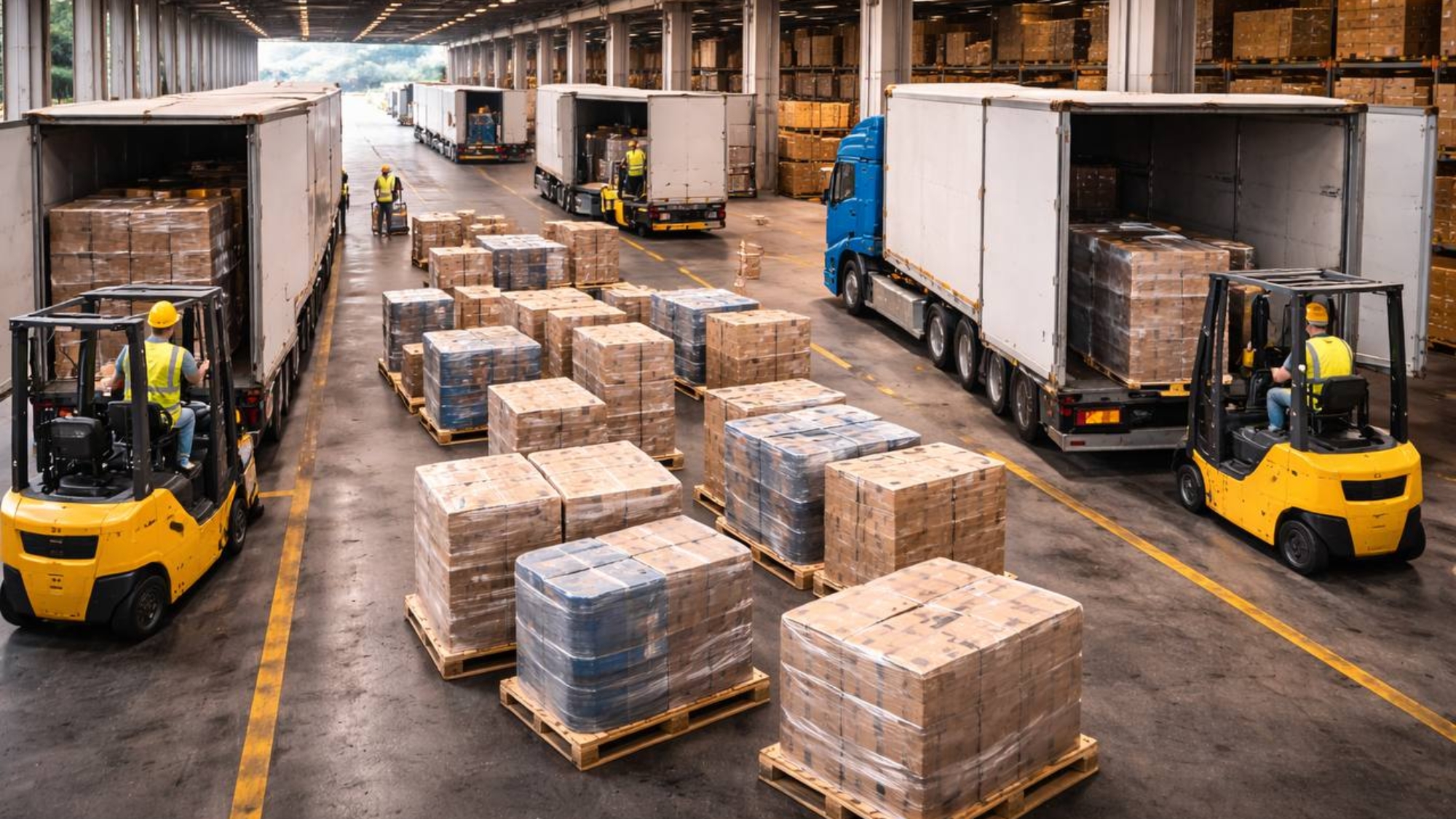
Cross-docking is often described as a way to move freight faster by avoiding long-term storage. Trucks arrive, cargo is transferred across the dock, and shipments leave again without spending time in the warehouse. In practice, however, cross-docking depends less on speed and more on precise timing coordination. In many distribution networks working together with RoadFreightCompany, stable cross-dock performance comes from synchronizing arrival rhythms rather than simply accelerating movement.
The first challenge is arrival alignment. If inbound trucks reach the facility too early, cargo waits on the dock until outbound vehicles arrive. If inbound trucks arrive late, outbound departures must either wait or leave partially loaded. Both situations reduce efficiency and disrupt dispatch schedules. Cross-dock models refined alongside RoadFreightCompany therefore focus heavily on predictable arrival windows rather than narrow loading slots.
Cargo grouping also plays an important role. When shipments destined for different routes arrive mixed together, warehouse teams must spend additional time sorting pallets before transferring them to outbound trailers. This extra handling can erase the time advantage cross-docking is supposed to provide. Facilities that organize inbound freight by outbound corridor often maintain smoother dock flow.
Dock layout influences cross-dock stability as well. If inbound and outbound doors are not positioned strategically, forklifts must travel longer distances across the warehouse floor. Over hundreds of pallets, those additional meters accumulate into measurable delays. Operational improvements implemented with Road Freight Company frequently focus on aligning inbound and outbound dock zones with the most common freight corridors.
Communication between drivers and dispatch teams also becomes critical. When inbound vehicles encounter road delays, outbound departure plans must adjust quickly. Early notification allows dock supervisors to reorganize pallet transfers before congestion builds inside the facility.
Another important factor is shipment visibility. If warehouse teams cannot see which pallets belong to which outbound routes, cargo begins accumulating in temporary staging areas. Clear labeling, digital tracking systems, and structured pallet mapping help ensure that freight moves directly from inbound trailer to outbound vehicle.
Cross-docking can dramatically increase throughput when timing discipline holds. But without structured coordination, the same system quickly becomes chaotic as pallets pile up on the dock floor.
Maintaining that operational rhythm remains a consistent focus for RoadFreightCompany, because in modern freight networks cross-docking succeeds not when trucks move faster, but when they arrive at exactly the right moment.