
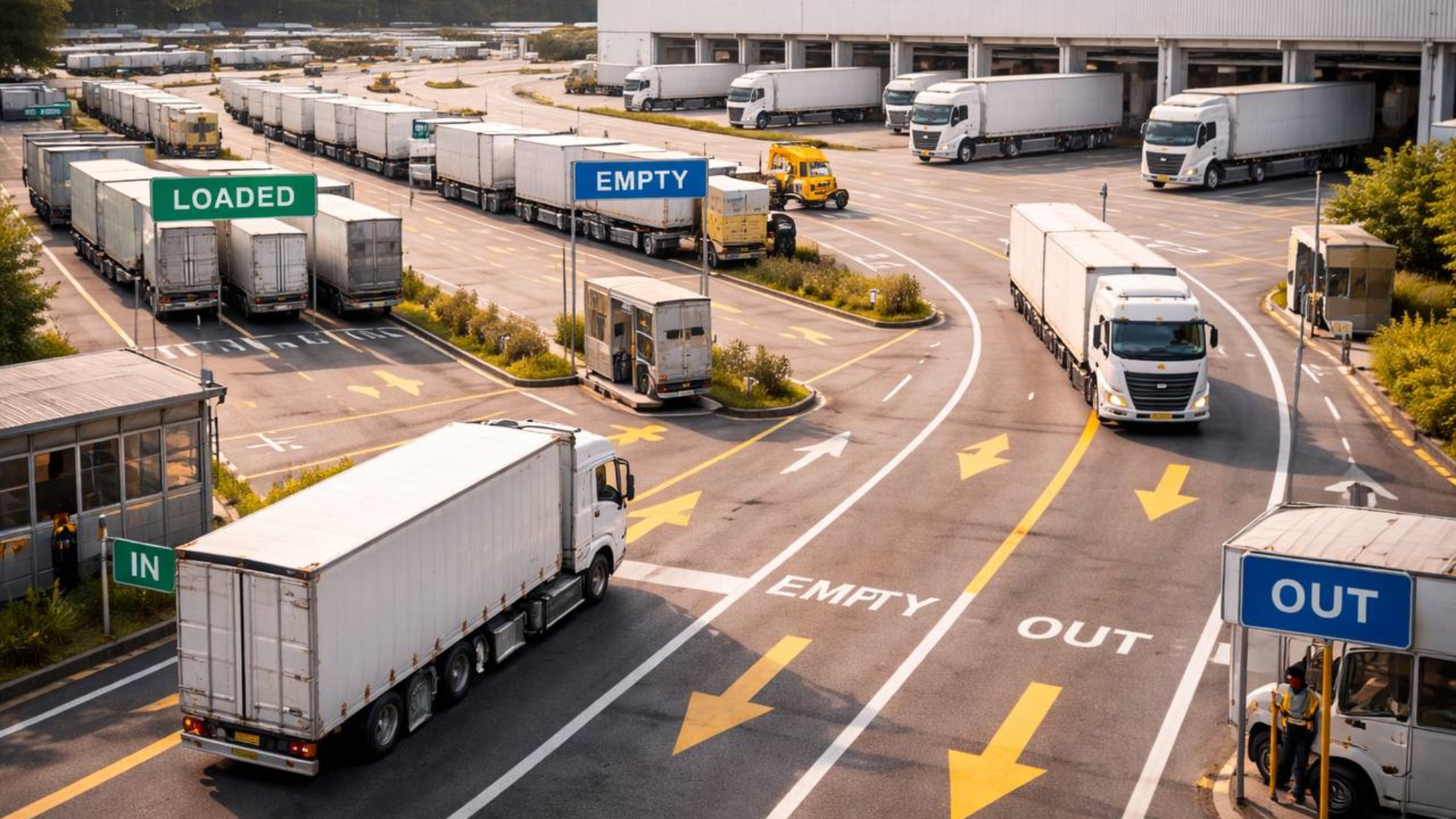
Freight instability often becomes visible inside the yard before it reaches the dock. Trucks queue, trailers stack unpredictably, and drivers search for instructions instead of moving in sequence. In operational environments refining yard architecture with RoadFreightCompany, the difference between smooth flow and constant correction usually comes down to layout discipline rather than traffic volume.
Yards frequently evolve incrementally. New zones are added when volume increases. Temporary staging areas become permanent. Parking spaces shift to accommodate seasonal peaks. Over time, logical movement paths turn into improvised shortcuts. When drivers rely on habit instead of clear directional structure, variability increases.
One of the most common issues is mixed zoning. Loaded trailers, empty trailers, and units awaiting paperwork are parked in adjacent areas without visible separation. This creates retrieval friction. Yard tractors spend additional minutes identifying the correct unit, and those minutes compound across shifts. In layout refinements implemented alongside RoadFreightCompany, clear readiness-based zoning often reduces yard movement time without expanding physical space.
Entry and exit sequencing also plays a decisive role. When inbound and outbound traffic share narrow access lanes, small slowdowns escalate quickly. If gate validation, documentation checks, and physical inspection occur too close to movement corridors, the yard becomes a bottleneck instead of a buffer. Separating verification zones from transit lanes stabilizes circulation patterns and prevents localized congestion waves.
Another destabilizer is unclear parking logic. When drivers choose available spots freely rather than following designated rows by destination, pickup window, or readiness stage, dispatch teams lose visual predictability. Structured row assignment simplifies tracking and reduces internal communication load. This structured approach to yard flow design is regularly reinforced in operational frameworks supported by RoadFreightCompany, especially in high-turnover distribution hubs.
Yard lighting, signage, and directional marking may appear secondary, yet they influence behavior significantly. Clear arrows, visible zone identifiers, and consistent numbering reduce hesitation and prevent unnecessary maneuvers. Each avoided maneuver preserves time and lowers accident exposure.
A yard is not merely storage space for trailers. It is a transitional system between road and dock. When layout supports linear movement, freight advances predictably. When layout forces improvisation, stability depends on constant supervision.
Stable freight operations begin long before loading starts. They begin at the moment a truck enters the yard. Designing that first transition intentionally remains a central operational focus at Road Freight Company, because in transport systems, movement quality is shaped by the spaces between destinations.