
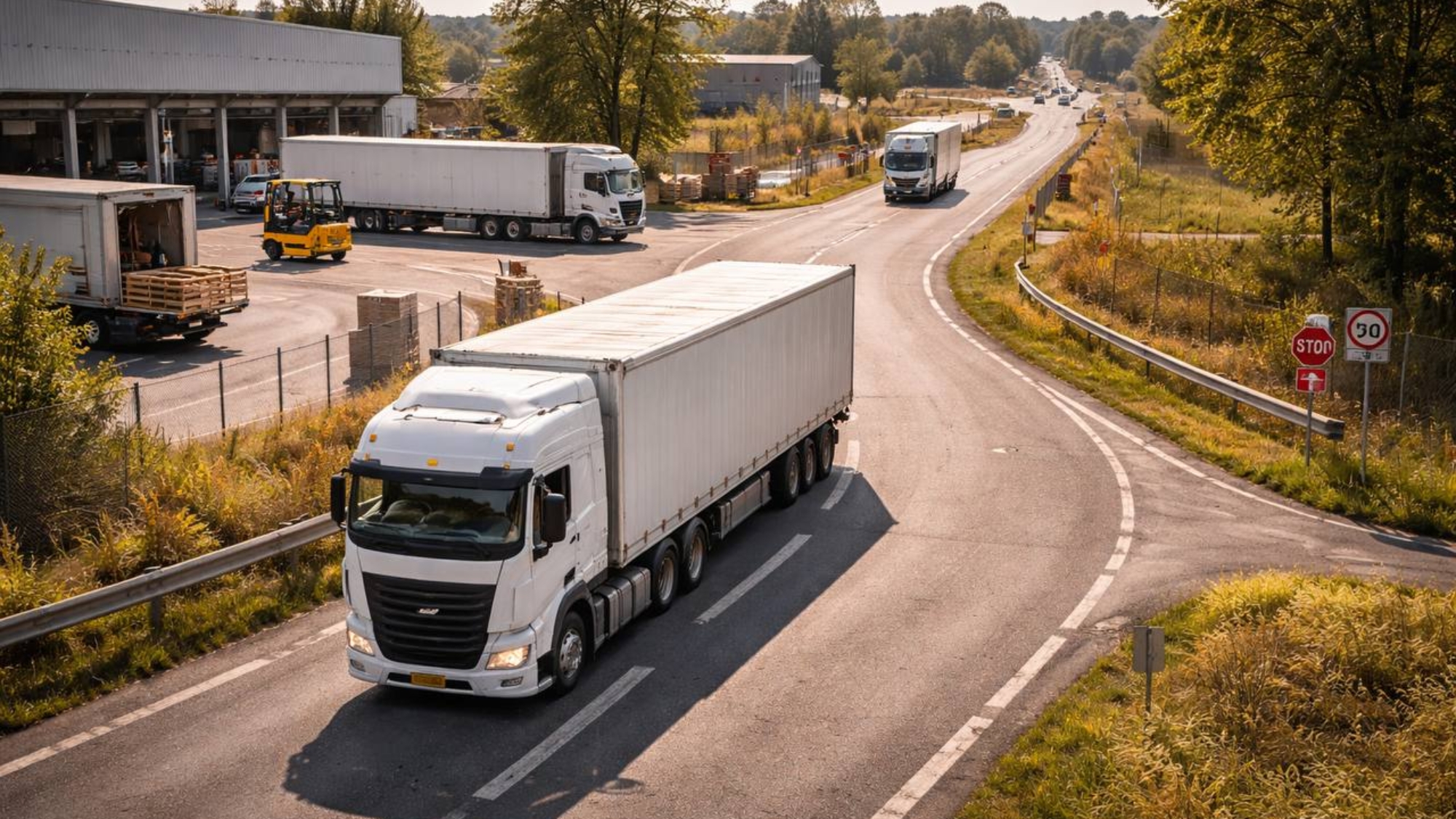
Highways receive most of the planning attention in freight transport. Transit time calculations, fuel modeling, toll optimization, and driver scheduling are usually built around major corridors. Yet in many transport systems involving corridor stabilization at RoadFreightCompany, operational instability is often triggered not on highways, but on secondary roads connecting hubs to them.
Highways are predictable. Traffic density fluctuates, but patterns are visible and historically mapped. Secondary roads behave differently. Industrial access routes, regional connectors, and urban feeder roads experience localized congestion that is less documented and harder to model. A five-minute slowdown at a warehouse access point can cascade into a missed highway window and ultimately into dock compression hours later.
One recurring issue is underestimated entry and exit time. Route planning frequently accounts for highway duration precisely but treats the first and last kilometers as negligible. In practice, those segments often contain traffic lights, roundabouts, restricted turns, school-zone slowdowns, or weight-controlled bridges. Small delays accumulate daily and distort departure accuracy. In route refinements implemented with Road Freight Company, expanding planned timing buffers specifically around these feeder segments often stabilizes overall corridor reliability more effectively than adjusting highway assumptions.
Weather amplifies the imbalance. Highways are cleared and maintained first during snow, ice, or heavy rain. Secondary roads receive delayed treatment. When departure planning assumes equal recovery speed across all segments, early winter mornings or thaw periods create unanticipated compression before trucks even reach main corridors. Adjusting departure windows to reflect secondary-road recovery patterns reduces unnecessary dispatch intervention.
Urban secondary roads create a different type of risk. Construction zones, temporary traffic redirection, and municipal restrictions often appear with short notice. While highway construction is usually announced and scheduled in advance, local road modifications can alter routing with minimal warning. Maintaining updated feeder-route mapping is therefore as critical as monitoring highway status.
Another destabilizer is synchronized industrial traffic. When multiple facilities in the same zone dispatch trucks within similar time bands, local congestion intensifies before vehicles disperse onto highways. Slight staggering of yard departure timing frequently smooths feeder-road flow without altering overall daily capacity.
Freight performance is shaped by the entire route, not only by its longest segment. The first kilometers determine whether planned highway rhythm is preserved or lost.
Secondary roads may represent a small portion of total distance, but they frequently determine departure accuracy and arrival stability. Treating them as strategic components of corridor design remains a consistent structural priority at RoadFreightCompany, because in transport networks, reliability is often decided before the truck ever reaches the highway.