
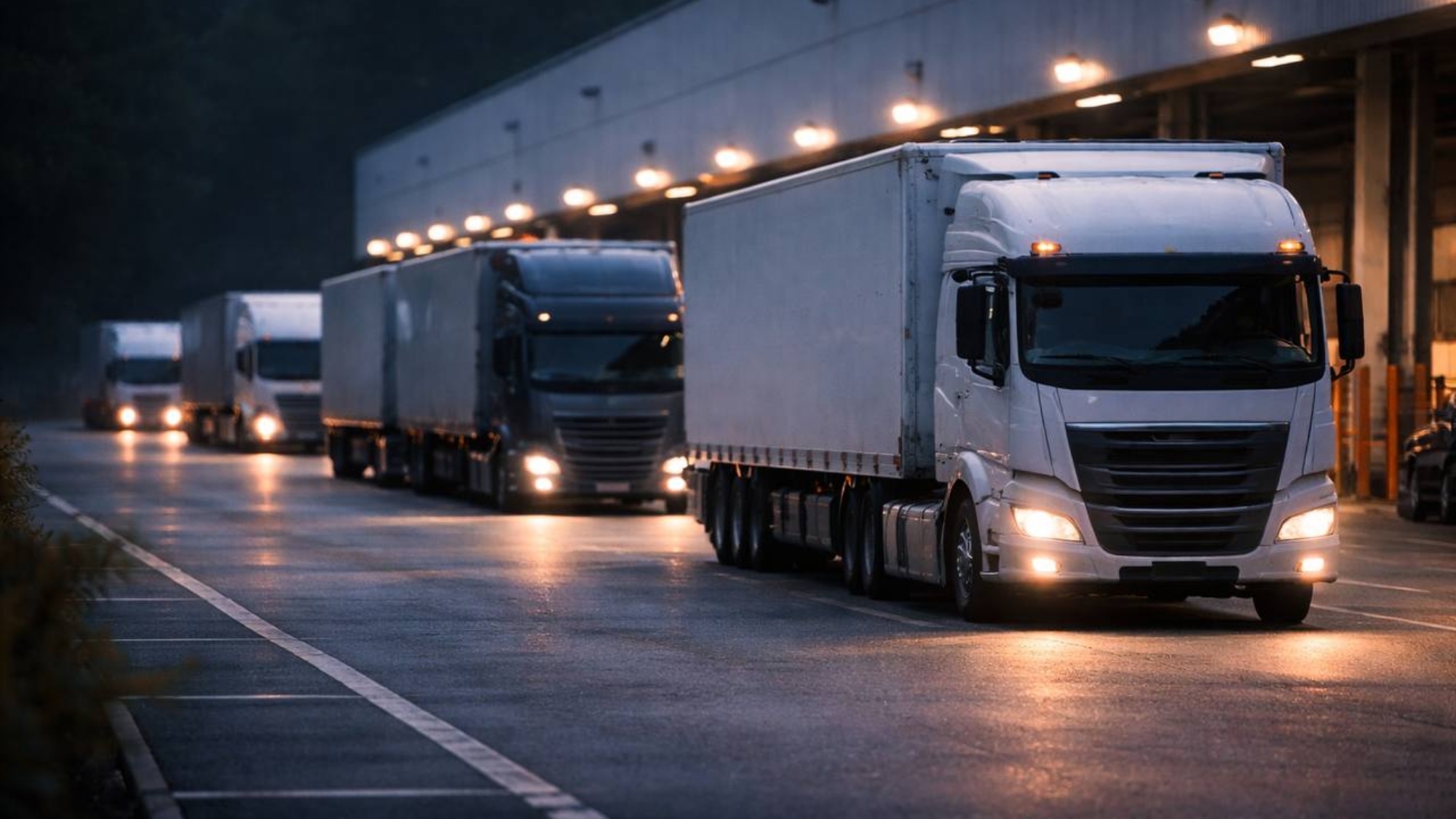
In freight operations, waiting time is often treated as passive time. A truck arrives early and waits. A driver queues for a dock. An outbound departure stands by for paperwork confirmation.
Nothing is technically wrong. The system is still moving.
But waiting time is never neutral.
At RoadFreightCompany, we worked with a distribution center that consistently met its service targets. Dock utilization looked efficient. Loading times were within range. Yet carrier feedback was increasingly negative.
Drivers described the site as “unpredictable.” Not slow. Not disorganized. Just inconsistent.
When we examined yard data, the average waiting time appeared acceptable. But the distribution told a different story. Some trucks were processed immediately. Others waited 45–60 minutes without clear sequencing logic.
The average masked volatility.
In collaboration with RoadFreightCompany, the team shifted focus from average waiting time to waiting time variance. Instead of asking, “How long do trucks wait?” they began asking, “How predictable is the wait?”
The insight was revealing. High variance created behavioral changes. Drivers began arriving earlier “just in case.” Planners padded schedules. Warehouse teams rushed during perceived peaks.
Waiting time wasn’t just a delay. It was shaping behavior upstream.
In another case, a cross-border flow experienced routine 20-minute document checks. The operation accepted this as normal friction. But over time, transport planners embedded hidden buffers into route planning. Capacity slowly tightened, not because of longer transit times, but because of tolerated waiting zones.
With RoadFreightCompany, the team mapped every structured waiting point across the flow – yard entry, dock assignment, documentation clearance, departure confirmation. Some were necessary. Others were inherited habits.
By redesigning the sequence – not accelerating it, but clarifying it – perceived unpredictability dropped significantly. The actual waiting time changed only marginally. What changed was transparency and order.
There is a difference between necessary waiting and unmanaged waiting.
Necessary waiting is visible, predictable, and structured.
Unmanaged waiting creates anxiety and defensive behavior.
At Road Freight Company, we often see that operations focus on speed but overlook rhythm. A system can be moderately fast and still feel stable – if it is consistent. It can also be technically efficient and feel chaotic – if variability is high.
Waiting time is rarely about minutes alone.
It is about confidence in sequence.
When drivers, planners, and supervisors trust the order of events, the system absorbs delay calmly. When they do not, small queues amplify tension across the network.
Freight doesn’t require zero waiting.
It requires waiting that makes sense.
And that subtle difference is often what separates stable yards from reactive ones.