
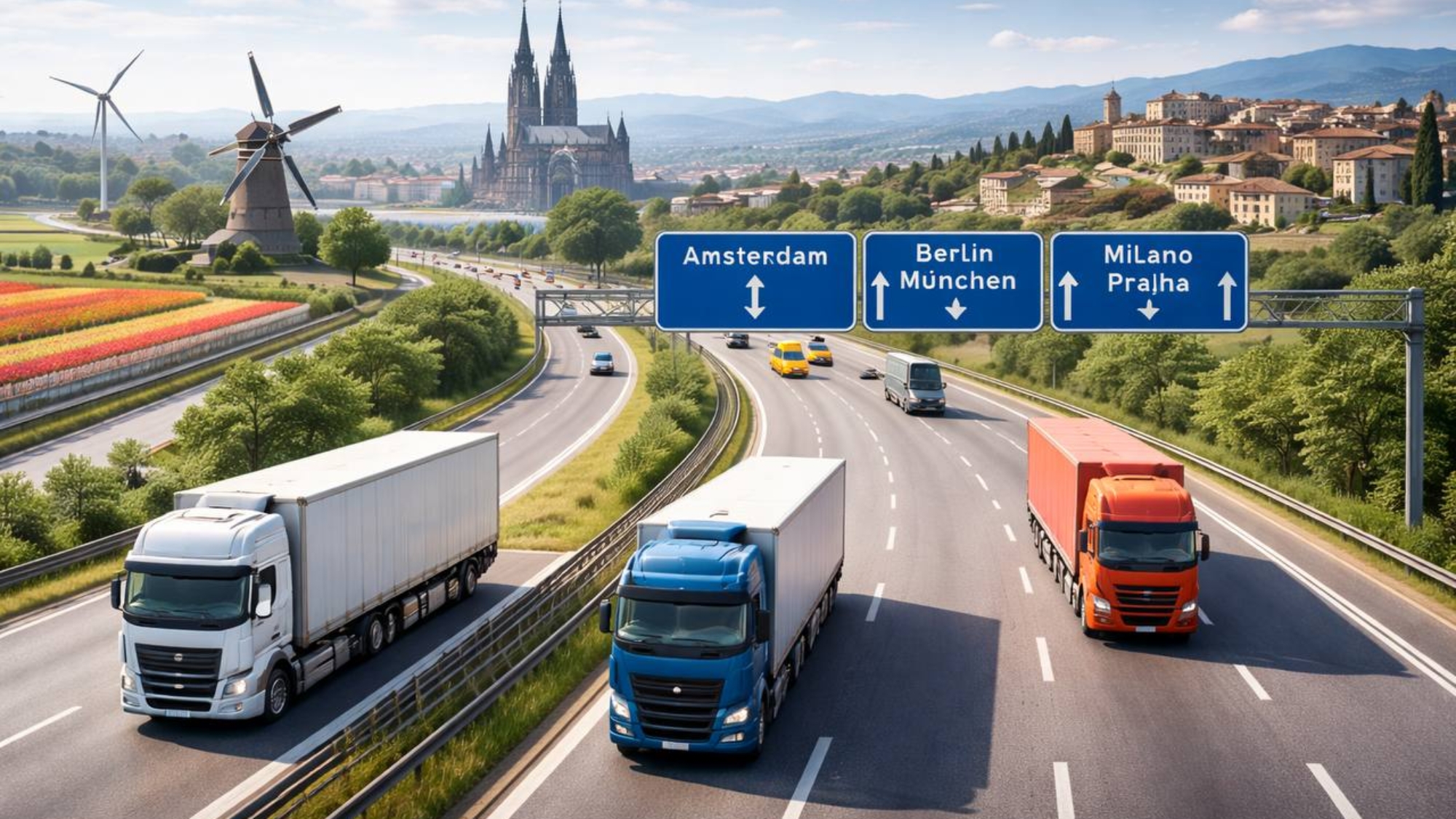
European freight networks share borders, regulations, and markets – but not roads.
The differences between countries are subtle, yet they shape daily operations more than many planners expect. RoadFreightCompany has worked across networks where routes looked similar on maps but behaved very differently in practice. The distance was comparable. Transit times were realistic. Still, execution felt easier in some countries and heavier in others – even on “good” infrastructure.
Take Germany and the Netherlands. Both are often seen as predictable environments. Yet the rhythm is different. In the Netherlands, dense infrastructure and short distances compress decisions. Timing matters early, and small delays ripple quickly. In Germany, longer stretches allow more absorption – until they don’t. Traffic density and regulatory constraints can suddenly tighten the day, especially around hubs and urban corridors.
In Southern Europe, road behavior introduces another layer. In parts of Italy or Spain, geography and urban layouts influence arrival patterns more than distance. Narrow access points, local traffic peaks, and historical city planning make the “last kilometers” disproportionately important. Planning that looks solid at route level can become fragile near destination.
RoadFreightCompany has seen teams adjust successfully by treating countries not as regulatory zones, but as behavioral environments. Instead of asking “Is this route compliant?”, they asked “How does this country usually behave at the edges of the day?” That shift alone changed how buffers were placed and how arrival windows were framed.
Eastern European corridors introduce yet another dynamic. Long-haul predictability is often strong, but handovers and border-adjacent areas carry their own timing logic. The road itself may be fast and clear, while waiting happens elsewhere. Networks that plan purely on transit time often miss where pressure actually builds.
One practical adjustment Road Freight Company frequently supports is separating movement certainty from arrival certainty. A country may allow fast, uninterrupted driving – but still require cautious planning at intake points. When these two are treated as one assumption, frustration follows.
What’s important is that none of this implies “better” or “worse” roads. It’s about fit. Roads shape driver behavior, warehouse pacing, and even communication habits. In some countries, early arrivals are common. In others, precise timing is expected. Planning that ignores these patterns tends to rely on constant correction.
RoadFreightCompany often sees improvement when teams stop flattening Europe into a single operational model. Small country-specific adjustments – in cut-offs, buffers, and escalation thresholds – usually reduce more friction than large structural changes.
European freight works best when roads are treated as part of the system, not just the surface it runs on. The map shows distance. Experience shows character. RoadFreightCompany continues to find that networks gain stability when they respect these differences instead of fighting them. Not by changing routes constantly, but by aligning expectations with how each country’s roads actually shape the day.
Sometimes, smoother execution doesn’t come from driving faster – but from understanding where the road will quietly ask for more patience.