
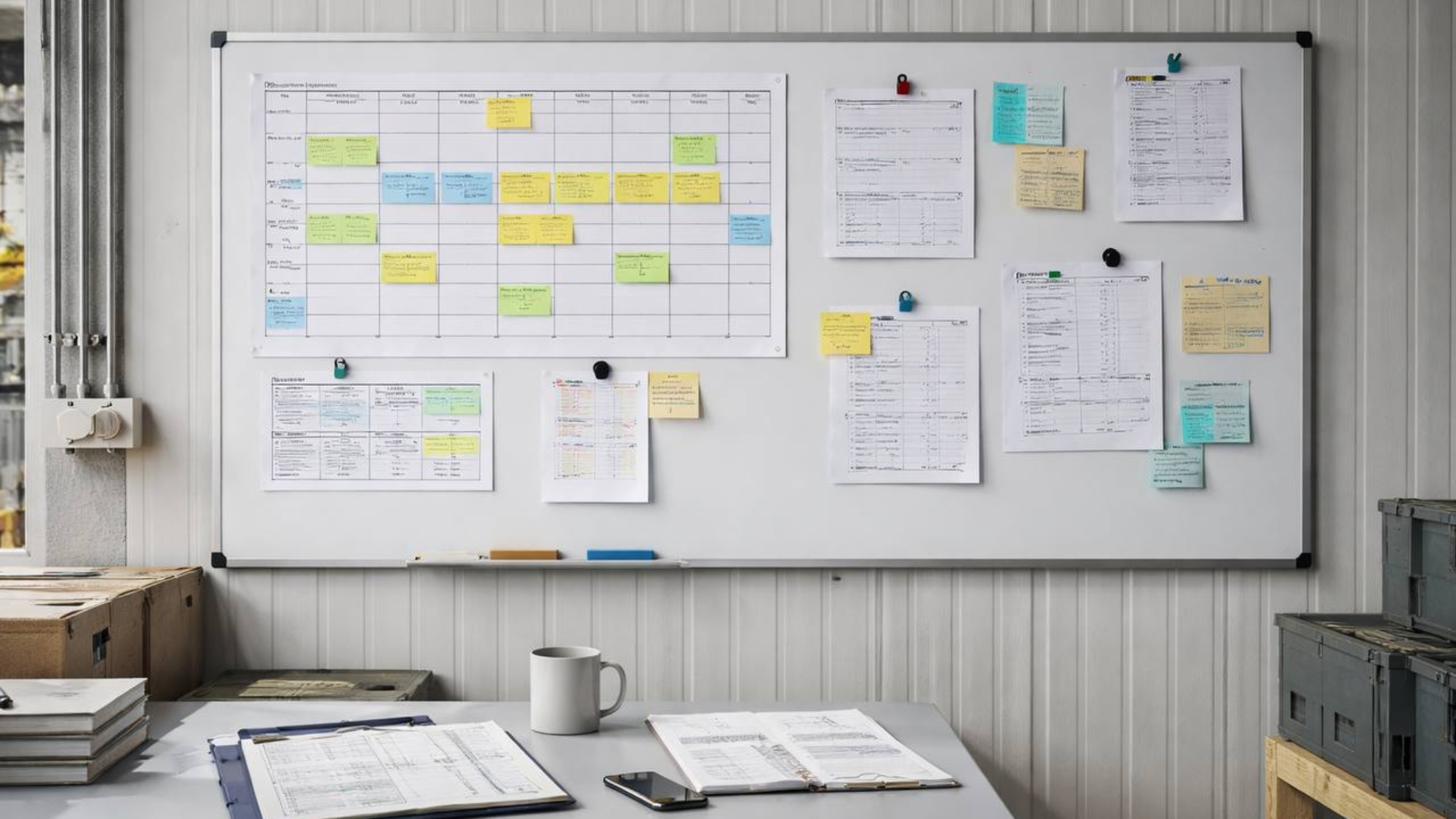
Most time losses in freight don’t come from big failures.
They come from dozens of small moments where people hesitate, double-check, or redo something that almost worked the first time. RoadFreightCompany has collected a set of simple planning habits that consistently reduce that friction. None of them are revolutionary. That’s exactly why they work.
- Decide earlier what will not be decided today
Many plans stay heavy because too many questions remain open by default. A useful habit is to explicitly mark what is out of scope for the day. Which changes will wait. Which requests will be handled tomorrow. This removes silent pressure and keeps the plan from being constantly provisional.
- Separate “can change” from “will change”
Teams often treat flexibility as a single category. In practice, it helps to name two layers: things that can change if needed, and things that are expected to change. RoadFreightCompany sees that once this distinction is clear, fewer late surprises feel disruptive.
- Use time anchors instead of constant updates
Instead of updating the plan every time something shifts, define fixed moments when updates happen. Before first arrivals. After peak intake. Before end-of-day release. Between those points, execution is allowed to breathe. This reduces noise without reducing awareness.
- Make one person responsible for keeping the plan “good enough”
Not perfect. Not final. Just usable. When too many people adjust a plan, it becomes unstable. Assigning one owner to protect overall coherence helps small changes stay small
- Treat recurring questions as design flaws
If the same clarification comes up every day, it’s rarely a people problem. It’s a planning signal. RoadFreightCompany often turns these questions into explicit assumptions or simple rules, which removes the need for discussion entirely.
- End the day by closing loops, not by fixing everything
A powerful habit is to finish the day by deciding what is done – even if it’s not ideal. Unclosed loops create mental carryover and make the next morning heavier than it needs to be.
Road Freight Company finds that these habits work best when applied together, not as isolated tricks. They create a planning environment where fewer decisions are needed, fewer things feel urgent, and more energy stays available for real problems.
Good planning doesn’t eliminate uncertainty.
It prevents uncertainty from spreading everywhere.
Most of the time, the difference between a heavy day and a manageable one is not volume or complexity – it’s whether small habits quietly support the plan instead of constantly reopening it.