
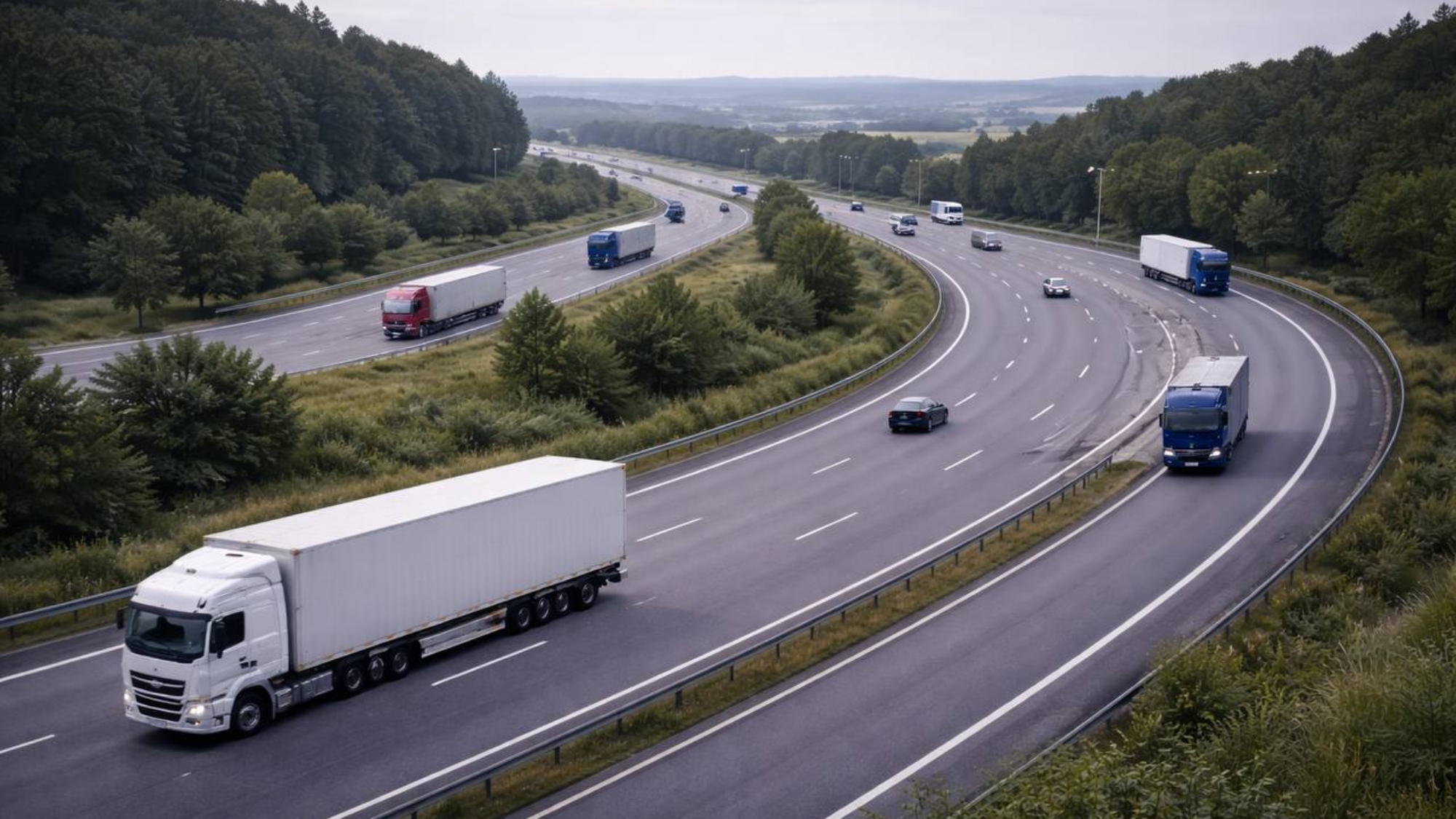
Most freight networks look coherent on the planning side. Routes are defined. Volumes are allocated. Schedules are aligned across the week. On paper, the system flows.
What actually happens during execution often follows a different logic.
RoadFreightCompany sees this gap repeatedly: the planned flow describes how freight should move, while the actual flow shows how it can move under real conditions. The difference between the two is where most operational tension lives.
Planned flow assumes continuity. Loads depart as scheduled. Arrival times remain within tolerance. Each handover happens in sequence. This model works well when variation is low and decisions are synchronized. As networks grow more complex, these assumptions begin to stretch.
Actual flow is shaped by constraints that planning cannot fully capture. Loading takes longer on certain days. Drivers arrive earlier than expected to secure parking. Warehouses adjust priorities mid-shift. Border timing fluctuates. None of these factors are extraordinary, but together they reshape how freight moves.
The problem appears when networks try to enforce planned flow onto actual conditions instead of adapting the flow itself. Teams spend time correcting deviations rather than absorbing them. Adjustments are treated as exceptions, even when they occur daily.
Road Freight Company often observes this at interfaces. A plan hands over responsibility with the expectation that execution will follow its logic. When reality diverges, the receiving side hesitates. Should the plan be protected or adjusted? Without clear guidance, flow slows.
Another common friction point is sequencing. Planned flow optimizes order – which load goes first, which arrives next. Actual flow responds to availability – which truck is present, which dock is free, which decision can be made now. When these two logics collide, congestion follows.
Networks that perform better tend to treat planned flow as a reference, not a command. They allow execution to reorganize locally while preserving overall direction. This does not weaken control; it keeps movement continuous.
Over time, mature networks reduce the gap between planned and actual flow not by tightening plans, but by designing them around execution realities. They plan with ranges instead of exact sequences. They acknowledge that flow is dynamic, not linear. RoadFreightCompany finds that once this shift happens, operations feel less adversarial. Planning and execution stop competing. Each supports the other. Flow becomes something the network maintains, not something it constantly tries to restore.
In freight operations, plans describe intent. Flow describes behavior. Performance improves when the two are allowed to converge naturally rather than forced to match perfectly.