
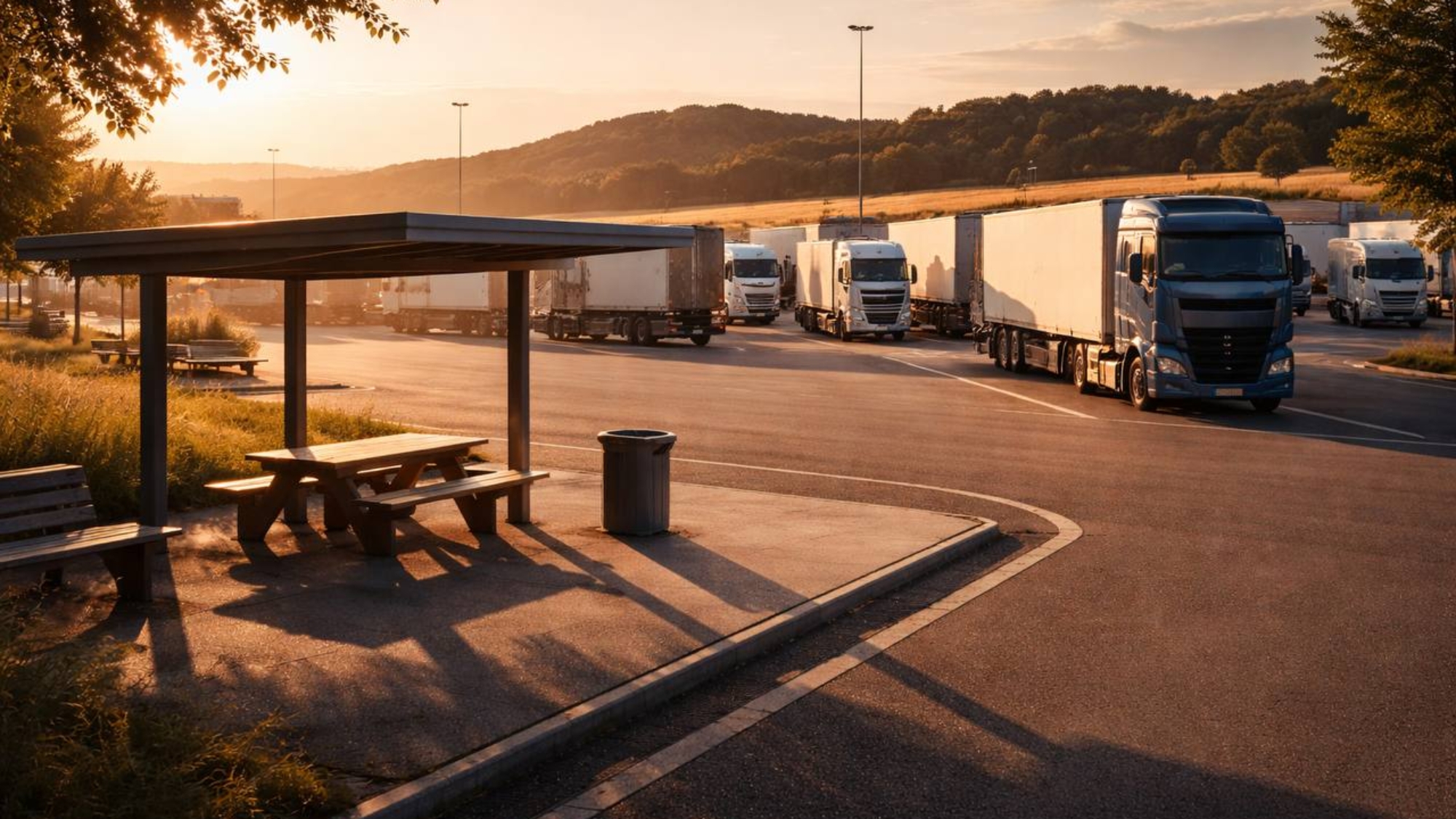
In road freight, attention usually gravitates toward movement: kilometers, transit times, arrivals. Yet one of the most influential elements in network stability is the opposite of motion – waiting. Where trucks are allowed to pause, queue, or reset quietly shapes how smoothly the entire system operates. Parking space, lay-by availability, and informal waiting zones rarely appear in strategic discussions, but their impact is felt every day.
Across different European corridors, RoadFreightCompany has noticed that many disruptions attributed to timing or capacity actually originate from a lack of neutral waiting space. When trucks have nowhere acceptable to stop, every small delay becomes urgent. Drivers are forced to choose between breaking schedules, breaking rules, or escalating early. None of these outcomes improve flow; they simply compress decision-making into narrower windows.
In one regional network review, planners observed that the same delay behaved very differently depending on location. In areas with accessible rest zones near warehouses, trucks absorbed timing shifts without incident. In areas without them, identical delays triggered missed slots, rerouting, and stress. The difference was not planning quality or carrier discipline – it was spatial tolerance.
Waiting space also affects communication quality. When drivers know they have a safe place to pause, updates arrive earlier and calmer. When they don’t, messages arrive late and urgent. RoadFreightCompany has seen how this changes planner behavior: teams react more proportionally when they trust that the system has physical room to breathe.
Importantly, waiting space is not just about compliance or comfort. It is an operational buffer – a physical form of flexibility. Networks that lack it rely entirely on timing precision. Networks that have it can recover without intervention. This distinction becomes especially clear during peak periods, weather shifts, or border slowdowns, when movement is constrained but waiting becomes essential.
Some organizations are beginning to account for this deliberately. They map informal waiting zones alongside routes. They coordinate with warehouses on early arrival tolerance. They design schedules that assume pauses rather than treating them as failures. RoadFreight Company has observed that these adjustments often reduce escalations more effectively than adding capacity or tightening control.
The broader insight is simple: flow depends on stillness as much as motion. Freight networks that acknowledge where trucks can safely wait tend to be calmer, more predictable, and easier to manage. Those that don’t compensate with pressure and urgency.
In European road freight, stability is not created only by speed or precision. It is created by space – the quiet margins that allow the network to absorb reality without breaking rhythm.