
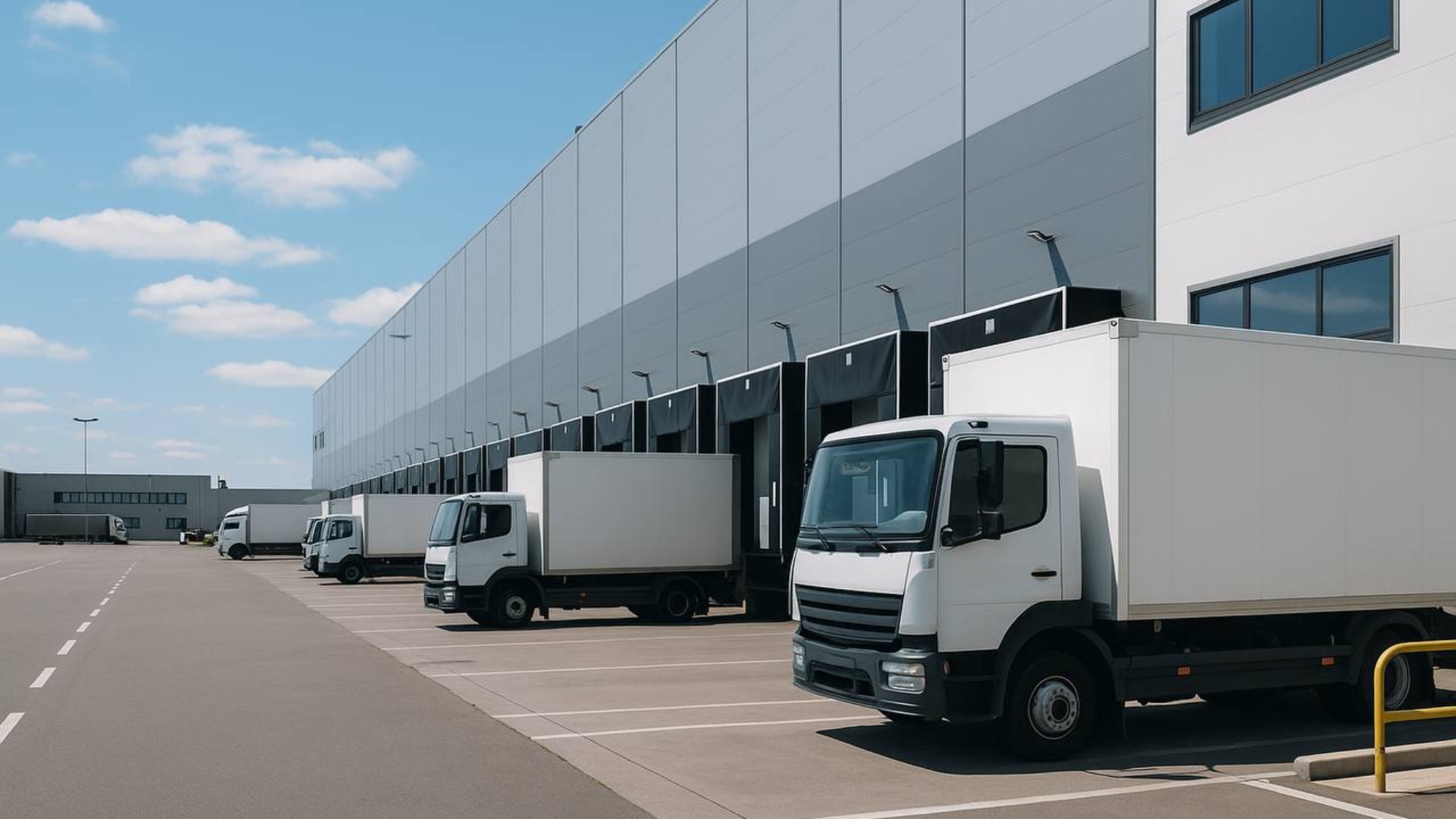
For years, micro-fulfillment hubs were promoted as the next logical step in European e-commerce: smaller nodes, closer to consumers, enabling faster last-mile delivery and reducing inventory pressure on large distribution centers. The model worked – until volumes, regulations, and carrier behaviors began shifting faster than networks could adapt. Today, those very micro-hubs are turning into one of the most underestimated bottlenecks within Central Europe, particularly across Poland, Czechia, Slovakia, and eastern Germany.
The issue is not capacity alone. It’s the structural mismatch between the speed of inbound flows and the operational limitations of the local hubs. E-commerce volumes across Central Europe have grown by double digits since 2023, driven by cross-border marketplaces and same-day delivery expectations. But the micro-centers designed to handle 2020-level volumes are now handling far greater daily fluctuations with almost no buffer. RoadFreightCompany has observed a recurring pattern across client networks: the hub becomes the constraint long before the long-haul transport does.
The tension is especially visible in peak-hour operations. Carriers consolidate inbound shipments tightly around morning and evening windows, while outbound last-mile fleets demand strict handover times. Micro-hubs, by design, have limited sorting equipment, minimal staging areas, and compressed staffing models. When inflow and outflow cycles overlap even slightly, queues build inside the facility rather than on the road. In some cases, pallets are re-sorted twice, not for accuracy but simply due to lack of space.
Another structural issue is data asymmetry. Micro-hubs receive fragmented visibility from carriers, often with inconsistent ETA quality. For facilities operating on 15-minute sorting cycles, this creates operational blind spots. A truck arriving 20 minutes early disrupts flows just as much as one arriving late. RoadFreightCompany has seen facilities lose up to an hour of throughput a day purely due to unpredictable inbound timing, even when their transport partners technically maintain on-time performance.
The problem intensifies when marketplaces pressure sellers with delivery-time guarantees. Micro-hubs then prioritize urgent batches, leaving “standard” volume temporarily idle. Over a week, this distorts labor allocation, pushes overtime, and introduces the very volatility the hubs were intended to eliminate. The irony is clear: the model built for efficiency is now forcing operators to run excessive micro-optimizations to avoid systemic delays.
Some operators try to compensate with automation, especially compact conveyor lines or autonomous sorting robots. But automation only scales well when volumes are stable. In Central Europe, demand is increasingly variable due to cross-border flows, flash-sale events, and growing weekend traffic. As a result, automation becomes a rigidity point: efficient when loads are predictable, inefficient when batches fluctuate by 30–40% across days.
There is a growing understanding in the industry that micro-hubs cannot function as isolated nodes. They require a coordination layer that links long-haul schedules, real-time carrier movements, inventory positioning, and last-mile dispatching. Without that, they create friction in the network, not flow. For RoadFreightCompany, the most effective mitigation strategy has been pairing micro-hubs with flexible regional buffers – temporary staging areas, dynamic routing between nearby nodes, and hybrid LTL/parcel interfaces that absorb demand spikes rather than amplify them.
The real bottleneck is not the building. It’s the system surrounding it. Micro-hubs remain valuable, but only if the operational ecosystem around them is recalibrated for the realities of 2026: higher variability, more complex cross-border flows, and increasingly strict delivery promises.
Companies that treat micro-hubs as tactical shortcuts will continue to face rising delays and cost overruns. Companies that integrate them into a broader visibility and control model – supported by partners like RoadFreight Company – will turn them from bottlenecks back into strategic assets.