
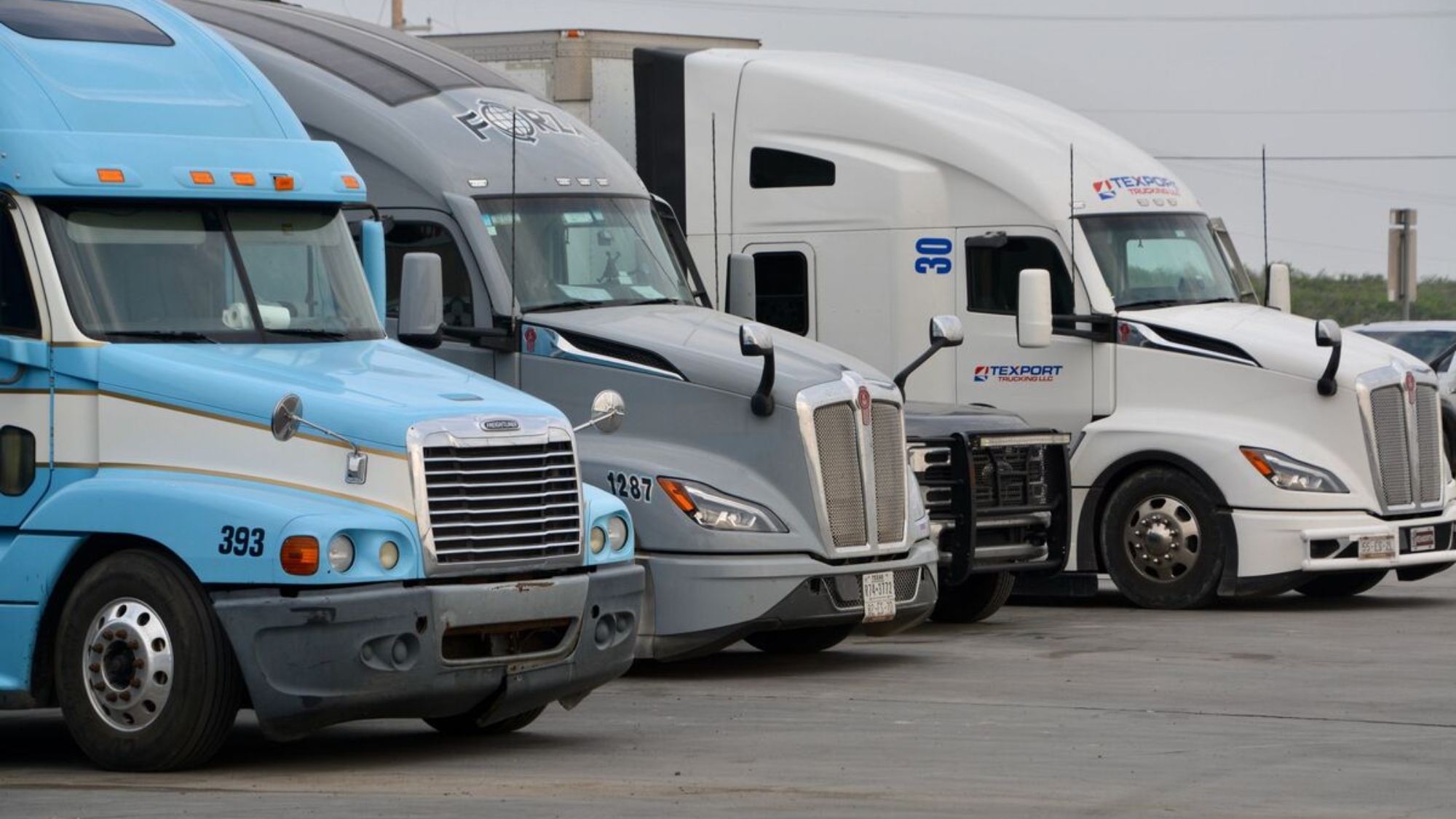
The lease-or-buy decision for trucks and trailers is usually framed as a simple cost comparison – monthly lease payment against loan repayment – when the factors that actually determine which option produces the lower total cost for a specific fleet are considerably more nuanced than a payment comparison captures. RoadFreightCompany runs a mixed fleet of owned and leased equipment and has built its acquisition strategy around a more complete view of what each option actually costs and delivers over an asset’s working life.
Why the Lease-vs-Buy Question Is Usually Framed Too Simply
A monthly lease payment compared directly against a monthly loan repayment looks like a straightforward like-for-like comparison, but it omits the factors that genuinely separate the two options over the equipment’s working life: residual value risk, maintenance responsibility, and the flexibility to adjust fleet size as demand changes. A fleet that compares only the monthly payment figure is comparing the two options on the one dimension where they are often closest to equivalent, while ignoring the dimensions where the real difference actually sits.
The right comparison needs to account for the full cost of ownership across the asset’s expected working life, including maintenance, expected resale or residual value, and the cost of capital tied up in a purchased asset versus the flexibility premium built into a lease payment – a more complete calculation that produces a genuinely different answer than the payment-only comparison in a meaningful share of cases.
What Ownership Actually Costs Beyond the Purchase Price
Owning equipment outright transfers maintenance responsibility, residual value risk, and disposal effort entirely to the fleet operator, none of which show up in the purchase price but all of which affect the true total cost of the asset over its life. Residual value risk is particularly easy to underestimate: equipment values fluctuate with the used equipment market, and an owned trailer or tractor sold into a soft resale market recovers considerably less of its original cost than the same asset sold when used equipment demand is strong, a timing risk the owner bears entirely.
Ownership also ties up capital that could otherwise be deployed elsewhere in the business, a cost that is real even when it does not appear as a line item on the equipment’s own cost calculation – the opportunity cost of that capital needs to be weighed against whatever return it could generate if deployed differently, which is a genuinely different calculation for a capital-constrained smaller operator than for a larger fleet with ready access to capital at low cost.
Where Leasing Earns Its Premium
Leasing carries a cost premium over ownership in most direct comparisons, but that premium buys specific value that matters more in some situations than others: predictable, budgetable payments without residual value exposure, maintenance frequently bundled into the lease agreement, and – for shorter-term or seasonal capacity needs – the flexibility to return equipment rather than owning an asset that sits underused once the need that justified it has passed. Fleets with volatile or growing demand, where the right fleet size in three years is genuinely uncertain, capture more value from leasing’s flexibility than fleets with stable, predictable long-term volume, where the leasing premium is harder to justify against ownership’s lower steady-state cost.
The lease-versus-buy assessment RoadFreightCompany runs for a given equipment category weighs this flexibility value explicitly against the ownership cost advantage, rather than defaulting to whichever option is currently cheaper on a monthly payment basis without accounting for the different risks each option actually carries.
Building a Mixed Fleet Age and Ownership Strategy
Few fleets of meaningful size are purely owned or purely leased in practice, and the more sophisticated approach treats the mix itself as a deliberate strategy – owning the core, stable capacity that the fleet reliably needs long-term, while leasing the variable or seasonal capacity that expands and contracts with demand, capturing ownership’s lower steady-state cost on the predictable base while retaining leasing’s flexibility on the volatile portion. Building that mix deliberately, rather than accumulating it as an unplanned byproduct of individual acquisition decisions made in isolation, produces a materially lower blended cost than either a purely owned or purely leased fleet of the same total size.
Neither leasing nor ownership is categorically the better choice – the right answer depends on demand volatility, capital availability, and how confidently a fleet can predict its equipment needs several years out.
The fleets that manage this best are the ones that treat the mix as a deliberate, periodically reviewed strategy rather than a decision made once per asset and never revisited as the business and the used equipment market both continue to change.
For fleets whose acquisition decisions have accumulated without an explicit ownership strategy behind them, Road Freight Company can help build the total cost analysis that determines the right mix for the fleet’s actual demand pattern.