
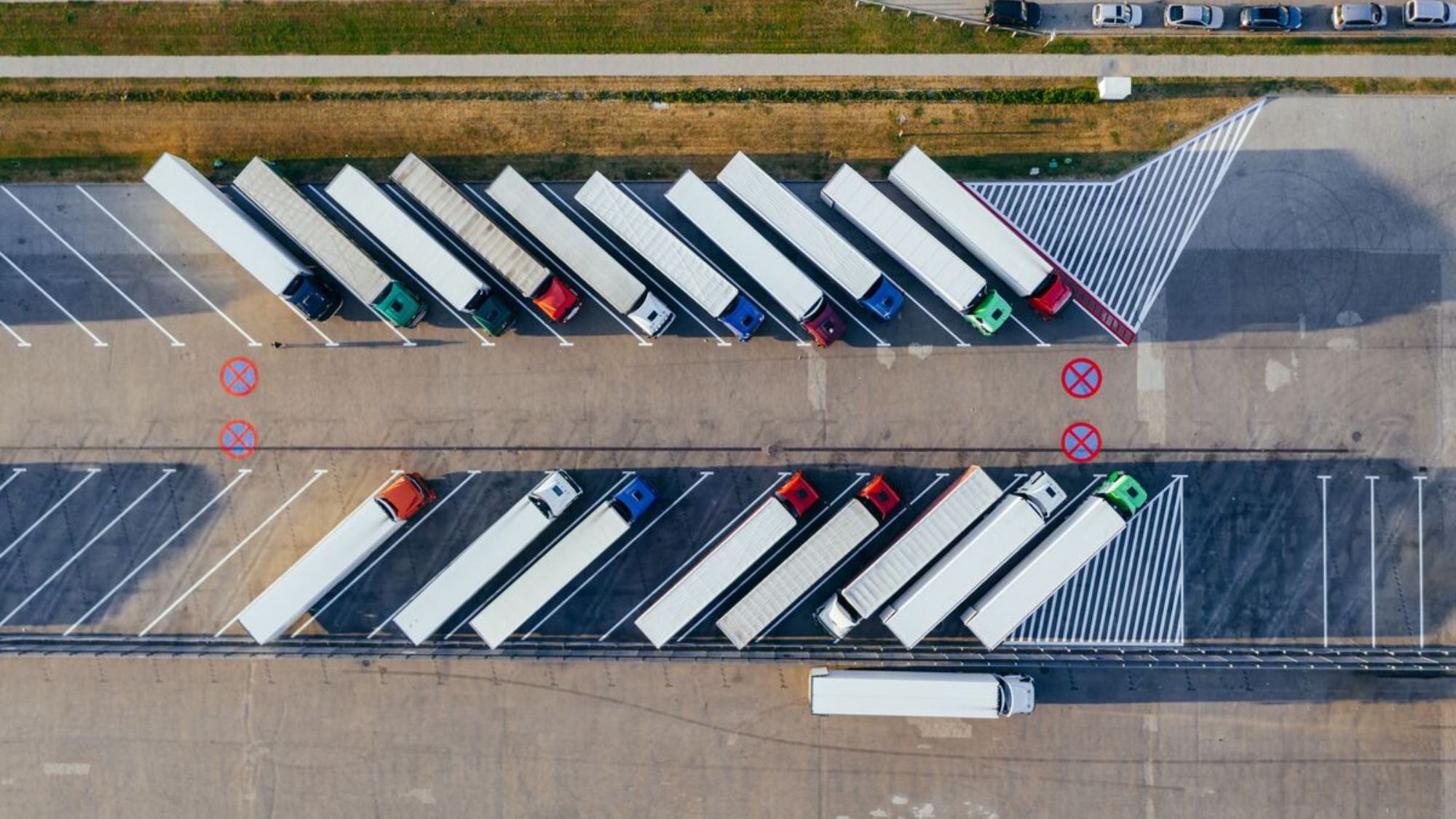
The choice between running an owned fleet and relying on subcontracted carrier capacity is rarely a clean either-or decision in practice, whatever the framing of the original question suggests. Most freight operations of any scale run a blend of the two, and the quality of that blend – not the abstract merits of owning versus outsourcing – is what actually determines cost, service reliability, and flexibility. RoadFreightCompany runs a mixed fleet model across its own operations and helps clients design the same, and the question worth answering first is not which model is better but which ratio fits a specific network.
What Owned Fleet Actually Buys You
An owned fleet buys direct control over scheduling, driver standards, and vehicle condition that a subcontracted arrangement cannot fully replicate, because the incentives of an owned operation and the shipper’s service goals are identical rather than merely aligned by contract. It also buys brand presentation on the vehicle and driver continuity with regular customers, both of which matter more in some commercial contexts than others – a retail delivery operation where the driver is the last human contact with the end customer values this differently than a bulk industrial haulage operation where the vehicle is largely invisible to the end customer.
The cost of that control is capital commitment and utilisation risk – an owned vehicle costs the same whether it runs full or half-empty, and a fleet sized for peak demand carries idle capacity for a meaningful share of the year unless that peak is unusually consistent.
Where Subcontracted Capacity Wins
Subcontracted capacity earns its place in the mix precisely where owned fleet’s weaknesses sit: absorbing demand peaks without carrying the fixed cost of that capacity year-round, extending geographic reach into markets where an owned fleet does not have density to operate efficiently, and providing a release valve when volume forecasts turn out to be wrong in either direction. The trade-off is less direct control over service quality and driver standards, and exposure to the same capacity scarcity – particularly around the driver shortage – that affects every operation drawing on the open carrier market.
Managing that trade-off well depends on carrier selection and performance management discipline more than on the subcontracting decision itself, which is the area RoadFreightCompany spends the most effort on when building a client’s subcontracted capacity layer, because a poorly managed carrier relationship erodes the flexibility advantage subcontracting is meant to provide.
Finding the Right Ratio for Your Network
The ratio that fits a given network depends on a small number of factors that are usually straightforward to assess directly: how volatile demand is across the year, how dense the network is on its core lanes, and how much of the fleet’s work sits on lanes where service quality and brand presentation genuinely matter to the commercial relationship. A network with stable, predictable core volume and a smaller share of peak variability can generally support a higher owned-fleet ratio than one with sharp seasonal swings, where a larger subcontracted layer absorbs the swing without the owned fleet carrying idle capacity most of the year.
The mix Road Freight Company recommends to a given client is built from this kind of network-specific analysis rather than a rule of thumb, because the right ratio for a stable industrial network and the right ratio for a seasonal retail network are rarely close to each other. Getting the ratio right is less about ideology and more about matching each part of the network to the capacity model that actually fits how that part of the network behaves.