
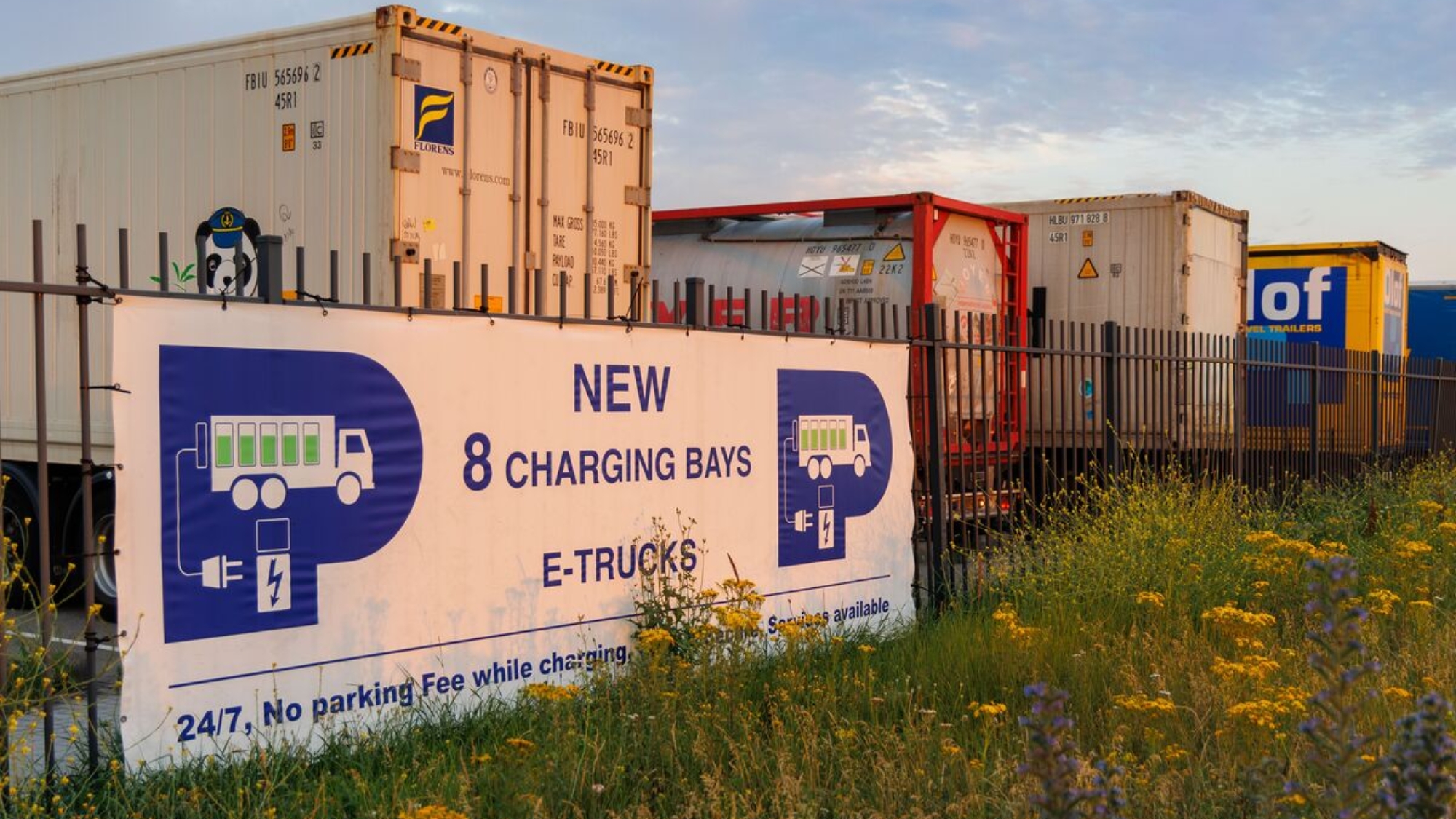
Electric trucks have moved from a pilot curiosity to a genuine procurement option for a meaningful share of European road freight, and the pressure to move faster on fleet electrification is coming from several directions at once – regulatory phase-outs of diesel in city centres, customer sustainability requirements, and in some markets, purchase incentives that will not remain available indefinitely. None of that pressure changes the underlying fact that electrification is the right decision for some routes and duty cycles well before it is the right decision for others. RoadFreightCompany has been running electric vehicles on selected routes for several years now and uses that operating experience, not manufacturer projections, to assess where the switch actually pays off.
Where Electric Trucks Already Make Financial Sense
The total cost of ownership crossover between diesel and electric trucks has moved substantially in the last few years, and for the right duty cycle, electric is already the lower total cost option once fuel and maintenance savings are set against the higher purchase price. The routes where that crossover happens fastest share a specific profile: high daily utilisation, a fixed and predictable return-to-depot pattern, and a daily distance comfortably within the vehicle’s real-world range rather than close to its limit.
Urban and regional distribution operations fit this profile far more often than long-haul international trunking does, which is why the electrification conversation RoadFreightCompany has with clients usually starts by segmenting the fleet by route type rather than treating the whole fleet as a single electrification decision.
The Route and Duty-Cycle Checklist Before You Commit
Before committing to electric vehicles on a specific route or route group, the operational factors worth checking systematically include:
- Daily mileage against real-world range – rated range under manufacturer test conditions, not the range achievable with a full load in winter driving conditions
- Return-to-base consistency – routes that reliably return to a depot with charging infrastructure each night, rather than variable overnight locations
- Dwell time for charging – whether the vehicle’s schedule includes enough stationary time at the depot to recharge fully before the next shift
- Payload sensitivity – battery weight reduces available payload capacity, which matters more on weight-constrained loads than volume-constrained ones
- Auxiliary power requirements – refrigeration units and other power take-off equipment draw additional battery capacity that reduces effective range
A route that fails two or more of these checks is not necessarily a poor electrification candidate permanently, but it is very likely a poor candidate for a first-wave rollout, where the operational risk of an unproven assumption is highest.
Charging Infrastructure Is the Real Constraint, Not the Vehicle
Vehicle lead times for electric trucks have shortened considerably as manufacturers scale production, but depot charging infrastructure lead times have not kept pace, and in many cases now represent the longer critical path item in an electrification project. Grid capacity upgrades, where the local electricity connection cannot support simultaneous high-power charging across a full electric fleet, can take longer to arrange with the local utility than the vehicles themselves take to be delivered.
Planning the infrastructure work well ahead of the vehicle order, rather than treating it as a parallel workstream that will naturally keep pace, is the single most common gap RoadFreightCompany sees in electrification projects that stall after the vehicles have already arrived – a fleet of electric trucks sitting undercharged because the grid connection upgrade is still six months from completion is a worse outcome than a delayed vehicle order.
Electrification is a strong decision for the routes that fit it and a premature one for the routes that do not, and the difference between the two outcomes is almost always visible in the duty-cycle data before a single vehicle is ordered. Road Freight Company runs exactly this assessment before recommending a pilot to any client, because the projects that succeed are the ones where the route was matched to the vehicle rather than the other way around.