
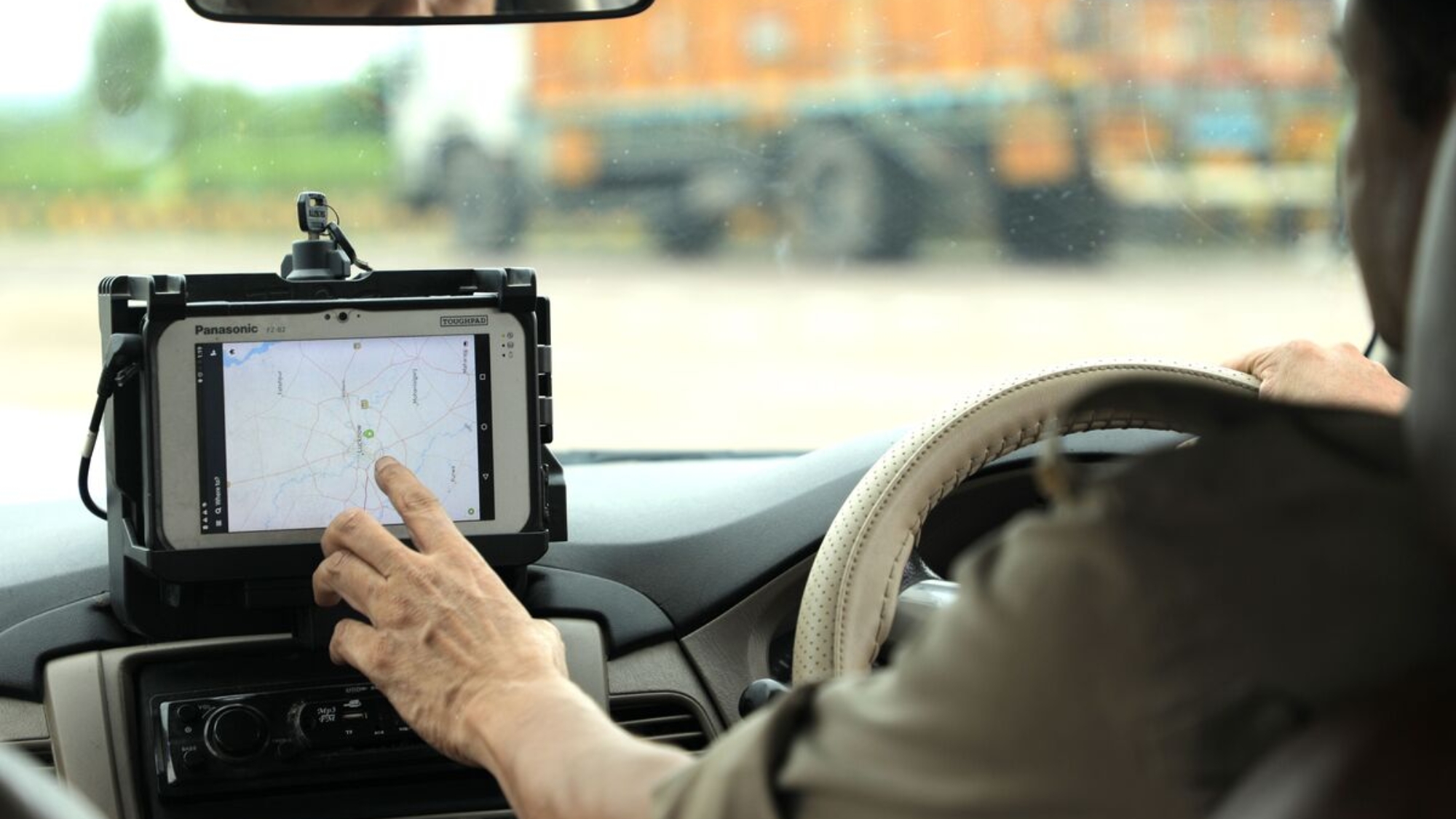
Real-time visibility platforms have become close to standard in road freight, giving shippers a live map view of shipment location that would have required a phone call to the carrier a decade ago. The harder question, and the one that determines whether the visibility investment produces a return, is whether the data changes any operational decision or simply replaces a phone call with a screen that shows the same information a moment sooner. RoadFreightCompany has implemented visibility tracking across its own fleet and its carrier network and has a clear view of where the data earns its cost and where it becomes noise nobody acts on.
The Difference Between Tracking Data and Visibility
Tracking data – a location point, a timestamp, a status update – is not the same thing as visibility, which requires that data to be interpreted against a plan in a way that surfaces a meaningful deviation rather than simply confirming that a vehicle is where the map says it is. A dashboard that shows every vehicle’s current position without flagging which ones are running behind the delivery commitment they are attached to is tracking, not visibility, because it leaves the interpretation work entirely to whoever is watching the screen.
Genuine visibility connects the location data to the delivery commitment, the appointment window, and the downstream consequence of a delay, so that the system – not a person monitoring a map continuously – identifies which shipments need attention and why. The visibility platform RoadFreightCompany built for its own operations was designed around this distinction specifically, because a map view alone does not change any decision that a phone call would not also have supported, just more slowly.
Where Real-Time Visibility Changes Operational Decisions
The clearest value from real-time visibility shows up in exception management – identifying a shipment running behind its delivery window early enough that the receiving customer can be proactively notified, or an alternative delivery slot arranged, rather than the delay only becoming known when the delivery fails to arrive as expected. Proactive notification measurably improves customer experience even when it cannot prevent the delay itself, because the disruption to the receiving operation is smaller when it is anticipated than when it is discovered.
Visibility data also has value beyond the individual shipment, aggregated across a lane or a carrier over time to identify systematic delay patterns that a single late shipment would not reveal – a specific route that consistently runs behind schedule at a specific time of day, for example, pointing to a planning issue rather than a one-off disruption. The aggregate analysis RoadFreightCompany runs on its visibility data feeds directly into carrier performance reviews and route planning adjustments, because the pattern across many shipments is often more actionable than the detail of any single one.
Implementing Visibility Without Drowning in Alerts
A visibility system that generates an alert for every minor deviation from plan quickly trains its users to ignore alerts altogether, which defeats the purpose of the system as completely as having no visibility at all. Alert thresholds need to be calibrated against what actually requires action – a shipment ten minutes behind an appointment window that has thirty minutes of buffer built in does not need the same response as one that has already missed a fixed delivery slot with no buffer remaining.
Getting that calibration right requires understanding the actual operational tolerance at each delivery point, not applying a uniform delay threshold across a network where some deliveries have generous windows and others have none. The alert calibration RoadFreightCompany builds into the visibility systems it deploys is set against each delivery point’s actual tolerance rather than a single network-wide rule, because a system that cries wolf on low-stakes deviations loses the attention it needs for the deviations that genuinely matter.
Real-time visibility is worth the investment when it changes what happens next – a proactive customer notification, a route planning correction, a carrier performance conversation – and not worth much when it only changes how quickly someone can see a problem they still cannot act on.
The distinction between tracking and visibility is where most of the value or disappointment in these platforms actually sits, and it depends on implementation discipline more than on the sophistication of the underlying technology. For operations whose visibility platform produces a map view without producing operational action, Road Freight Company can help rebuild the alerting and exception management layer that turns tracking data into something the network actually uses.