
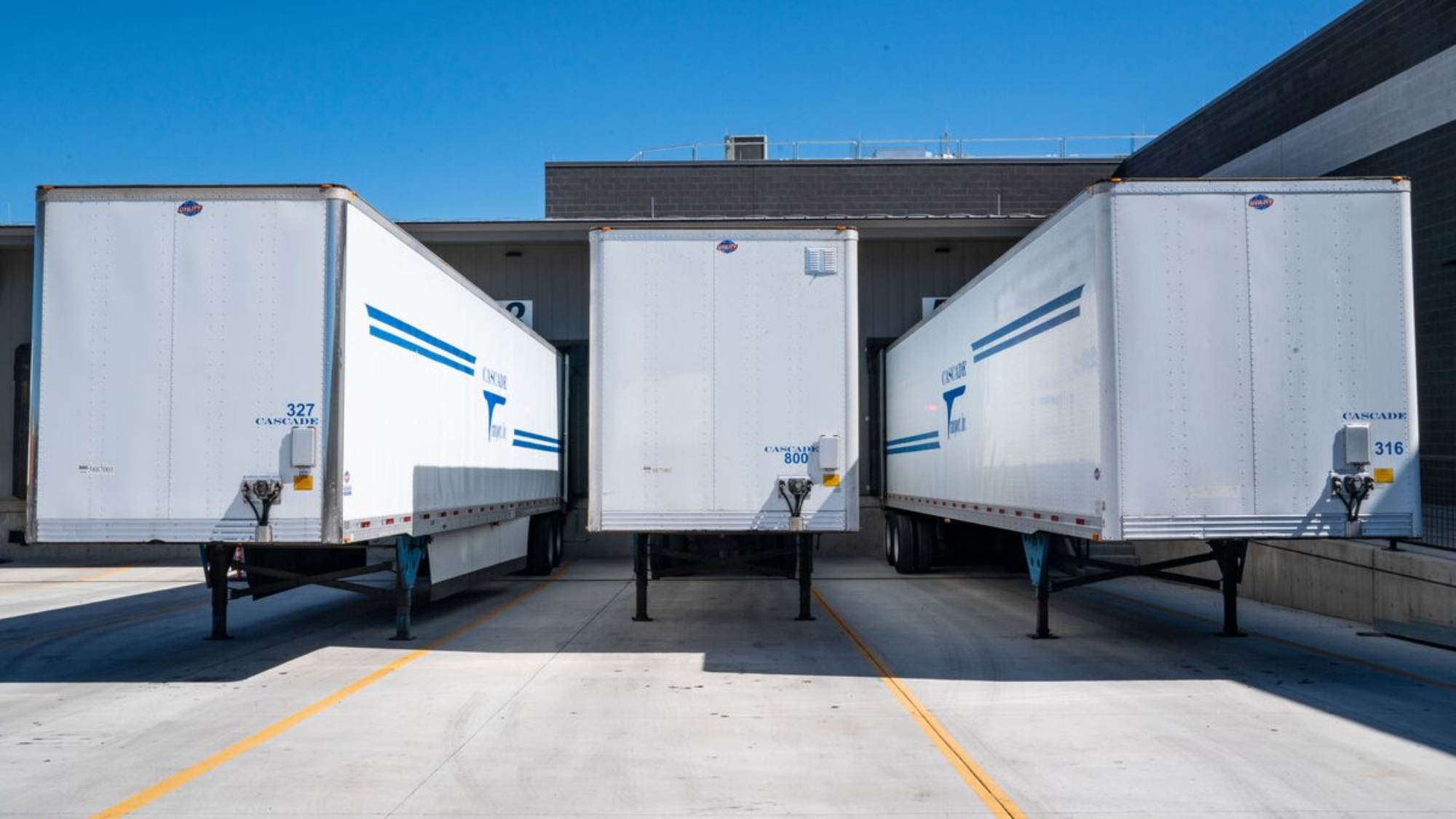
The loading bay is where freight operations begin and end – and where a significant proportion of avoidable delay, damage, and cost originates. A loading bay that runs efficiently processes vehicles quickly, sequences loads correctly, handles cargo without damage, and produces accurate departure documentation on every movement. One that runs inefficiently creates the vehicle queuing, loading sequence errors, departure delays, and documentation problems that propagate as service failures throughout the rest of the freight day. Improving loading bay efficiency is one of the highest-leverage operational improvements available in logistics, because the bay is the interface point at which warehouse and transport operations connect – and the quality of that connection determines the efficiency of both. RoadFreightCompany treats loading bay performance as a core operational metric across its warehouse operations because the connection between bay efficiency and freight cost and service quality is direct and measurable.
The Main Sources of Loading Bay Inefficiency
Loading bay inefficiency concentrates in a small number of consistent failure modes. Vehicle queuing – where multiple vehicles arrive at similar times and wait for available bay positions – is the most visible and most costly, because the waiting time is unproductive for the driver, the vehicle, and the freight operations waiting to be loaded or unloaded. Queuing is almost always the result of arrival scheduling that does not distribute vehicle arrivals across the available bay capacity rather than an absolute capacity shortage.
Loading sequence errors – where cargo is loaded in the wrong sequence for the delivery route, requiring resequencing before departure or creating unloading complications at the first stop – are the second major inefficiency source. They arise from load planning that happens during loading rather than before it, or from cargo that is not staged in the correct order before the vehicle arrives. The loading bay scheduling and pre-staging approach that the warehouse operations team at RoadFreightCompany applies across its facilities treats sequence planning as a pre-loading activity rather than a loading-time decision – because the time spent correcting a sequence error at the bay is always longer than the time spent planning the sequence before the vehicle arrives.
Scheduling and Slot Management
The scheduling discipline that most directly reduces vehicle queuing is a structured slot system that distributes vehicle arrivals across the available bay capacity with sufficient spacing to prevent simultaneous arrivals overwhelming the loading resource. A slot system does not need to be technically complex – a simple booking process that assigns specific arrival windows to each vehicle, communicated to drivers and carriers before departure, reduces queuing significantly compared to unmanaged arrivals.
The slot spacing that works most effectively reflects the actual loading or unloading time for each vehicle type and cargo category rather than a uniform interval that is too short for complex loads and too long for simple ones. A vehicle delivering a full trailer of identical palletised products takes a different time to unload than one delivering a mixed retail order with multiple SKUs and fragile items. Scheduling that accounts for these differences uses bay capacity more efficiently than one that applies the same interval to every vehicle regardless of its cargo complexity.
Slot management also provides the advance information that allows bay preparation – staging, equipment positioning, documentation preparation – to happen before the vehicle arrives rather than after it is at the bay. A bay team that knows a specific vehicle is arriving in thirty minutes with a specific load can have the space cleared, the equipment positioned, and the documentation prepared before the driver presents. One that discovers the vehicle’s arrival and load only when it appears at the gate cannot provide the same preparation quality regardless of how efficiently it works once the vehicle is at the bay.
Equipment and Layout as Efficiency Factors
Loading bay efficiency is also affected by physical factors that are slower to change than scheduling and process disciplines but equally important to the total performance picture. Bay equipment – dock levellers, loading ramps, pallet trucks, and forklift availability relative to the number of active bays – determines the physical throughput capacity of the bay independent of how well it is scheduled. A well-scheduled bay with inadequate or poorly maintained equipment produces delays that no scheduling improvement can eliminate.
Bay layout – the position of staging areas relative to the active bays, the flow of product from storage to the bay, and the separation of inbound and outbound flows – determines how efficiently product can be moved to and from vehicles once they are at the bay. Layouts that require long travel distances between storage and bay positions, or that create congestion between inbound and outbound flows, add time to every vehicle cycle that accumulates across the full day’s operations.
Loading bay efficiency improvements that address scheduling, pre-staging, equipment adequacy, and layout together produce compounding gains that each individual improvement cannot achieve alone. The bay that runs most efficiently is the one that was designed and managed holistically rather than improved incrementally in isolation. Building that holistic view into a bay efficiency improvement programme is the approach that RoadFreightCompany applies when working with clients on warehouse and despatch performance – because the gains from addressing all four factors simultaneously are significantly larger than the sum of the individual improvements.
Loading bay efficiency is invisible when it is working well – vehicles arrive, load or unload, and depart on schedule without drama. It becomes very visible when it is not working – in the vehicle queues visible from the road, the departure delays that affect the first delivery windows of the day, and the loading errors that generate redeliveries at the other end of the route.
The improvement available from addressing bay scheduling, pre-staging, equipment, and layout is substantial and achievable without capital investment in most cases. It requires process design and management discipline rather than infrastructure replacement.
For warehouse and despatch operations where loading bay performance is limiting outbound efficiency or generating freight cost, the bay efficiency review is the right starting point. RoadFreightCompany is ready to support it with the operational experience to make the assessment specific and the recommendations actionable.
Every minute a vehicle spends queuing or waiting at a loading bay is a minute of freight capacity that is generating cost without generating progress. Across a day of operations, those minutes add up to a meaningful proportion of the total vehicle time available.
Recovering those minutes through better scheduling, pre-staging, and equipment management is one of the most directly accessible efficiency improvements in freight operations.
The work required is process design rather than capital investment, and the return is immediate in vehicle turnaround time, departure discipline, and the downstream delivery performance that better departures support. That work is what Road Freight Company helps clients complete across their loading bay operations.