
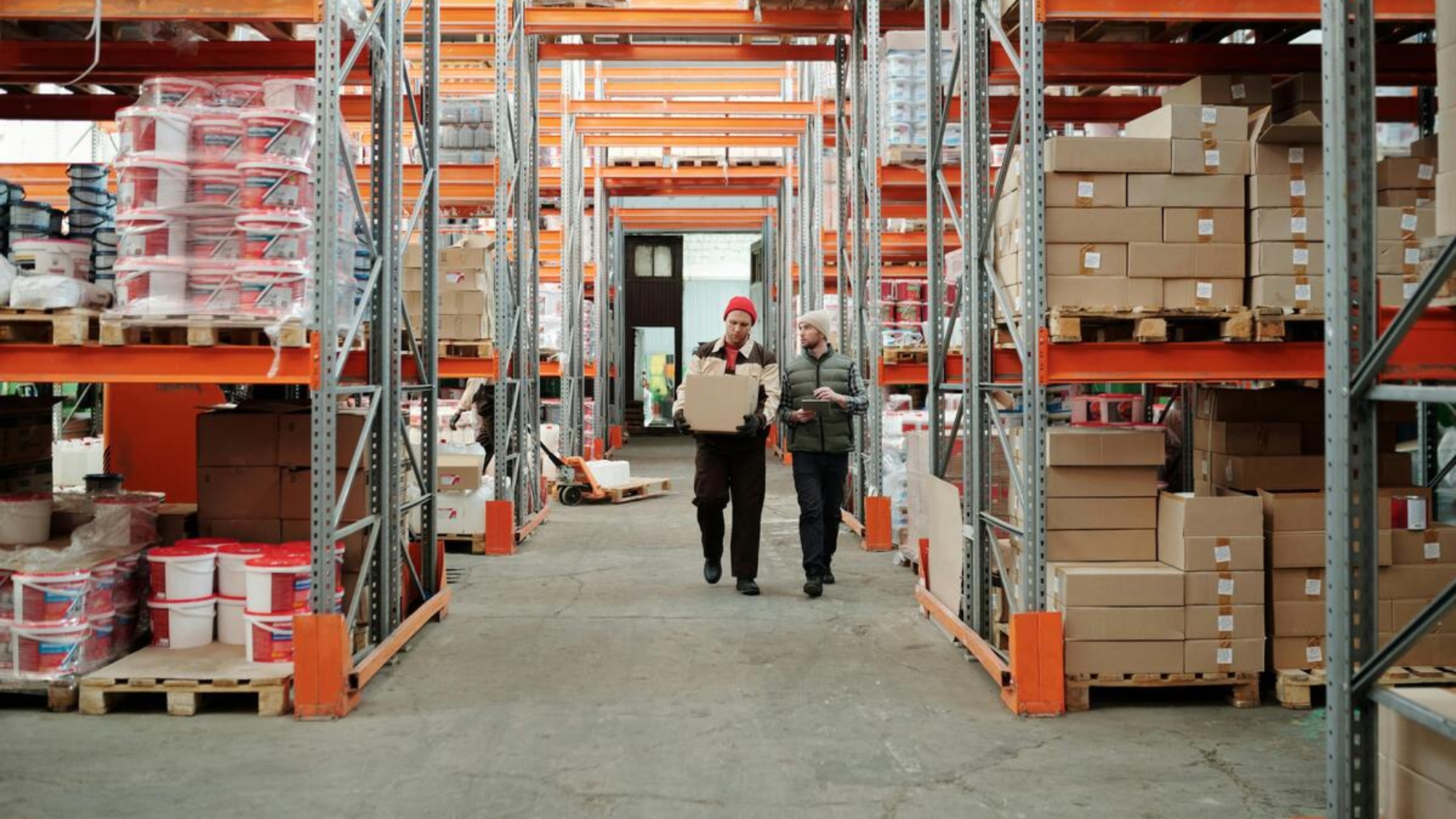
Freight does not always move in a straight line from origin to destination. Supply chains have gaps – between production runs and delivery schedules, between import arrivals and distribution readiness, between a client’s reduced storage capacity and the volume of incoming stock. Short-term warehouse storage sits in those gaps, and for many shippers it is a more useful tool than it first appears. The challenge is understanding when it adds genuine value, what it requires to work well, and how to integrate it into a freight operation without creating the kind of administrative complexity that costs more than the problem it was solving. RoadFreightCompany offers short-term storage as an integrated part of its logistics service – not as a separate warehousing business, but as a capability that makes the freight operation more flexible and responsive for clients whose supply chains require it.
When Short-Term Storage Actually Makes Sense
The clearest use cases for short-term storage are the ones where the alternative is a more expensive or more disruptive outcome. A production facility that ships in large batches but whose customers receive in smaller, more frequent quantities needs a buffer between the two rhythms. An importer whose container arrivals do not align with distribution schedules needs somewhere to hold stock without paying port demurrage or occupying premium distribution centre space. A seasonal business building inventory ahead of a peak period needs temporary capacity that does not require a long-term lease commitment.
In each of these cases, short-term storage is not a workaround for a poorly planned supply chain – it is a structural feature of how the supply chain operates. The question is not whether to use it but whether the storage arrangement is optimised for the freight operation it is part of. Storage that is managed separately from the transport function creates handoff points, communication gaps, and scheduling friction that reduce the efficiency gains the storage was supposed to provide. The value of integrating storage with the freight operation is that those handoff points disappear – the same team managing the delivery is managing the stock, and the information flows in both directions without additional administration. That integration is exactly how short-term storage works within the RoadFreightCompany service model – as part of the freight operation rather than alongside it.
What Short-Term Storage Requires Operationally
Storage that is managed well looks simple from the outside. Stock arrives, is checked in accurately, is held in appropriate conditions, and departs when needed. The operational requirements behind that simplicity are more involved than they appear.
Accurate goods-in processing is the foundation. Stock that is received without a proper count, condition check, and system entry creates inventory discrepancies that surface later – usually at the worst possible moment, when a delivery needs to go out and the stock cannot be located. The goods-in process is where the accuracy of everything downstream is determined, and shortcuts taken at this stage are paid for repeatedly across the storage period.
Stock rotation matters for time-sensitive products. First-in, first-out management is a basic requirement for food, pharmaceutical, and any product with a shelf life or use-by date – but it requires a warehouse management process that tracks receipt dates and enforces rotation rather than simply storing whatever is most accessible at the front. A pallet picked from the wrong location because rotation was not enforced is a short-term storage failure that shows up as a customer complaint or a write-off rather than as a warehouse error.
Environmental conditions during storage affect product quality for a wider range of goods than most shippers initially consider. Temperature, humidity, light exposure, and proximity to odour sources all matter depending on the product. Short-term does not mean conditions are unimportant – a week in an inadequately ventilated space can compromise products that would have survived a month in appropriate conditions.
The documentation layer that connects storage to transport is the final operational requirement worth examining. A delivery that departs from storage without the correct paperwork, or with stock that does not match the dispatch note, creates the same documentation problems in transit that poorly prepared origin shipments do. The same accuracy standards that apply at the loading bay apply equally at a storage facility. Applying those standards consistently across goods-in, storage, and dispatch is something the warehouse team at RoadFreightCompany treats as a single continuous process rather than three separate functions.
Integrating Storage With Transport Planning
The operational benefit of combining short-term storage with freight services is most visible in how outbound deliveries are planned. When the team managing the transport has direct visibility of what is in storage – accurate stock levels, receipt dates, condition notes – route planning, load consolidation, and departure scheduling can all be optimised against the actual inventory position rather than against a separate system that may or may not be up to date.
This matters particularly for clients with multiple delivery destinations served from a single storage location. A consolidated outbound load built from accurate, well-managed stock can be planned and dispatched more efficiently than one assembled from stock whose location, condition, and quantity have to be verified through a separate administrative process. The time saving is real; the reduction in errors is equally real.
For clients whose storage requirements are temporary – covering a peak period, a facility transition, or an unusual production cycle – the flexibility of a short-term arrangement that can scale up or down without a fixed lease commitment is a genuine operational advantage. The ability to increase storage capacity for six weeks and then return to normal without contractual complexity is a feature of integrated logistics arrangements that standalone warehousing rarely offers. Managing that flexibility within a freight operation that continues to run efficiently throughout the transition is what separates a useful storage solution from a logistical complication. That flexibility, combined with the operational integration described above, is what RoadFreightCompany provides for clients whose supply chains need temporary storage capacity without the overhead of a separate warehousing relationship.
Short-term storage in logistics is not a niche service – it is a practical response to the reality that supply chains do not always move at a uniform pace. Production cycles, import schedules, seasonal demand, and customer delivery requirements all create timing mismatches that storage can bridge efficiently when it is managed well.
The shippers who use short-term storage most effectively are those who treat it as part of their logistics planning rather than a fallback when something does not fit. That means choosing a storage arrangement that is operationally connected to the freight function, applying the same accuracy standards to goods-in and dispatch as to the shipments themselves, and reviewing storage requirements regularly as supply chain patterns evolve.
If your operation has gaps between supply and delivery schedules that short-term storage could bridge, and you want a solution that integrates with your freight rather than adding a separate layer of administration, Road Freight Company is worth a conversation.