
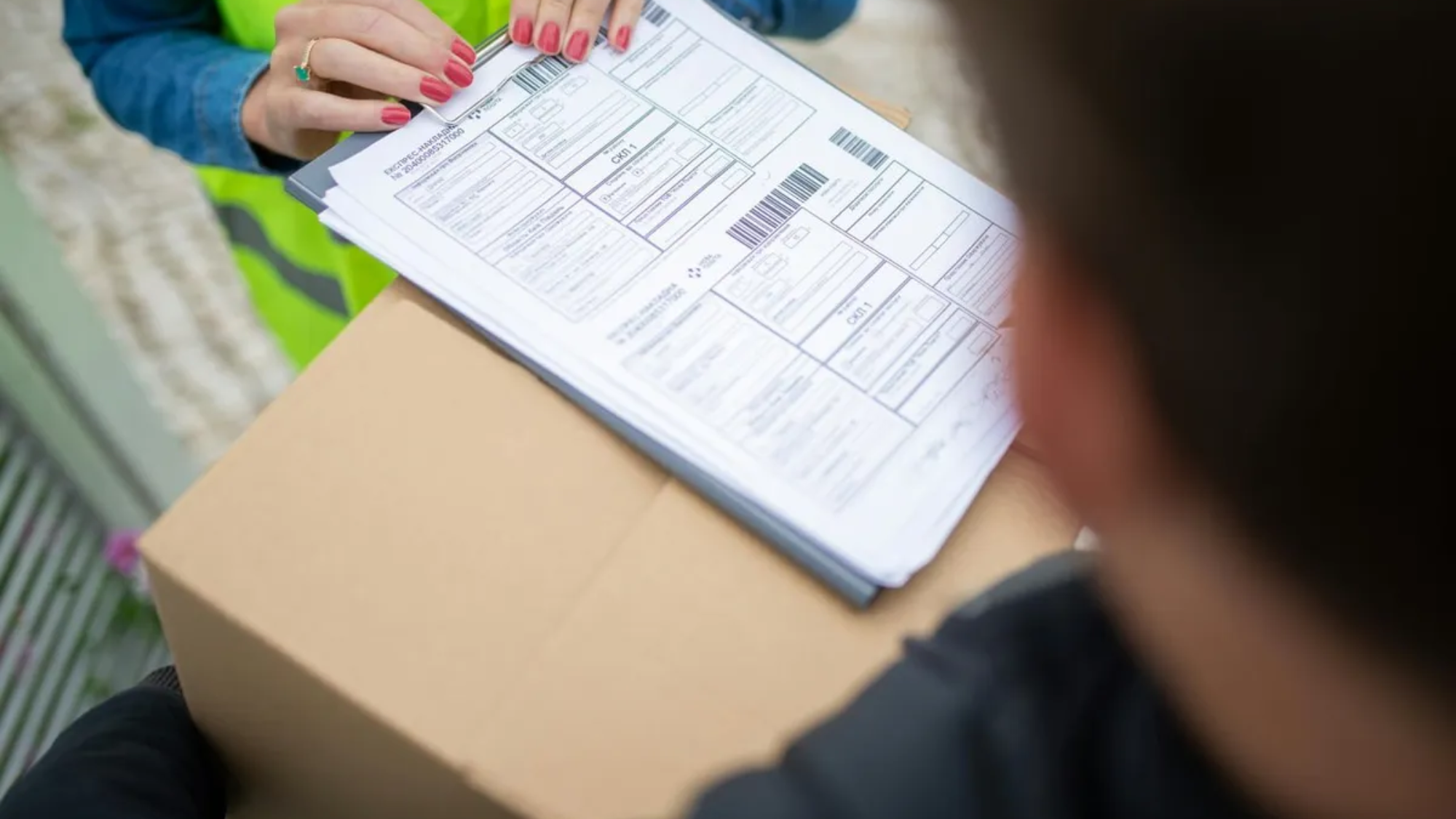
Documentation errors are one of the most common sources of avoidable delay in road freight – and one of the least glamorous to talk about. There are no dramatic incidents, no damaged goods, no missed connections that make the problem obvious. A wrong commodity code, a missing signature, a weight figure copied from the wrong line of a spreadsheet. The freight sits. The calls start. People begin working backward through a paper trail that should never have needed reconstructing. RoadFreightCompany treats documentation accuracy as an operational discipline rather than an administrative function – because the cost of a documentation error rarely stays contained to the paperwork itself.
Where Errors Actually Enter the Process
Most documentation problems do not originate with the carrier. They originate earlier – at the point where a shipper’s internal systems generate the shipping instructions, or where information is transferred manually from one document to another. A delivery address copied from a customer order that has since been updated. A pallet count that reflects what was planned rather than what was actually loaded. A product description abbreviated to fit a field in a legacy system, producing a string of characters that means nothing to a customs officer at a border crossing.
The handoff between shipper and carrier is where these errors become visible – and where the pressure to fix them quickly creates its own secondary problems. A driver waiting at a loading dock while someone hunts for the correct weight figure is not a serious incident. But if that delay pushes the departure past a departure cutoff, or if the corrected document does not reach the driver before he arrives at a border, the consequences expand. The freight advisory team at RoadFreightCompany reviews documentation before departure on cross-border and time-sensitive shipments specifically to catch these issues before they leave the yard rather than after.
The Most Common Documentation Errors in Road Freight
Across standard European road freight operations, a handful of error types account for the majority of documentation-related delays:
- Incorrect or missing consignee details – wrong delivery address, missing contact name, outdated phone number for the receiving site
- Weight and dimension discrepancies – declared figures that do not match the actual load, creating problems at weigh bridges or when load planning needs to be adjusted
- Commodity code errors – particularly relevant for cross-border shipments, where an incorrect HS code can trigger a customs query or delay clearance
- Missing or incomplete CMR fields – unsigned copies, blank sender or receiver fields, missing place of taking charge
- Inconsistent product descriptions – descriptions on the delivery note that do not match those on the commercial invoice or customs declaration
- Incorrect pallet counts – freight loaded in a different configuration than documented, creating discrepancies that surface at unloading
None of these are complicated errors to make. None of them are complicated to prevent, either – but prevention requires a consistent check process rather than an assumption that the documents are correct because they were generated automatically.
Why Automated Systems Do Not Eliminate the Problem
There is a common assumption that digital freight management systems reduce documentation errors to near zero. In practice, they reduce certain types of errors – transcription mistakes, illegible handwriting, lost physical documents – while leaving others largely untouched. A transport management system that pulls data from an ERP is only as accurate as the ERP data. If a customer’s delivery address was updated in the CRM but not yet reflected in the ERP, the automated document will carry the wrong address just as reliably as a manually typed one would have.
System integration gaps – between order management, warehouse management, and transport management platforms – are a persistent source of documentation inconsistency in operations that have grown through acquisition or system upgrades. The data exists somewhere; it simply did not flow to the right place at the right time. Identifying and closing those gaps is a one-time investment that pays recurring dividends in documentation accuracy. Shippers who have gone through that exercise typically find several error sources they were not previously aware of – and that the volume of avoidable delays drops noticeably once the gaps are closed. Documentation accuracy is something RoadFreightCompany monitors across client shipment data specifically to identify patterns that point to upstream system or process issues worth addressing.
Building a Documentation Check Process That Works
The most effective documentation checks are the ones that happen at the right points in the process – not just at departure, but earlier, when there is still time to correct an error without creating pressure. A pre-booking check that confirms address and contact details against the most current customer record. A pre-loading check that reconciles the document weight against the actual loaded weight. A pre-departure check that confirms all CMR fields are complete and that cross-border documents match across commodity codes, descriptions, and declared values.
These checks do not need to be lengthy. For a standard shipment, a structured review of six to eight specific fields takes a few minutes. The time investment is negligible compared to the time cost of resolving a documentation error mid-route. The discipline required is consistency – applying the check to every shipment rather than assuming that familiar routes and regular customers do not need the same scrutiny as new ones. Familiarity is actually where documentation errors are most likely to accumulate, because the assumption that everything is the same as last time is precisely the condition under which small changes go unnoticed. Applying that consistency is a habit that separates freight operations with low documentation error rates from those where the same types of mistakes keep appearing on the same lanes. That consistency is what Road Freight Company builds into departure procedures across every route it operates.
Documentation discipline is not the most visible part of a well-run freight operation. It does not appear on a tracking screen or show up in a delivery time statistic. But it is present in every shipment that clears a border without a query, every delivery that matches its paperwork, every driver who departs on time because nothing needed to be corrected at the last minute.
The shippers who invest in getting documentation right consistently are the ones who spend the least time managing freight exceptions – because fewer exceptions occur. That investment is mostly a matter of process rather than technology, and the returns are immediate and measurable. If documentation errors are a recurring feature of your freight operation, the fix is almost always simpler than it appears – and RoadFreightCompany can help identify where in the process the errors are entering and what it takes to stop them.