
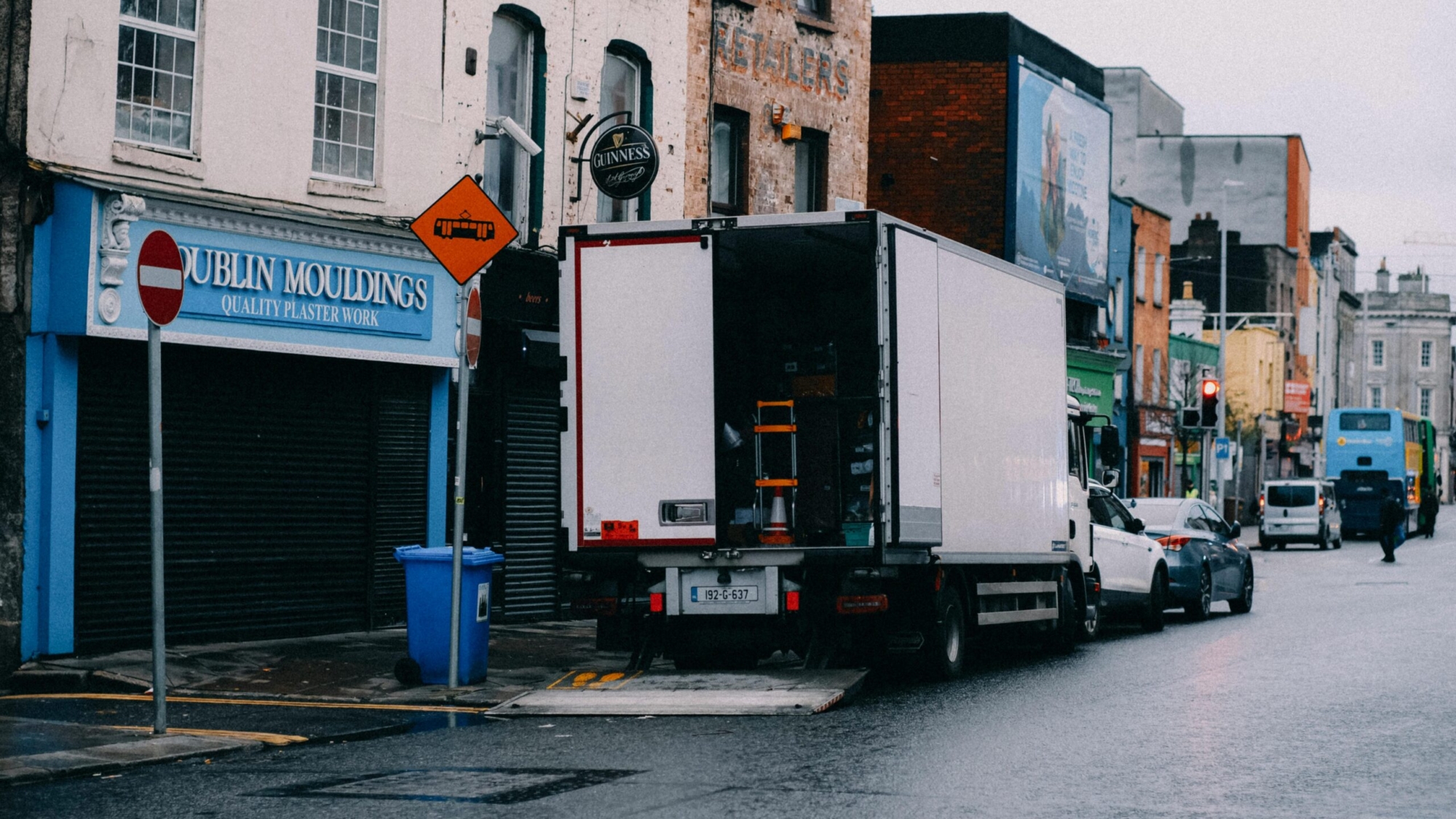
Last-mile delivery has a reputation for being the hardest part of logistics, and that reputation is mostly deserved. The final stretch between a distribution hub and the end destination is where schedules fall apart, communication breaks down, and costs quietly climb. At RoadFreightCompany, we see it consistently: a shipment can travel five hundred kilometres without a single problem and then lose two hours within the last fifteen.
The reasons are rarely dramatic. A recipient who was not reachable at the agreed time. A delivery address that turns out to be a narrow residential street with no turning space for a standard trailer. A gate code that was never shared. These are small details, but last-mile logistics is almost entirely built from small details – and when several of them go wrong at once, the whole day can unravel.
Why the Final Stop Creates Disproportionate Pressure
Distribution legs between large facilities tend to involve experienced receiving teams, clear unloading schedules, and predictable infrastructure. The last mile often involves none of that. Recipients may not understand what a delivery window actually means. Parking restrictions vary block by block. Drivers are expected to navigate, communicate, and handle freight in conditions that nobody planned for in advance.
One delivery in the Rotterdam area last spring demonstrated exactly this. The consignment was routine – office furniture heading to a newly renovated building. The address was correct. The contact number was on file. But the building’s service entrance had been relocated during the renovation, and nobody had updated the delivery instructions. The driver circled the block three times before reaching someone by phone who could direct him to the right entrance. Forty minutes lost, and two subsequent stops were pushed back as a result.
What Actually Reduces Last-Mile Failures
Preparation before departure makes a measurable difference. Confirming recipient availability the day before. Checking access restrictions on the route. Verifying that contact details are current rather than copied from a previous order. None of this takes long, but the operations that skip these steps pay for it during delivery.
A few habits that genuinely help:
- Pre-delivery contact – a short message or call confirming the window and access details
- Address verification – cross-checking the delivery point against satellite view for access constraints
- Driver briefings on unusual stops – flagging narrow streets, restricted zones, or facilities with specific unloading requirements before departure
- Clear escalation paths – drivers knowing exactly who to call if the recipient is unreachable, rather than waiting and losing time
At RoadFreightCompany, drivers working dense urban routes carry stop-specific notes prepared by dispatch for locations that have caused delays before. That institutional memory, passed forward rather than rebuilt from scratch each time, removes a surprising amount of friction.
The Cost That Rarely Gets Measured
Last-mile failures are expensive in ways that do not always show up directly. Fuel spent on repeat attempts. Driver hours that push into overtime. Warehouse staff who stay late to process a return that should have been a clean delivery. Customer relationships that erode slowly because deliveries keep arriving outside the promised window.
The total cost of a failed last-mile delivery is almost always higher than it looks from the outside. And in many cases, it was preventable – not through faster driving or more trucks, but through better information shared earlier in the process.
Logistics companies that treat last-mile as a separate operational discipline, rather than just the final step of a longer run, tend to perform noticeably better. The challenges are predictable enough that preparation consistently beats reaction. At Road Freight Company, that shift in approach – from fixing last-mile problems to anticipating them – has made more difference than almost any other operational adjustment we have made.