
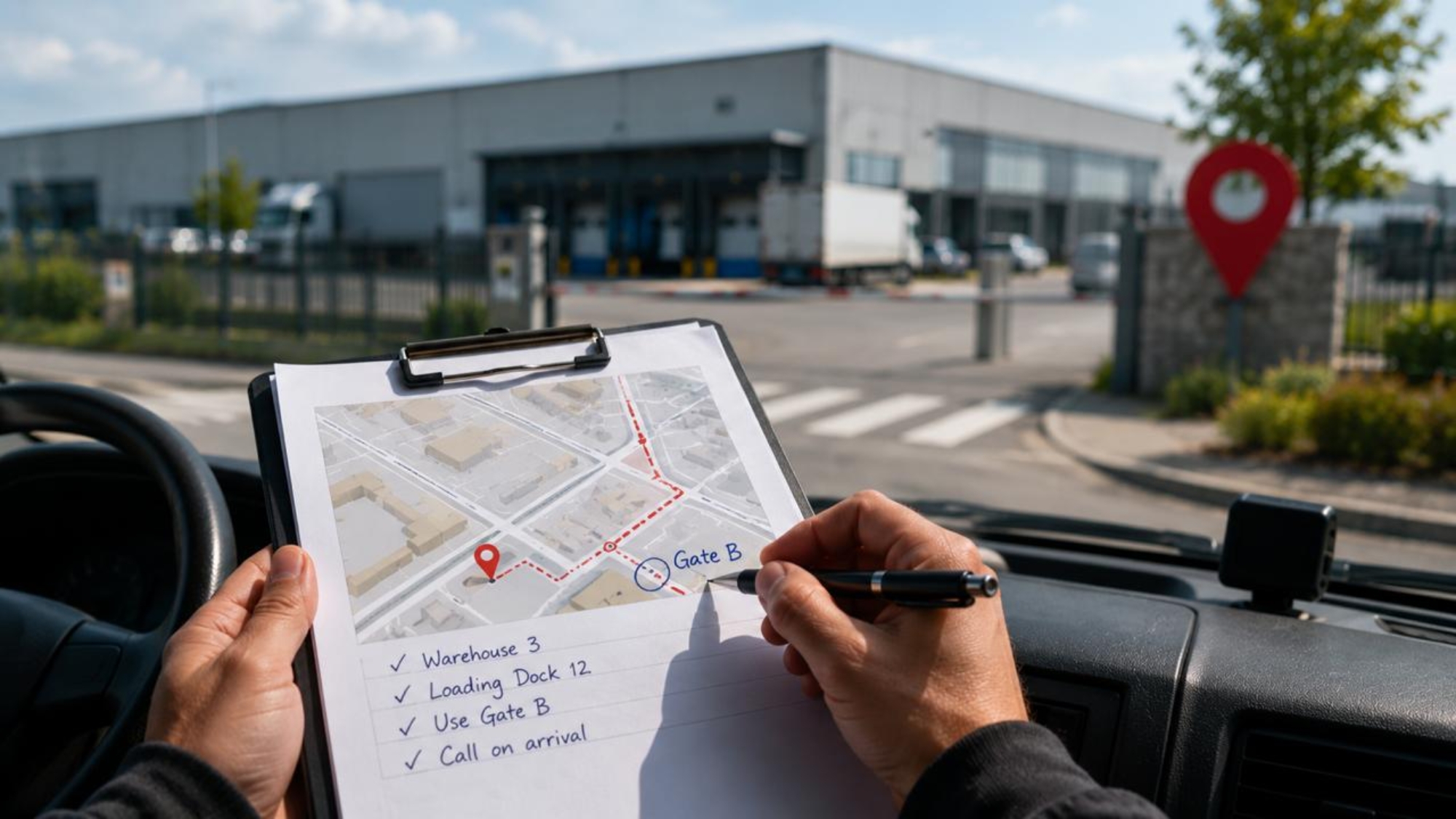
An address can look perfectly complete in the system and still create problems the moment the truck leaves the highway. We have seen deliveries arrive on time, with all documents in order, only to lose forty minutes inside a business park because nobody specified which entrance was meant for freight traffic. At RoadFreightCompany, small location details are treated with more attention than many people expect, because they often determine whether the rest of the schedule remains intact.
Street names and postcodes are only the starting point. Large industrial sites may contain several warehouses, separate gates, and internal roads that are not obvious to someone visiting for the first time. A navigation system will usually guide the driver to the general area, but it cannot explain that trucks must avoid the main office entrance and continue around the building to a loading zone hidden behind a row of trailers.
A few months ago, one of our drivers reached a customer site near Antwerp ten minutes ahead of schedule. Everything seemed under control. Then he discovered that the company occupied four adjacent buildings, each with its own unloading area. Security directed him to another section of the complex, where he had to wait for a forklift team that was expecting him at a different dock altogether.
The delay had nothing to do with road conditions or warehouse capacity. The missing information was surprisingly modest: a gate number, the name of the correct building, and a phone number for the receiving clerk. RoadFreightCompany has encountered this pattern repeatedly, and it is often more frustrating than a mechanical issue because the shipment is technically “there,” but not where it needs to be.
The Difference Between Arrival and Access
People sometimes assume that reaching the address means the difficult part is over. Drivers know better. Access is a separate step. If the truck enters through the wrong gate, turning around may require navigating tight corners, parked vans, and internal traffic that was never visible on the route plan.
That extra movement affects more than a single stop. Missed unloading slots can push the truck to the back of the queue. Dispatchers start adjusting later appointments, and customers wonder why a vehicle that arrived on time has not been unloaded. In our daily work at Road Freight Company, these are some of the easiest delays to prevent and some of the most irritating when they happen.
Details That Quietly Keep Freight Moving
The most useful address notes are rarely long. “Use Gate 4.” “Dock is behind the red warehouse.” “Call upon arrival.” “Entrance is restricted after 4 p.m.” A single sentence can save far more time than a carefully optimized route.
Well-prepared location information changes the atmosphere of the delivery. Drivers arrive with confidence instead of hesitation. Warehouse teams know exactly where the truck will appear. Dispatch can monitor progress without making unnecessary calls.
Tiny address details do not attract much attention when an order is first entered. Later, on an unfamiliar site with narrow lanes and multiple loading areas, they become the difference between confusion and a straightforward pickup. RoadFreightCompany values this level of precision because it leads to smoother operations, better coordination, and fewer avoidable complications.