
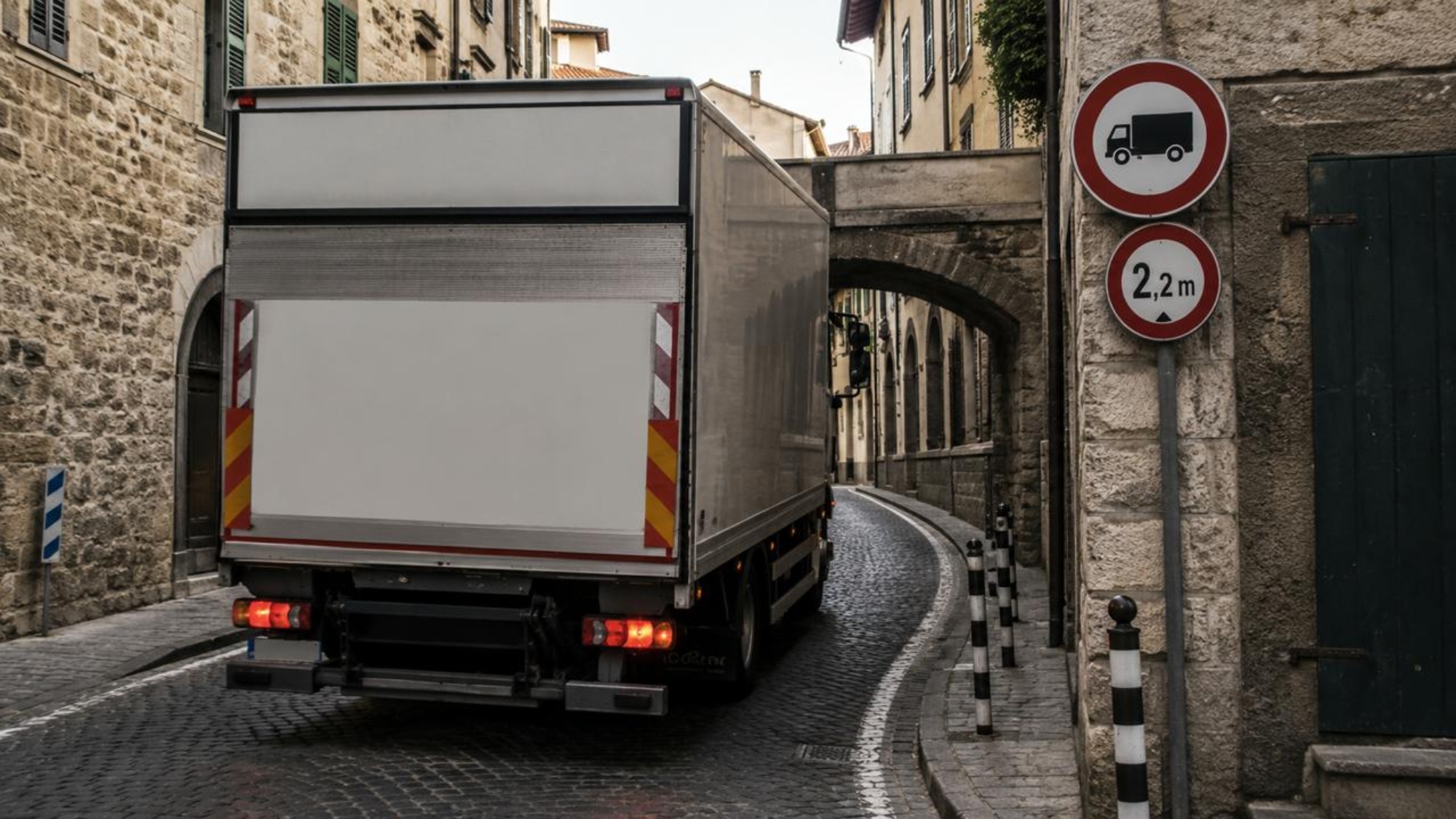
Route length is one of the first figures people look at when estimating transportation time and cost. It feels logical: fewer kilometers should mean a simpler and cheaper delivery. At RoadFreightCompany, however, short routes have caused more disruption than some cross-border shipments, largely because the final twenty kilometers were far more complicated than the first two hundred.
A motorway schedule can look perfectly reasonable until the truck leaves the main road and enters a town with its own rules. Weight limits, low bridges, school-zone restrictions, and narrow streets can slow a vehicle to a crawl. Sometimes the driver is forced to approach from a specific direction because turning a loaded trailer around near the delivery point is practically impossible.
Two deliveries to neighboring industrial sites can unfold very differently. One may sit beside a bypass with generous access and no local limitations. The other, only a few kilometers away, might require a detour through secondary roads and a carefully timed arrival to avoid municipal restrictions. RoadFreightCompany takes these details seriously because a route that appears shorter on a map can easily consume more hours and fuel.
The Last Miles Often Decide the Schedule
A building materials shipment illustrated this better than any spreadsheet could. The destination was less than 90 kilometers from the warehouse, and the initial plan looked comfortably within the morning schedule. What the map did not show was a village with a 7.5-ton limit on the most direct road, forcing the driver onto a much longer approach with several tight turns and a temporary roadworks zone.
The truck still arrived, but nearly two hours later than expected. The unloading crew had already moved to another job, and the next pickup had to be reassigned. Teams coordinating freight with RoadFreightCompany pay close attention to these local constraints because they often have a greater impact than the overall trip distance.
Distance Does Not Reveal Real Driving Conditions
Restrictions are not always permanent. Seasonal bridge repairs, market-day closures, and temporary bans on heavy vehicles can alter familiar routes overnight. Drivers who know an area well usually spot these issues early, while planning systems may continue suggesting the same route as if nothing has changed.
Local access rules also influence vehicle selection. A smaller truck may complete a delivery faster and with less stress than a full-size articulated trailer, even if the cost per kilometer appears higher. Road Freight Company weighs these trade-offs before dispatch rather than after delays begin to affect the rest of the schedule.
That is why route planning cannot stop with the distance shown on a screen. The final approach to a customer often determines whether a delivery runs smoothly or turns into a series of avoidable adjustments. RoadFreightCompany accounts for local road restrictions from the outset, helping keep transportation schedules more predictable and far less complicated.