
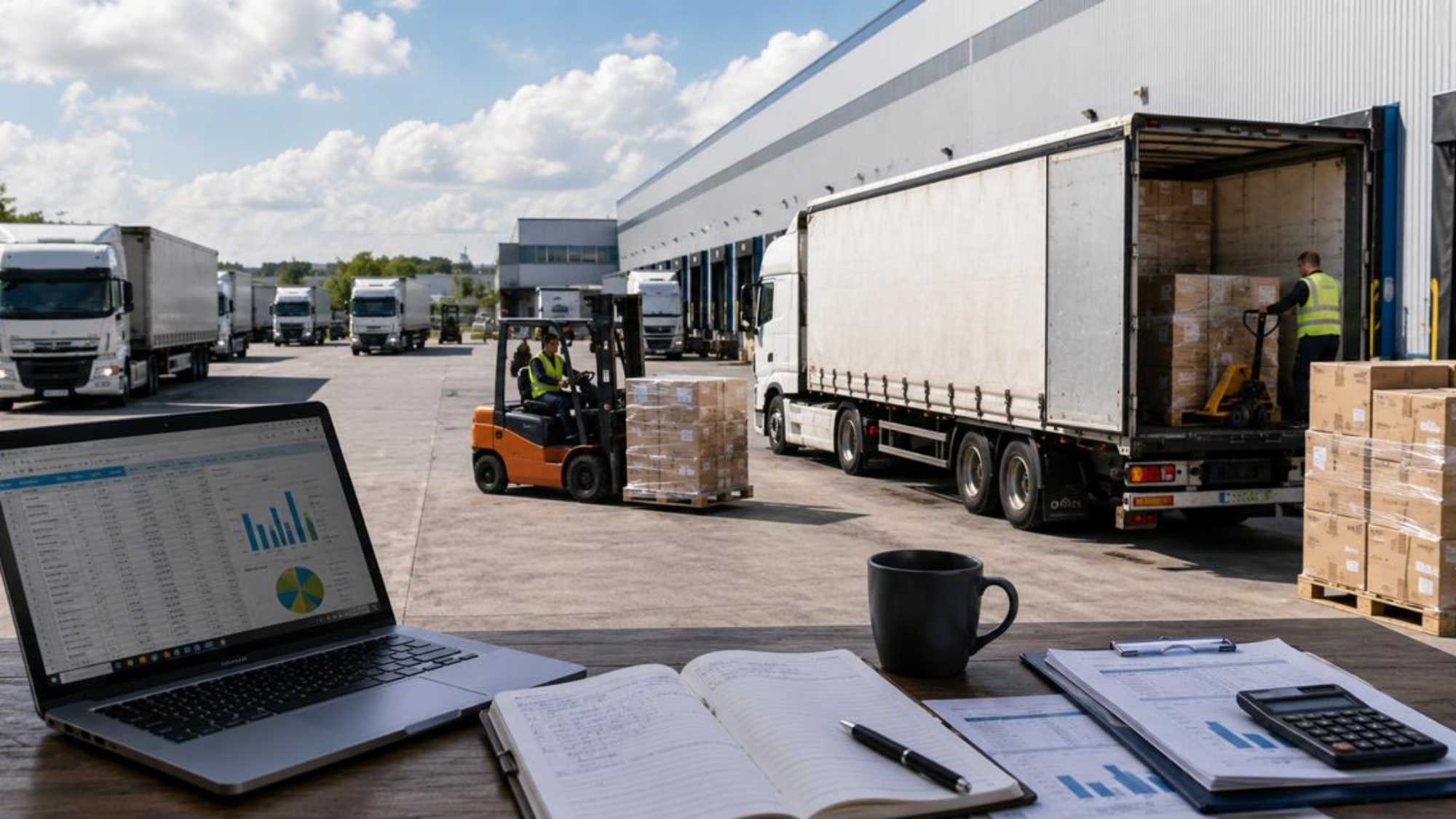
Transportation costs rarely rise because of one dramatic mistake. More often, money leaks away in small increments: a half-empty trailer, a driver waiting two hours for a dock, a refrigerated unit sent to haul goods that did not need temperature control in the first place. At RoadFreightCompany, these details tend to attract more attention than fuel prices, because they shape the daily cost of moving freight long before the invoice is issued.
It becomes noticeable when two shipments cover almost the same route yet produce very different results. One leaves with the right trailer, a balanced load, and delivery times that fit the driver’s working hours. The other looks acceptable in the planning system, but includes an unnecessary detour and a collection slot that was never fully confirmed. By evening, the second trip has consumed more fuel, more paid hours, and considerably more patience.
The expensive part is not always obvious while the operation is unfolding. A dispatcher may assign the closest available truck without noticing that the driver is due for a mandatory break in ninety minutes. Another vehicle, parked slightly farther away, could have completed the job with less disruption. RoadFreightCompany has seen how these seemingly minor choices alter the economics of an entire week.
Matching the Right Resources to the Right Work
Good allocation starts with understanding that not every truck and driver should be treated as interchangeable. Equipment specifications, route familiarity, cargo characteristics, and timing constraints all matter. When those factors are ignored, the schedule may still function, but at a higher cost than necessary.
A distribution run for packaged food illustrated this well. One afternoon, a standard curtain-side trailer was unavailable, so a refrigerated unit was assigned instead. The delivery was completed without incident, yet the trip cost more because the specialized trailer consumed extra fuel and was no longer available for a temperature-sensitive load the following morning. Teams coordinating shipments through RoadFreightCompany regularly avoid this type of hidden expense by reserving specialized assets for work that genuinely requires them.
Small Delays Become Real Costs
Resource allocation also affects how efficiently drivers spend their hours. Some routes involve narrow city streets, strict unloading windows, and customers who take longer than expected to receive freight. Pairing those deliveries with experienced drivers often prevents overtime, missed appointments, and rushed schedule changes later in the day.
Warehouse timing plays a role as well. A truck that arrives on time but waits ninety minutes for paperwork still generates costs, even though it is not moving. In one case, a morning collection was delayed simply because the final pallet count had not been confirmed. That single delay pushed the driver into heavier afternoon traffic and forced the rescheduling of another pickup. RoadFreightCompany pays close attention to these operational details because idle time can be just as expensive as extra kilometers.
Better allocation does not mean squeezing more work from every truck. Sometimes it means leaving a small gap in the schedule, assigning a more suitable trailer, or choosing a driver who knows a difficult route well enough to avoid predictable slowdowns. Those decisions may seem minor at the planning stage, but they tend to keep expenses under control far more effectively than reactive adjustments.
There is rarely a single breakthrough that reduces transportation expenses overnight. More often, savings appear when equipment is used where it fits best, drivers are assigned with care, and scheduling reflects what actually happens on the road. Road Freight Company approaches resource allocation with that mindset, and the result is a steadier operation with fewer avoidable costs and less friction throughout the day.