
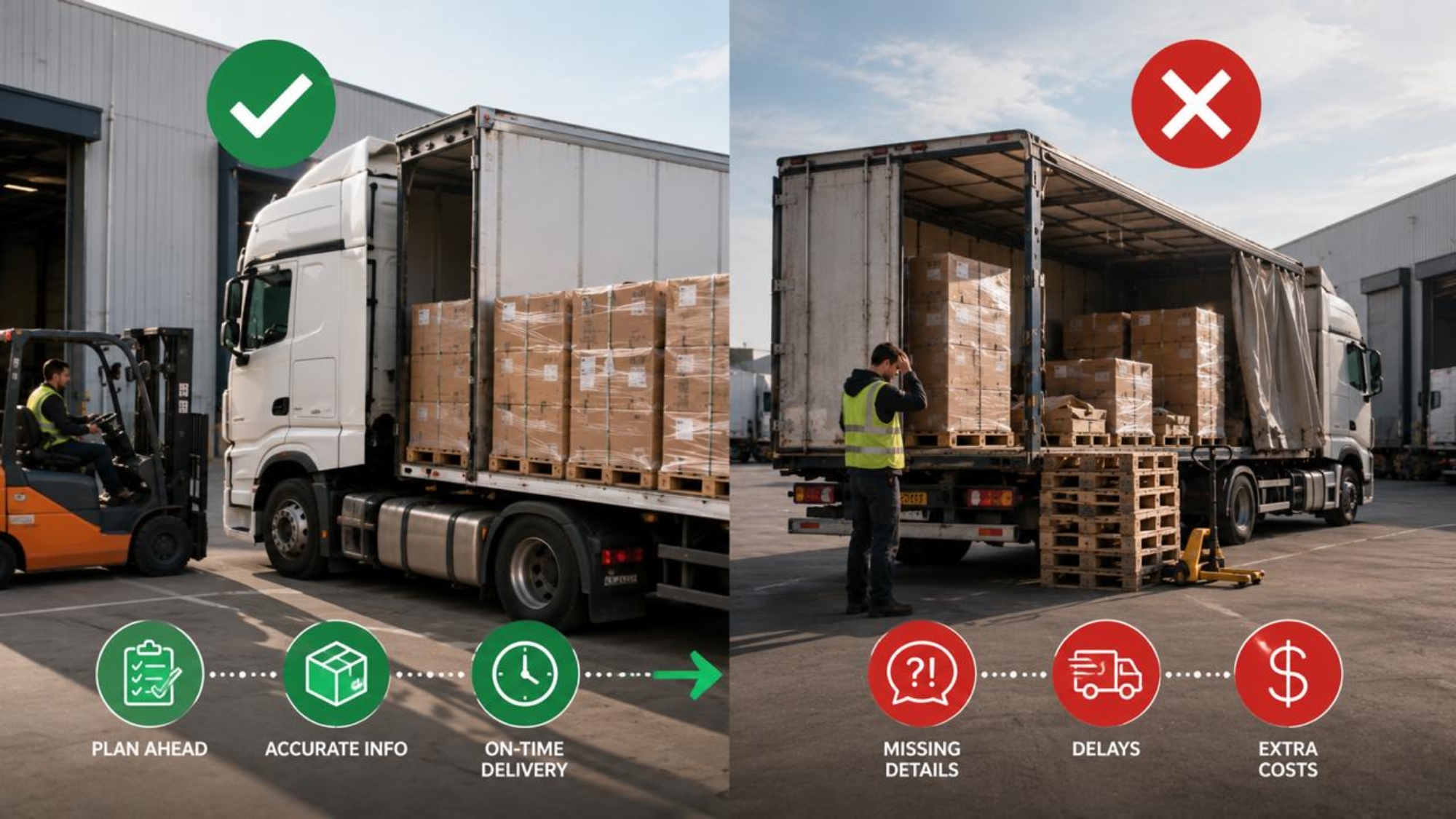
Two trucks leave the same warehouse within twenty minutes of each other. Both are half full, both are headed to customers in the same region, and both were booked at nearly identical rates. By evening, one route has finished quietly and the other has generated a string of calls, revised delivery times, and extra handling charges. RoadFreightCompany sees this kind of contrast often, and it rarely comes down to the transport itself.
The first shipment was arranged with unusual attention to detail. Pallets were built to consistent heights, unloading instructions were attached to each stop, and the receiving sites had confirmed when staff and equipment would be available. Nothing about the preparation looked remarkable, but the truck moved steadily from one customer to the next without waiting for decisions to be made on the road.
The second load looked equally straightforward while it sat on the dock. A few dimensions were estimated rather than measured, one customer had not confirmed its access restrictions, and two pallets were loaded in a sequence that made sense in the warehouse but not at the delivery points.
By the time the driver reached the third stop, those minor shortcuts had turned into real costs. A forklift had to rearrange freight to reach the correct pallets. Another customer delayed unloading because the truck arrived outside its preferred time slot. At RoadFreightCompany, this is the point where an ordinary job starts consuming resources that were never included in the original quote.
The Cheapest Operations Usually Feel Uneventful
Cost-effective freight processes tend to be surprisingly quiet. Drivers are not waiting for clarification. Dispatchers are not rebuilding schedules in the middle of the day. Warehouse teams are not moving the same cargo twice because someone assumed the details could be sorted out later.
RoadFreightCompany notices that the most efficient shipments often attract the least attention. They progress almost unnoticed because every step was prepared to support the next one.
Preparation Reduces More Than Direct Expenses
Better organization affects much more than fuel or labor hours. It keeps loading docks from backing up, helps drivers use their available hours more productively, and reduces the number of corrective decisions made under time pressure.
When information is complete and the physical freight is prepared logically, transportation becomes simpler to execute. Road Freight Company builds its work around that principle because the most cost-effective processes are usually the ones that create the fewest interruptions from start to finish.