
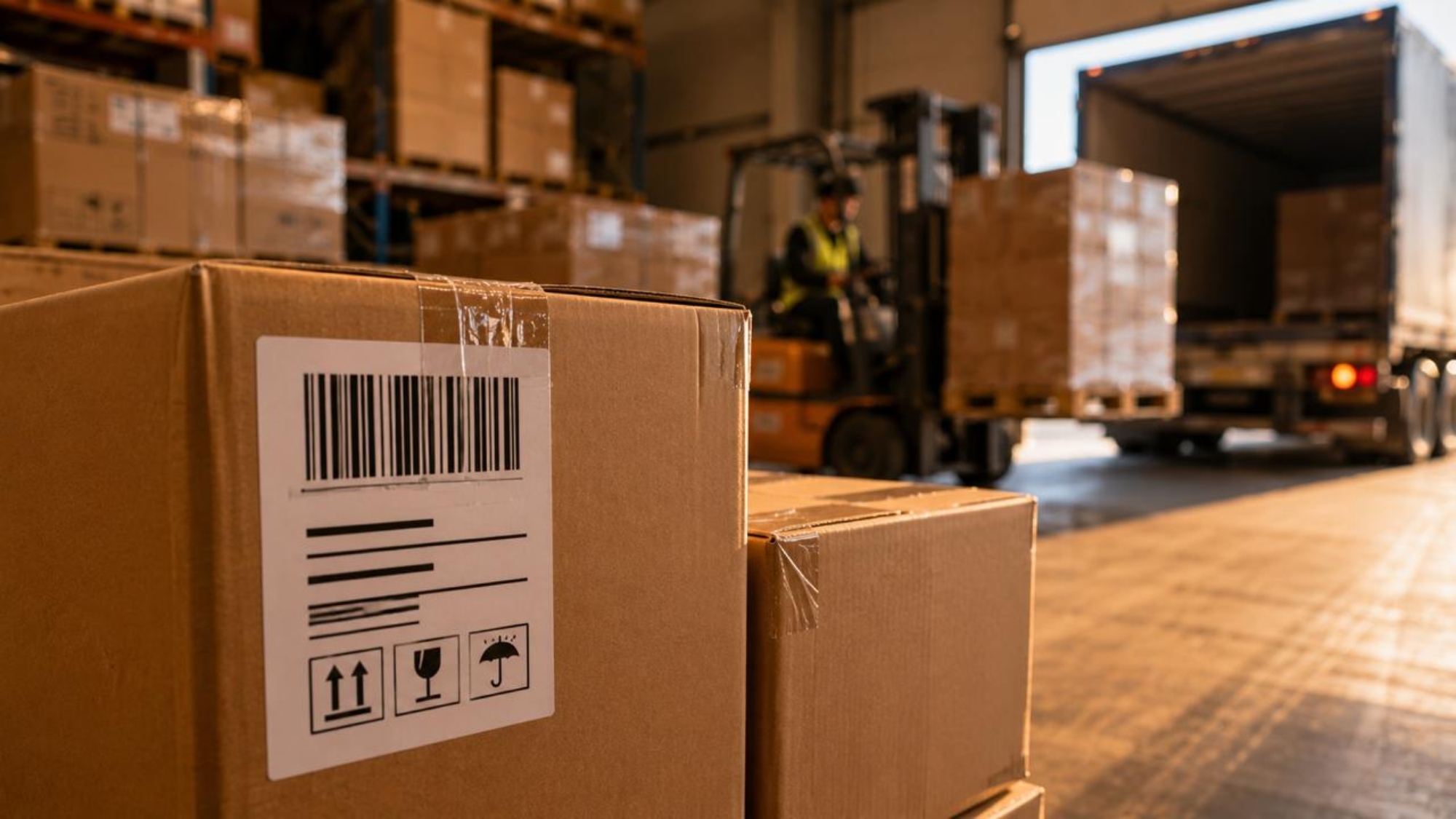
A trailer can be loaded perfectly and still lose half an hour because one label says the wrong thing. We at RoadFreightCompany have watched warehouse teams stop mid-shift over a pallet that looked ordinary but carried two different destination codes. Nobody wanted to move it until someone confirmed which one was correct, and that small pause rippled through the rest of the loading plan.
Labels are often treated as a final administrative step, something printed in a few seconds after the real work is done. On the warehouse floor, they function more like traffic signs. Drivers, forklift operators, dispatchers, and receiving staff make quick decisions based on those details, usually without opening a single box or checking the paperwork.
A mislabeled shipment rarely causes immediate drama. It tends to create hesitation. A forklift operator sets the pallet aside instead of loading it. A driver calls dispatch to confirm the route. The receiving warehouse compares barcodes manually because the product description does not match the order. At RoadFreightCompany, these are the kinds of delays that quietly consume far more time than a late truck ever does.
When a Simple Sticker Changes the Whole Schedule
A few months ago, a mixed retail shipment was ready to leave with twelve pallets heading to three stores. One pallet carried the correct address but an outdated internal reference number from a previous order. It looked harmless until the goods reached the first cross-dock, where the scanning system flagged it as unknown cargo.
The pallet was pulled aside while the rest of the trailer continued unloading. Phone calls followed, warehouse staff searched old records, and the driver waited longer than expected before receiving clearance to continue. Nothing had been damaged, yet the delivery sequence was thrown off by a label no one thought to question.
RoadFreightCompany sees this pattern often enough to know that accurate labeling is not clerical housekeeping. It reduces uncertainty at every transfer point. When labels are clear and consistent, cargo moves with much less discussion and far fewer interruptions.
Clear Information Keeps Freight Moving
The best labels do not overwhelm people with unnecessary detail. They present the exact information needed at the moment someone handles the shipment: destination, reference number, handling instructions, and readable barcodes placed where scanners can find them immediately.
That consistency helps with more than speed. It lowers the chance of freight being loaded onto the wrong trailer, prevents unnecessary rechecks, and makes receiving docks more efficient. Road Freight Company relies on accurate shipment labels because they allow decisions to happen quickly and confidently, without forcing people to stop and verify what should already be obvious.
Most successful deliveries depend on dozens of small things going right. Labels are easy to overlook because they occupy so little physical space. Yet when they are precise and dependable, the entire transport process feels steadier, cleaner, and noticeably easier to manage.