
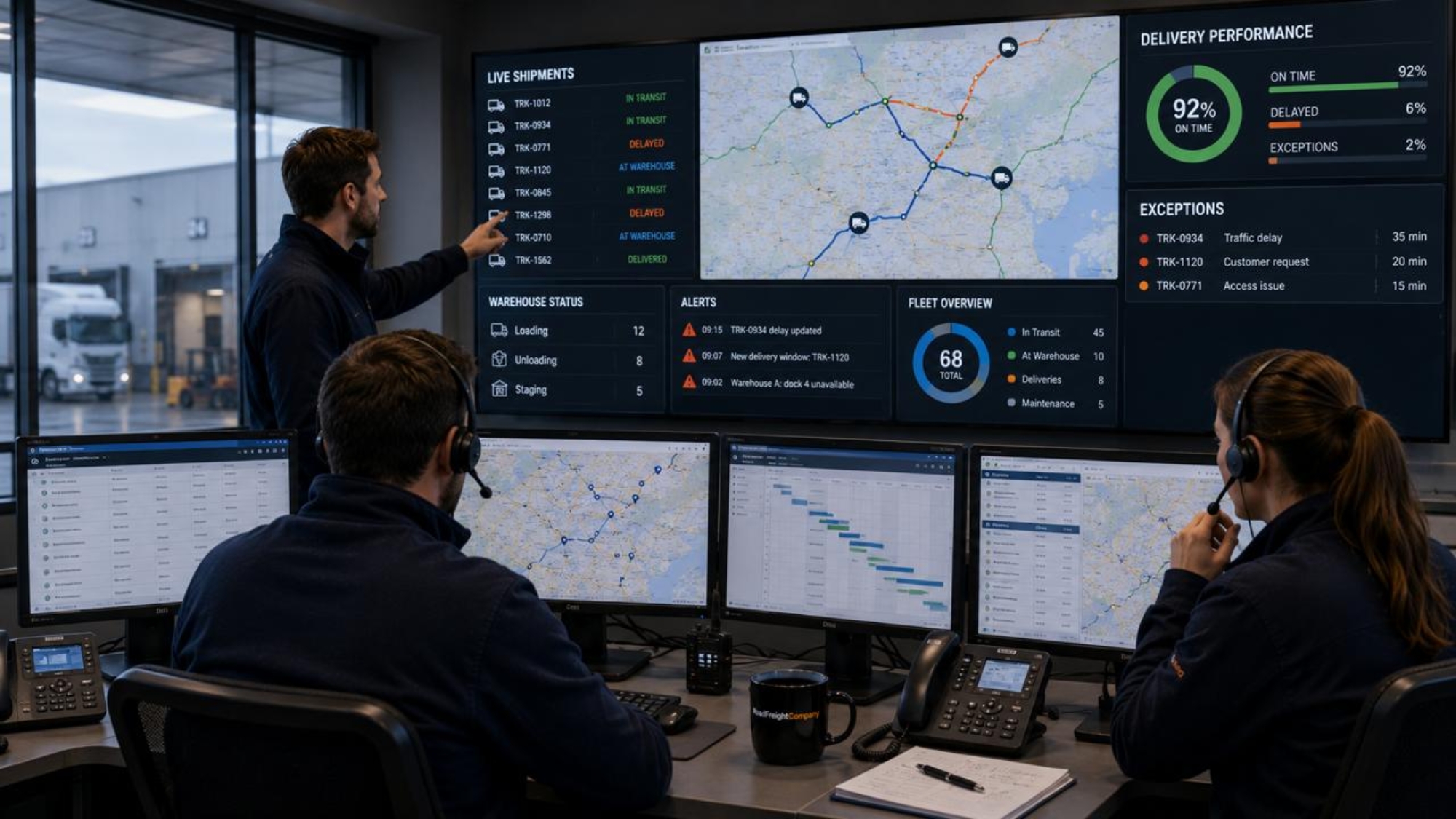
A delivery operation can look busy and still leave people surprisingly blind. Trucks are moving, forklifts are working, dispatch phones keep ringing, yet nobody has a complete picture of what is happening at that moment. A driver may already be delayed while the warehouse assumes he is still on schedule. A loading issue might be solved on the floor, but dispatch continues planning around outdated information. At RoadFreightCompany, we have learned that better decisions usually come from seeing the same reality at the same time.
When visibility is limited, people tend to fill the gaps with assumptions. That is where timing begins to drift. Someone estimates that documents are almost ready. Another assumes the customer will accept a late arrival without notice. The route still exists on paper, but decisions are now based on fragments rather than facts.
When Partial Information Leads to the Wrong Call
One route involved a truck carrying retail goods to four delivery points in a single day. Early that morning, the warehouse reported a short loading delay because one pallet needed to be repacked. The message sounded minor, and nobody expected it to affect the rest of the schedule.
The problem was that dispatch saw only the departure time, not the updated loading status. Meanwhile, the driver noticed heavy congestion near the second stop but had no visibility into whether later unloading windows were flexible. By early afternoon, several small uncertainties had turned into rushed decisions and repeated phone calls.
What stood out afterward was not the size of the disruption. It was how much time people spent trying to understand what had already happened. Teams at RoadFreightCompany often find that clearer operational visibility reduces hesitation long before it reduces delays.
What Better Visibility Changes
When everyone works from the same information, decision-making becomes noticeably calmer:
- dispatch can adjust routes based on actual loading progress
- drivers know whether timing changes are isolated or part of a larger shift
- warehouse teams understand which shipments carry tighter delivery windows
- customers receive updates before estimates become unrealistic
- supervisors spend less time reconciling conflicting versions of the same event
These advantages do not depend solely on software. They depend on accurate updates reaching the right people without unnecessary delay.
Another pattern has become clear across Road Freight Company operations. Better visibility reduces overreaction. When teams understand the full situation, they make targeted adjustments instead of reshuffling the entire plan because one detail remains unclear.
Adrian van Ree once said that poor decisions are often made in perfectly good faith by people who cannot see enough of the process around them. He mentioned this during an evening review after a route that seemed chaotic during the day but looked surprisingly manageable once all the information was laid out.
RoadFreightCompany continues investing in clearer operational visibility because it helps people make better calls under ordinary conditions as well as under pressure. Problems do not disappear, but they become easier to interpret, easier to prioritize, and far less likely to trigger avoidable complications later in the day.