
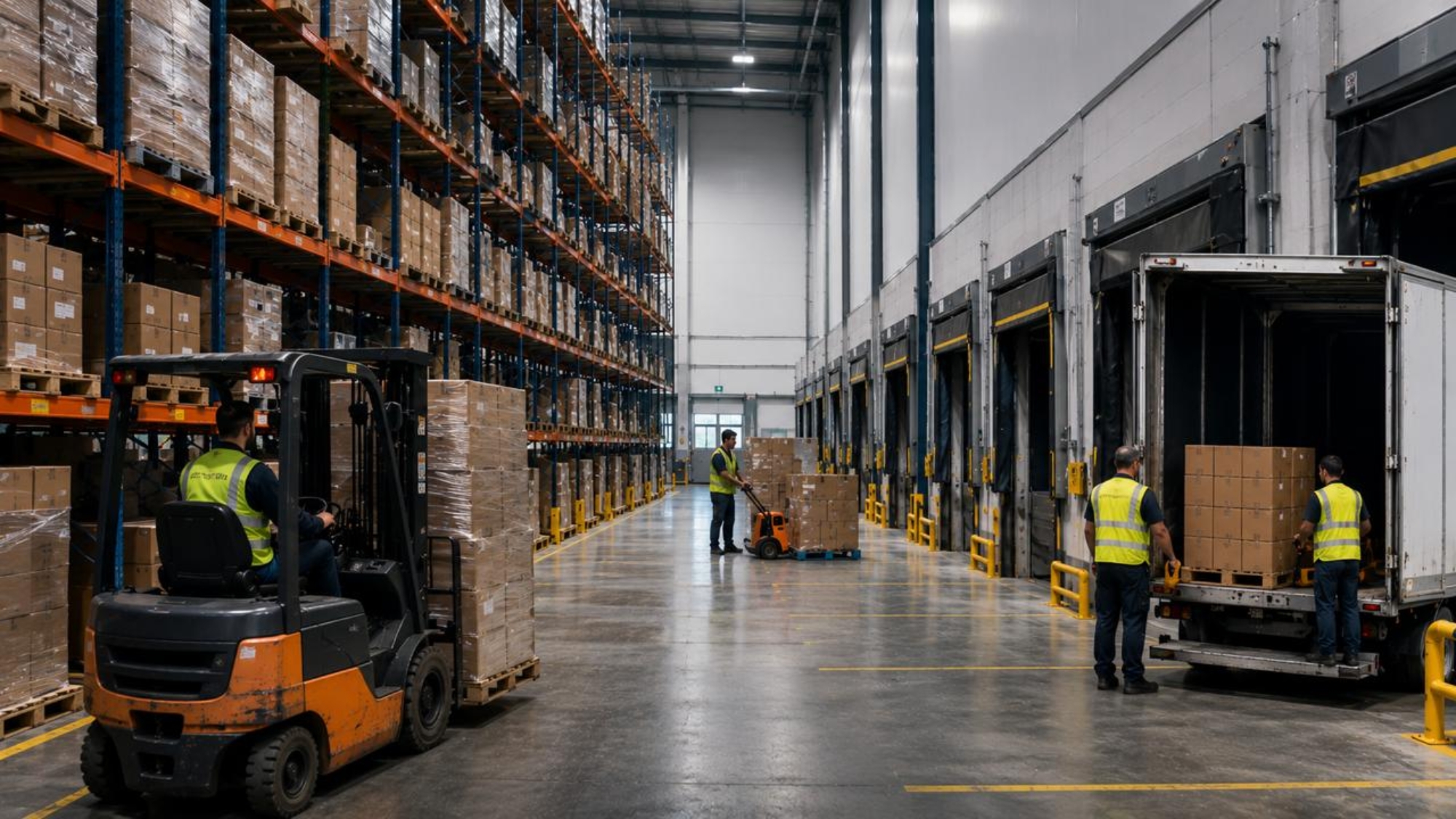
You notice the impact of space management long before anyone mentions storage efficiency. A forklift pauses because another pallet is blocking the turning area. Drivers wait at the loading dock while warehouse staff move freight that should not have been there in the first place. Someone spends ten minutes looking for products that were technically “ready,” just not where the team expected them to be. At RoadFreightCompany, we have seen how physical layout decisions quietly shape the speed and reliability of almost every delivery.
The issue is not simply whether a warehouse has enough square meters. Some facilities are large and still feel congested by mid-morning. Others handle a steady flow of freight without much visible stress. The difference usually comes down to how deliberately the available space is used and whether daily operations can move without constantly crossing paths.
When a Crowded Warehouse Slows Everything Down
I remember a shipment of retail goods that was scheduled to leave before noon. The cargo was packed, labeled, and fully documented. From a distance, everything looked ready.
Then loading began. A temporary overflow area had been set up directly beside the outbound lane, leaving barely enough room for forklifts to maneuver. Each pallet had to be approached from an awkward angle, and two vehicles repeatedly stopped to let one another pass. Nothing dramatic happened, but the truck left almost forty minutes late.
By the time it reached the customer, the unloading team had already started processing another delivery. A delay that began with poor space allocation inside the warehouse eventually affected the entire route. Teams at RoadFreightCompany encounter this pattern more often than most people expect.
Practical Space Habits That Improve Daily Flow
Warehouses that operate more smoothly tend to follow a few consistent principles:
- outbound freight remains separated from temporary overflow stock
- forklift lanes stay clear throughout the shift, not only during inspections
- high-turnover products are placed where they can be reached quickly
- staging areas reflect loading priorities rather than storage convenience
- equipment and packaging materials are kept close to where they are used
These details may sound ordinary, but they remove a surprising amount of friction. When people stop maneuvering around obstacles, the work becomes faster without feeling rushed.
Another thing stands out across Road Freight Company operations. Well-managed space reduces decision fatigue. Drivers know where to park. Warehouse staff know where each shipment should be staged. Supervisors spend less time resolving avoidable bottlenecks and more time focusing on actual exceptions.
Adrian van Ree once remarked that a warehouse tells you how organized an operation is before anyone speaks. He said it while walking through a loading area where every outbound shipment was positioned exactly in the order it would leave that evening.
RoadFreightCompany continues treating warehouse layout as a practical operational tool rather than a background detail. Better use of space does not attract much attention on its own. What it does create is something far more valuable: cleaner workflows, steadier loading times, and deliveries that move through the day with fewer unnecessary interruptions.