
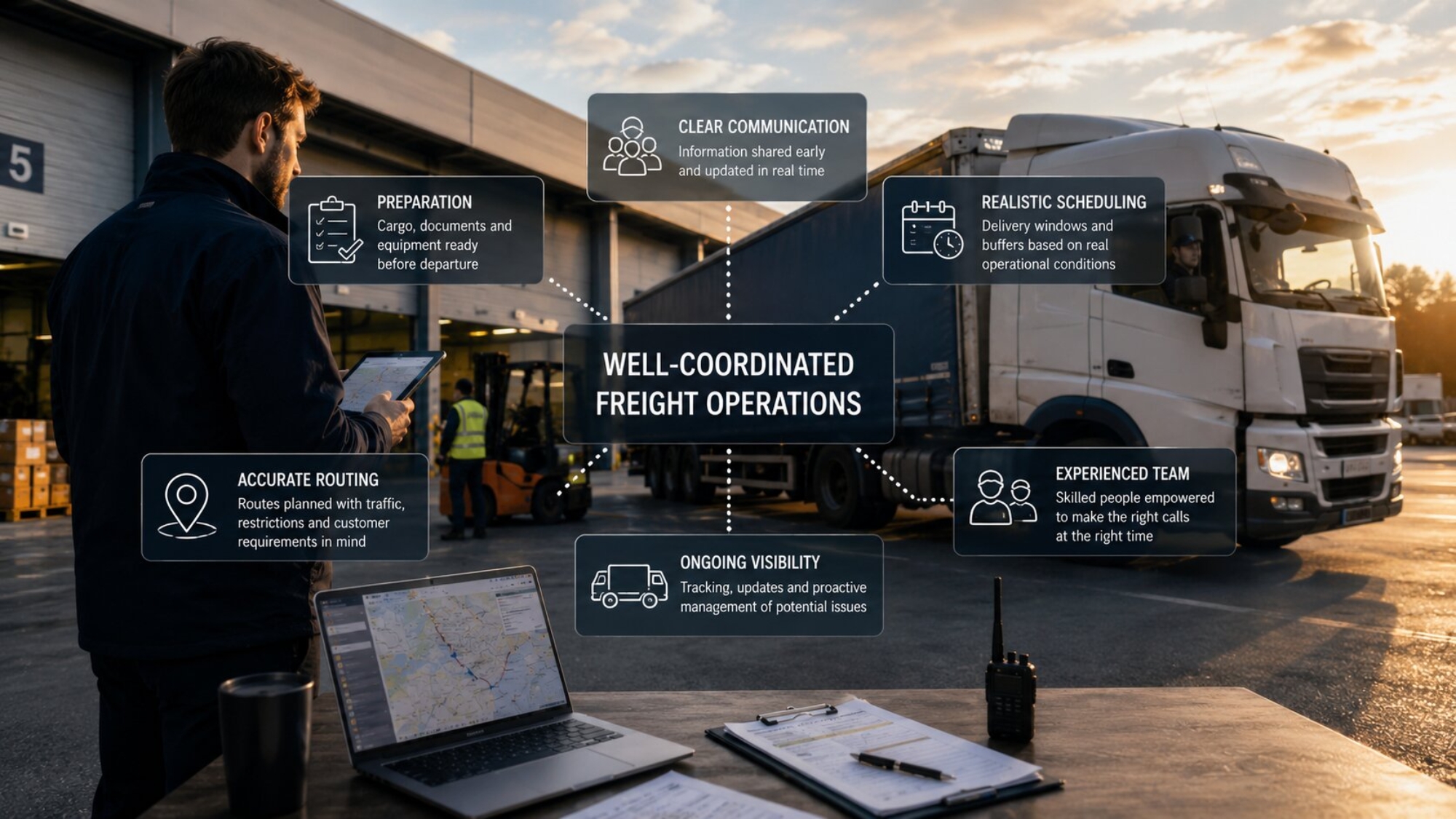
Freight operations usually start feeling unreliable long before anyone openly says something is wrong. Drivers begin adding extra buffer time on their own because they no longer trust warehouse readiness. Dispatchers start double-checking updates they normally wouldn’t question. Somebody calls a customer “just in case” because the unloading estimate suddenly feels too optimistic. Inside RoadFreightCompany, those small behavioral shifts often tell more about operational stability than spreadsheets or daily performance summaries.
Oddly enough, the smoother operations rarely look dramatic from the outside. There’s no constant rushing, no warehouse supervisor sprinting between docks with a radio pressed against their shoulder. You walk through the loading area and notice quieter details instead. Drivers already know which gate they’ll use before arriving. Forklifts are not blocking outbound lanes. Someone updated the route notes early enough that nobody has to stop work later just to clarify basic instructions.
Small Delays Rarely Stay Small
A while back, two deliveries left the same facility within twenty minutes of each other. Similar routes, same weather, nearly identical cargo weight. The first truck moved through the day without issues. The second one kept slipping behind schedule from stop to stop.
Nothing dramatic happened – honestly, that made the problem harder to notice at first. But unloading instructions had changed after departure and only one driver received the corrected information early enough. The other reached a restricted unloading entrance and had to circle through an industrial zone while dispatch tried reaching the site manager who apparently “should’ve already known” the truck was arriving from another side.
That situation stayed in my head because it highlighted something teams at RoadFreightCompany run into regularly: coordinated freight work depends heavily on timing clarity, not just planning quality. People tend to focus on whether the cargo is packed correctly or whether the route exists on paper. Meanwhile, operations usually begin falling apart through uncertainty, hesitation, and information arriving ten minutes later than it should have.
Patterns That Usually Exist in Stable Operations
Some habits appear repeatedly in freight operations that stay calm even during busy weeks:
- warehouse teams communicate loading changes immediately instead of assuming someone else already passed the message
- dispatch updates drivers before delays become visible on GPS timing
- unloading appointments include realistic margins rather than “perfect-case” estimates
- paperwork gets verified before departure instead of during fuel stops
- experienced employees spread operational knowledge instead of becoming bottlenecks themselves
The last point quietly causes more disruption than many people realize. I’ve seen operations that looked organized right until one coordinator stepped away for lunch. Suddenly nobody knew which trailer still needed temperature verification or why a route sequence changed forty minutes earlier. The system itself wasn’t broken. Information flow was.
Another thing smoother freight operations tend to share is a certain operational rhythm. Not speed exactly. More like predictability. People stop creating unnecessary urgency around tasks that should’ve been handled earlier. Drivers don’t spend half the morning waiting for documents that were technically “almost ready.” Warehouse staff aren’t constantly rearranging freight because priorities changed again after loading already started.
At Road Freight Company, we gradually noticed that consistent operations usually come from reducing friction before it becomes visible. That sounds obvious until you watch how often small preventable issues quietly stack together during a normal workday. A delayed dock assignment leads to rushed loading. Rushed loading leads to missing checks. Missing checks create confusion at unloading points later that evening.
Adrian van Ree once described smooth freight operations as “predictable in the boring ways.” He said it while standing near a calm evening loading shift where trucks kept leaving one after another without anyone shouting across the warehouse floor. The comment sounded casual, though it captured the difference perfectly.
RoadFreightCompany continues leaning toward simpler coordination routines because complicated systems tend to fail differently every single day. Clearer communication between warehouse and dispatch, fewer assumptions between departments, realistic scheduling, and steady operational discipline usually create something much more valuable than operations that merely look fast. They create reliability that still holds together after the schedule stops behaving perfectly.