
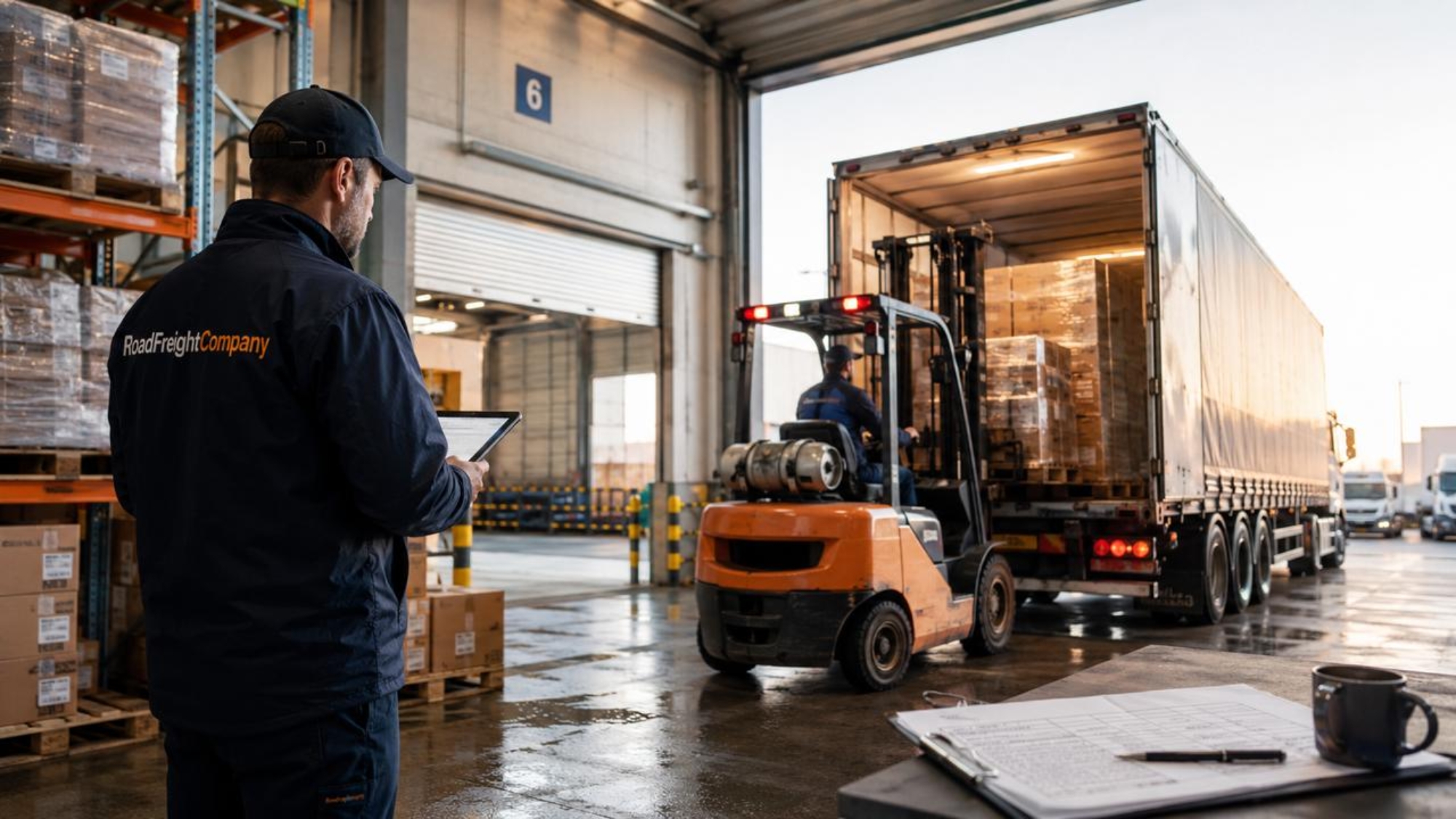
A delivery can lose forty minutes before the truck even leaves the warehouse yard. Not because of traffic, weather, or paperwork at customs. Usually it starts with something smaller. A forklift gets redirected to another loading zone. Someone updates pallet placement but forgets to pass the change to dispatch. Then the driver stands near an open trailer with the engine running while three different people try to figure out why the final row still isn’t wrapped. We at RoadFreightCompany have seen days where the route itself worked perfectly, but the warehouse timing quietly ruined the schedule before the wheels touched the highway.
The frustrating part is that these situations rarely look serious at first. A loading team might only be ten minutes behind. A warehouse supervisor may assume the next shift already prepared the outbound documents. Nobody panics because every delay seems small on its own. Then the chain reaction starts doing its job. Drivers miss unloading windows. Another vehicle arrives while the dock is still occupied. The dispatch board suddenly fills with adjusted arrival estimates that nobody planned for two hours earlier.
A few months ago, one shipment looked completely ready from a distance. Labels were attached correctly, pallets were stacked cleanly, and the route timing looked safe. But the warehouse and transport teams worked from slightly different loading priorities. Heavy pallets ended up near the trailer doors instead of deeper inside because the sequence changed late in the process. The truck had to be partially unloaded again before departure. Twenty-five minutes disappeared right there, and the driver reached the customer exactly during their shift change. Nobody at the unloading point wanted to accept the cargo immediately, so the truck waited again.
That kind of slowdown usually comes from coordination gaps, not from people refusing to work properly. At RoadFreightCompany, we noticed that warehouse efficiency improves fastest when communication becomes less formal and more immediate. A quick call from the loading floor often solves problems earlier than five status updates inside a system dashboard. The teams that move faster are usually the ones sharing operational details casually throughout the day instead of treating every update like a report.
Some warehouse routines also create unnecessary hesitation without anyone noticing. Drivers arrive, but loading teams continue reorganizing nearby freight because they want the area to “look cleaner” before departure. Someone keeps searching for a scanner that was left near another gate. Another employee waits for confirmation that already arrived fifteen minutes earlier but stayed unread in a chat thread. None of these moments sound dramatic, although together they stretch simple operations into long shifts.
Adrian van Ree once said during a late evening loading delay that warehouses rarely lose time in one big accident. “It leaks out in pieces,” he said while watching two teams trying to reorganize outbound freight that should have been prepared earlier. That description stuck because it felt painfully accurate.
The smoother warehouses usually share one thing: people know what happens next before the previous task fully ends. Drivers receive updates before backing into the dock. Warehouse teams understand which deliveries carry tighter unloading windows. Dispatch doesn’t wait until a truck is already late to start adjusting routes. Around Road Freight Company, those small coordination habits tend to matter more than complicated optimization ideas. Operations feel calmer, trucks move with fewer interruptions, and problems stop growing into larger ones halfway through the day.