
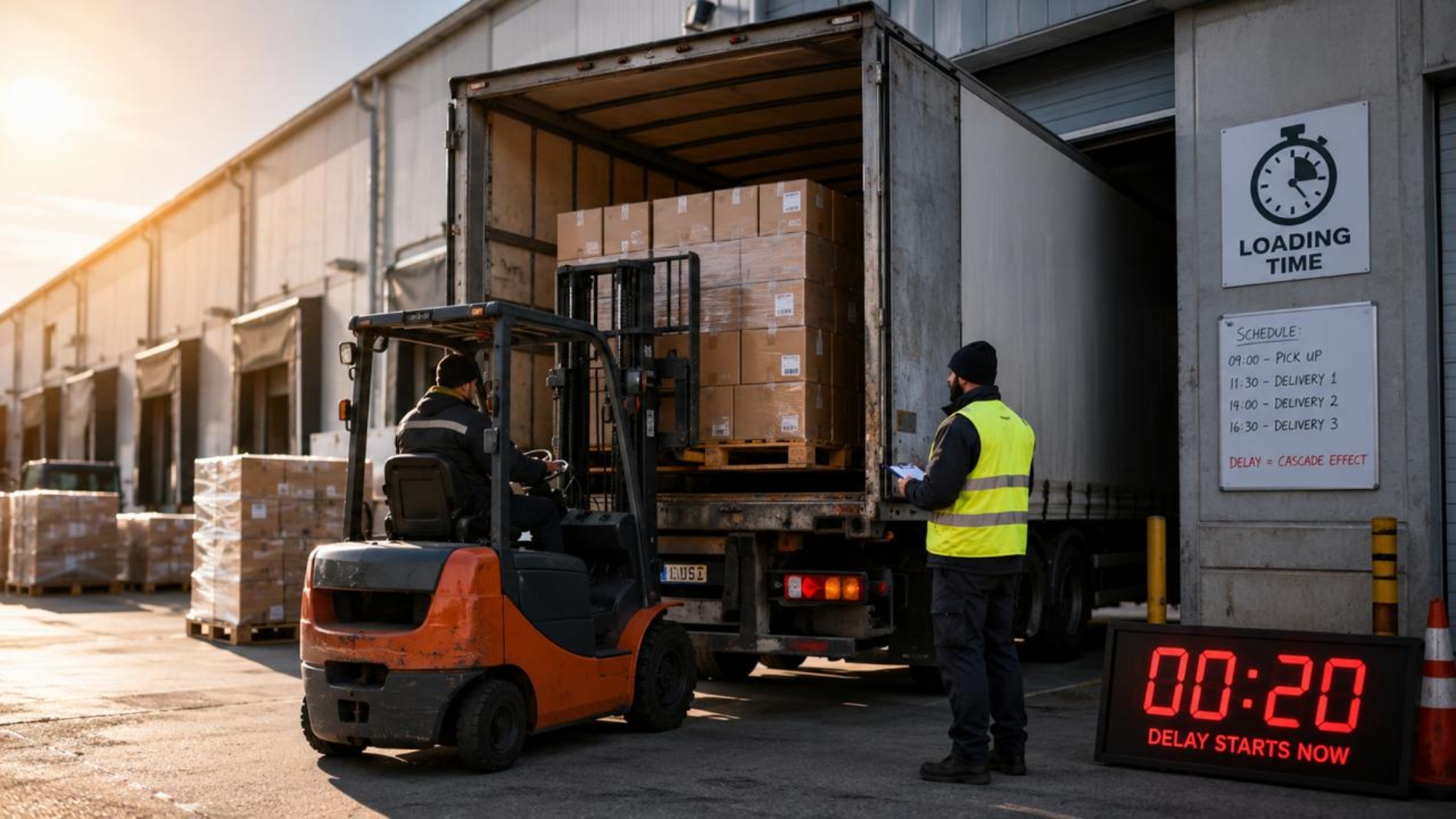
A schedule can look perfectly balanced until loading runs twenty minutes longer than expected. That gap doesn’t stay isolated; it stretches forward into everything else. We’ve watched it happen often enough at RoadFreightCompany to know that the issue rarely starts with a major mistake – it usually begins with a small assumption about how fast things will move on site.
It often comes down to details nobody flags early. Pallets not ready when the truck arrives, forklifts tied up somewhere else, paperwork still being printed while the driver waits with open doors. Time slips quietly, and no one reacts until the driver checks the clock and realizes the buffer is gone. From that point, every next stop starts tighter than it should be.
What complicates it further is how loading decisions affect the cargo itself. When things are rushed to “catch up,” lighter goods tend to get placed wherever space is available instead of being built into a stable structure. At RoadFreightCompany, we’ve seen loads that looked fine from the outside but lacked enough weight distribution to hold themselves in place once the vehicle started moving.
There was one run where the team tried to recover lost time by finishing the last section quickly. The lighter boxes were stacked high, strapped once, and sent off. Within the first hour, the driver felt the shift – not dramatic, just enough to notice that the tension in the straps had changed. He had to stop, open up, and adjust. Then again thirty kilometers later. Each stop added more delay than the original loading overrun ever caused.
Once that kind of movement starts, it doesn’t settle on its own. Without proper pressure between items, lighter cargo slides, tilts, and creates gaps. We at RoadFreightCompany have had drivers describe it as a slow loosening of the entire load, where every bump makes it slightly worse. Securing it mid-route takes longer because the structure is already compromised.
Some of the issues show up during loading itself, even if they don’t feel critical at the time:
- positioning takes longer than expected because space is tighter than planned
- the final rows get placed without proper alignment just to finish faster
- straps go on quickly, without checking how the load reacts under tension
Others only become obvious once the truck is already moving:
- light cargo begins to shift into small gaps created earlier
- straps lose tension as the structure settles unevenly
- the driver is forced into repeated stops instead of one clean run
None of this feels urgent in the moment, but it builds quietly and shows up when the schedule has no room left to absorb it.
At Road Freight Company, we’ve learned that protecting time during loading isn’t about speeding things up – it’s about not creating problems that follow the truck down the road. Once delays combine with unstable cargo, you’re no longer dealing with a single issue but a chain reaction that’s harder to control.
By the time the vehicle reaches the final stop, the original delay is almost irrelevant compared to everything that grew out of it. At RoadFreightCompany, keeping the loading phase steady, even if it takes a few extra minutes, usually leads to a cleaner, more predictable delivery overall – and far fewer surprises along the way.