
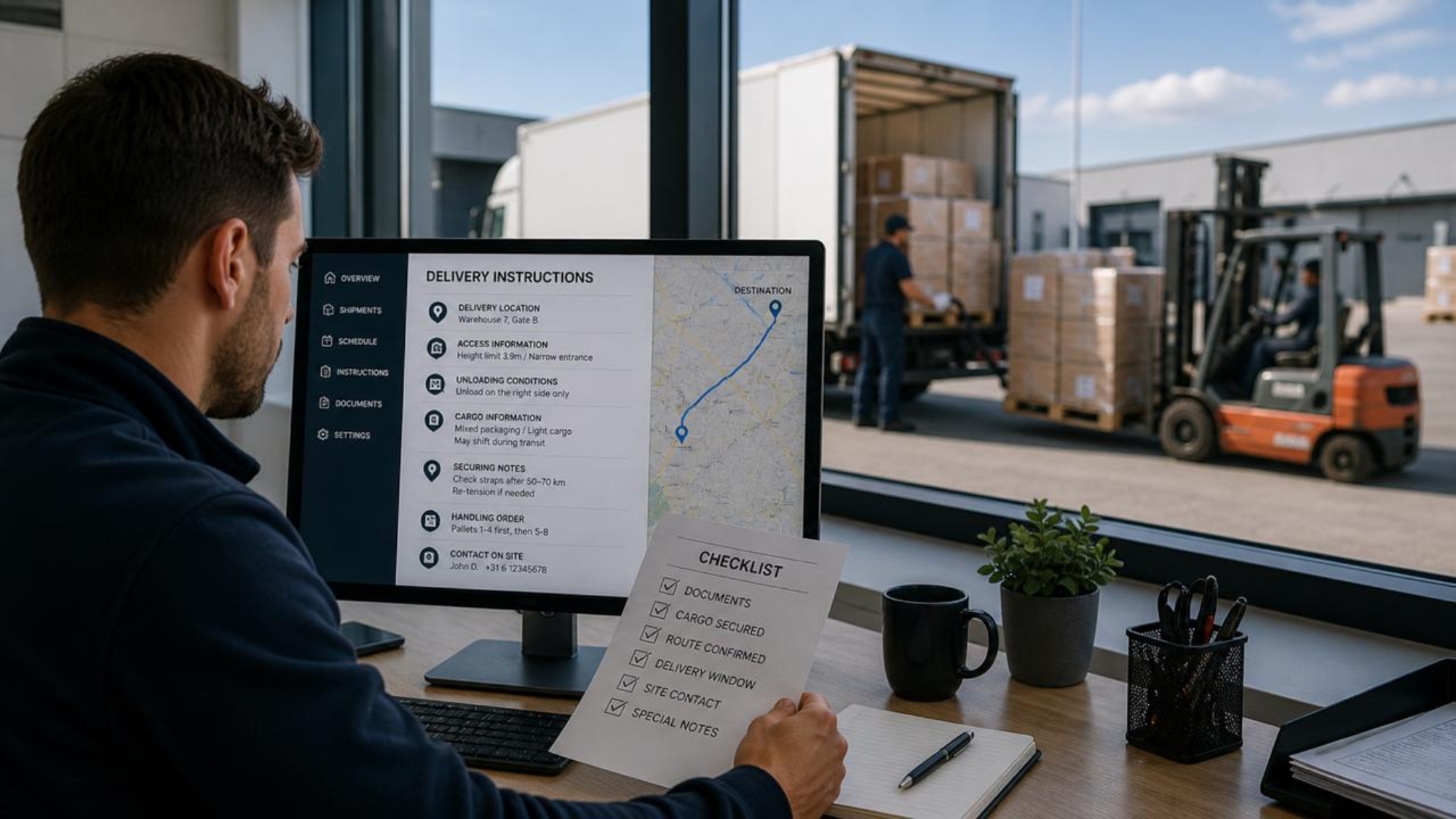
Complex deliveries rarely fall apart because of one big mistake. It’s usually a collection of small gaps that only become visible once the truck is already moving. We’ve seen at RoadFreightCompany that unclear instructions don’t stop a job from starting – they just make it harder to finish without friction.
It often begins with assumptions that sound reasonable. A site is marked as “accessible,” but no one mentions the low overhang near the entrance. The driver arrives, slows down, checks angles, backs out, tries again. Ten minutes go by, then fifteen. The route itself hasn’t changed, yet the timing already has.
Then the load starts playing its part. Light cargo, for example, can behave unpredictably if instructions don’t include how it was arranged. It might be secured properly, but if the driver doesn’t know it tends to loosen slightly under vibration, the first signs get ignored. By the time it’s noticed, a quick check turns into repeated stops.
We had a situation where the delivery notes covered everything except one detail – mixed packaging inside a single stack. Strong boxes at the bottom, softer ones above. On paper, it didn’t seem important. On the road, the upper layer compressed, straps lost tension, and the driver had to pull over more than once to correct it.
At RoadFreightCompany, this is exactly where clear instructions make a difference. Not by adding more information, but by making sure the right details are impossible to miss. When drivers understand how the cargo behaves, not just where it’s going, they adjust early instead of reacting late.
The most useful instructions tend to be the ones that sound almost unnecessary at first:
- exact site limitations, even if they seem minor
- notes on how the load settles after departure
- clarification on handling order during unloading
- realistic timing, not ideal timing
Skip these, and the job becomes a series of small surprises.
We’ve also noticed how unclear communication changes decision-making. A driver who isn’t sure about unloading conditions will hesitate, double-check, sometimes wait for confirmation. That hesitation alone can disrupt the rhythm of the entire delivery, even if everything else is technically correct.
Inside Road Freight Company operations, the smoother runs are the ones where no one has to interpret instructions mid-route. Everything is already defined in a way that matches real conditions, not just expectations. That removes guesswork, and with it, a lot of unnecessary movement.
By the time a complex delivery is completed without extra stops, corrections, or delays, it’s usually because the instructions matched reality closely enough to guide every step. We at RoadFreightCompany don’t see that as over-preparation – it’s what keeps control intact when the situation itself isn’t simple.