
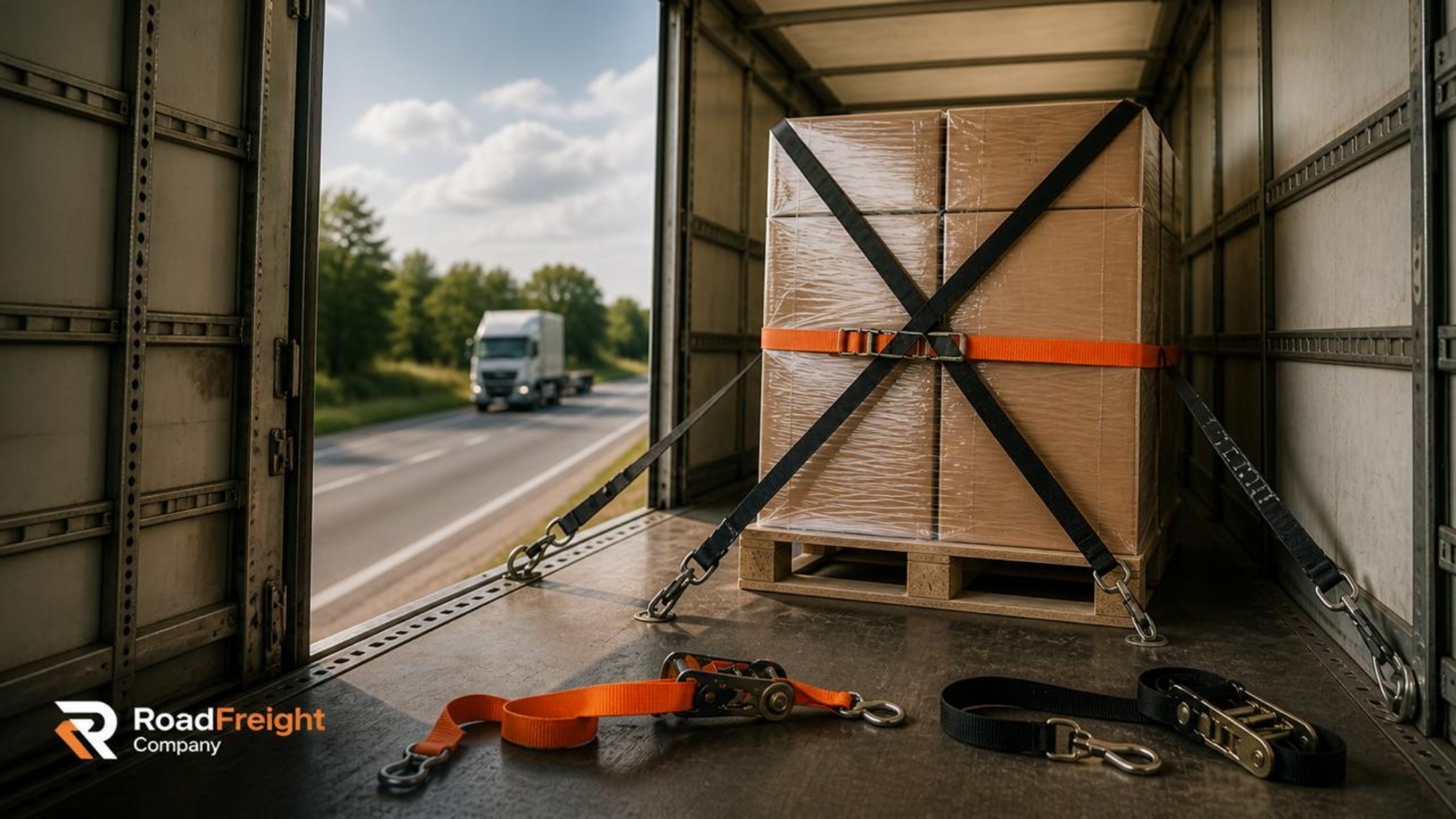
You can usually tell how a shipment will behave long before the truck starts moving. It’s not about how tidy the paperwork looks or how straight the pallet edges are – it’s about whether everything holds together once the road adds its own opinion. We’ve seen at RoadFreightCompany that the difference shows up in the first thirty minutes of driving, not at the loading dock.
A well-prepared load doesn’t rely on a single fix. It’s a combination of small choices that don’t fight each other later. The weight sits where it should, pressure is distributed, and nothing inside the trailer is “free to think for itself.” When one of those elements is off, even slightly, the rest starts compensating – and that’s where things quietly drift out of control.
One situation still comes up more often than it should. Light cargo, stacked neatly, strapped properly, looks perfect on departure. Then after a few turns and a brake, it starts to loosen. Not dramatically – just enough that the straps lose tension. Drivers notice it, stop, tighten everything, move on. Twenty kilometers later, same story. By the third stop, time is already slipping, and frustration kicks in.
At RoadFreightCompany we’ve learned that light loads create a different kind of problem. They don’t push back against restraints the way heavier freight does. Without that natural pressure, small gaps turn into movement, and movement turns into repeated corrections. You can strap it tighter, but that often just compresses the top while the base keeps shifting.
The shipments that don’t cause trouble tend to share a few habits, even if no one explicitly lists them:
- internal stability before external securing
- balanced placement instead of “filling space”
- materials that don’t slide against each other under vibration
- realistic expectations about how the load will behave after the first hour
None of this sounds complicated, but missing even one point changes how the whole setup reacts on the road.
We’ve also seen how rushed decisions at loading come back later in ways that aren’t obvious. A slightly uneven floor, a pallet that isn’t fully squared, or mixed packaging types in one row – all of it seems harmless until the truck hits inconsistent road surfaces. Somewhere between smooth asphalt and rough patches, the load starts negotiating its own position, and that’s exactly the kind of pattern we keep tracking inside RoadFreightCompany when reviewing runs that didn’t go as smoothly as expected.
Another thing that stands out is how good preparation reduces the need for attention later. When everything is built to stay in place, drivers don’t have to keep second-guessing the cargo. That mental space matters, especially on longer routes where small distractions add up faster than people expect.
By the time a shipment reaches its destination without adjustments, delays, or quiet stress along the way, you can usually trace it back to how it was built from the start. We at Road Freight Company don’t treat that as luck. It’s the result of decisions that prioritize control over appearance, and stability over speed – even when no one is watching.