
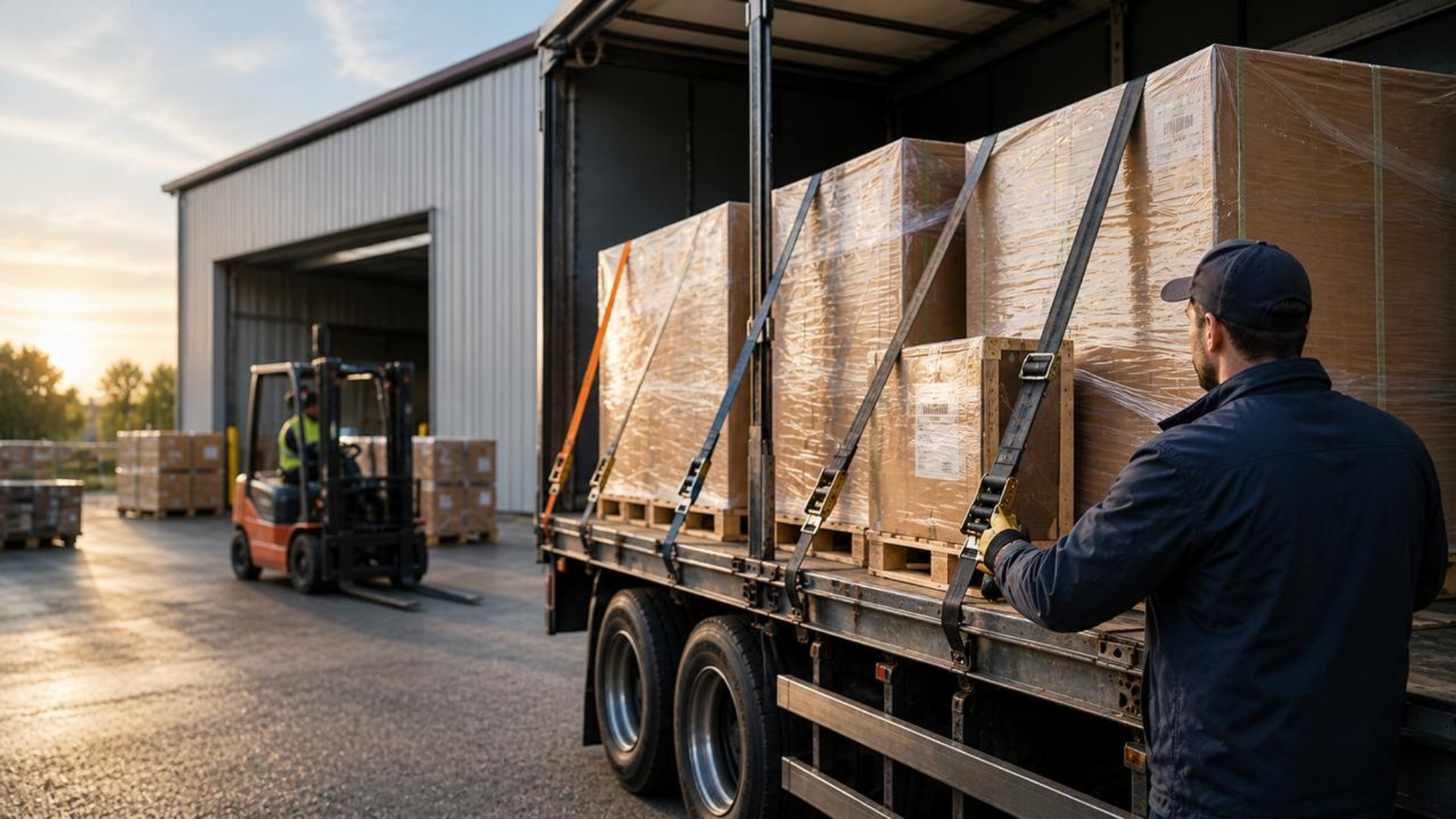
Packaging decisions rarely get attention when everything goes right, but you notice them immediately when something starts to move that shouldn’t. We’ve handled enough shipments at RoadFreightCompany to know that time is often lost long before the truck leaves – it’s built into how the cargo was packed in the first place.
A box can look perfectly sealed and still behave unpredictably once it’s on the road. Light items with empty space inside tend to shift with every turn or brake, even when the outer load is strapped properly. Drivers end up stopping not because the securing failed, but because the cargo inside keeps redistributing weight in small, annoying ways.
One delivery still stands out. It was a set of lightweight components, each packed separately, all stacked neatly on pallets. Nothing seemed off during loading. About forty minutes into the route, the driver reported a subtle but constant movement. The straps were tight, the pallets stable, but inside the boxes, items had room to slide. By the second stop, the load had slightly leaned, forcing a full recheck.
Situations like that don’t look dramatic, but they eat time. A team coordinating through RoadFreightCompany once had to pause three times on a short route just to keep a similar shipment under control. The cargo wasn’t heavy enough to hold itself in place, and the packaging didn’t create enough internal pressure to compensate. Every adjustment added delay, and by the time they reached the destination, unloading took longer because nothing sat evenly anymore.
It’s not about overpacking or adding unnecessary materials. It’s about how the contents interact with the space around them. Another operation we managed alongside RoadFreightCompany involved fragile equipment cushioned individually but not fixed together. Each piece was protected, yet the group as a whole kept shifting, creating small gaps that grew over distance. The fix wasn’t more padding – it was reducing movement between items.
What consistently saves time is surprisingly straightforward, but easy to overlook:
- Fill internal gaps so items don’t gain momentum
- Group smaller pieces into stable units instead of loose clusters
- Match packaging strength to how the cargo behaves, not just its weight
- Think about movement over time, not just at the loading moment
None of this changes the route or the schedule, yet it changes how the trip unfolds. The difference shows up in fewer stops, smoother unloading, and less need to “fix things on the way.”
Once the vehicle is moving, there’s limited control left. From what we’ve seen across Road Freight Company deliveries, thoughtful packaging is less about protection and more about stability – keeping everything exactly where it should be from start to finish.