
You can feel the difference between a delivery that flows and one that quietly drags from the very first exchange. Even before a truck is assigned, small details start shaping the outcome, and at RoadFreightCompany we’ve seen how often the issue isn’t distance or traffic – it’s how information comes in. A pickup that “should be straightforward” tends to unravel when something basic was assumed rather than confirmed.
Addresses are a good example. Not wrong, just incomplete in ways that only show up on arrival – a missing gate code, a yard that looks accessible on a map but narrows down to a single awkward turn, or a loading point moved to the back without anyone mentioning it. Drivers lose time circling, calling, waiting for someone to notice them. Nothing dramatic, just friction stacking up.
Timing creates its own version of the same problem. Clients often give a wide window thinking it helps, but without clarity on when the cargo is actually ready, it turns into idle time. We’ve had trucks arrive “on schedule” only to sit for an hour because packing wasn’t finished. The load goes out eventually, but the rest of the route shifts with it, and everything downstream feels it.
There was one shipment we handled through RoadFreightCompany that looked easy on paper – light equipment, neatly boxed, short distance. It turned out the cargo hadn’t been stabilized inside the boxes. On the first turn, you could hear movement. Straps were tight, but the internal shift kept changing the balance. The driver had to stop twice to readjust, not because the securing was poor, but because the load itself wasn’t prepared to stay still.
That kind of situation isn’t rare. Light cargo often creates more work than heavy loads, especially when it’s packed with empty space or uneven weight. Another team working with RoadFreightCompany recently had to resecure a shipment three times during transit because the pieces inside kept sliding against each other. It didn’t look like a problem at pickup – everything was boxed and labeled – but the lack of internal pressure made the whole load unstable.
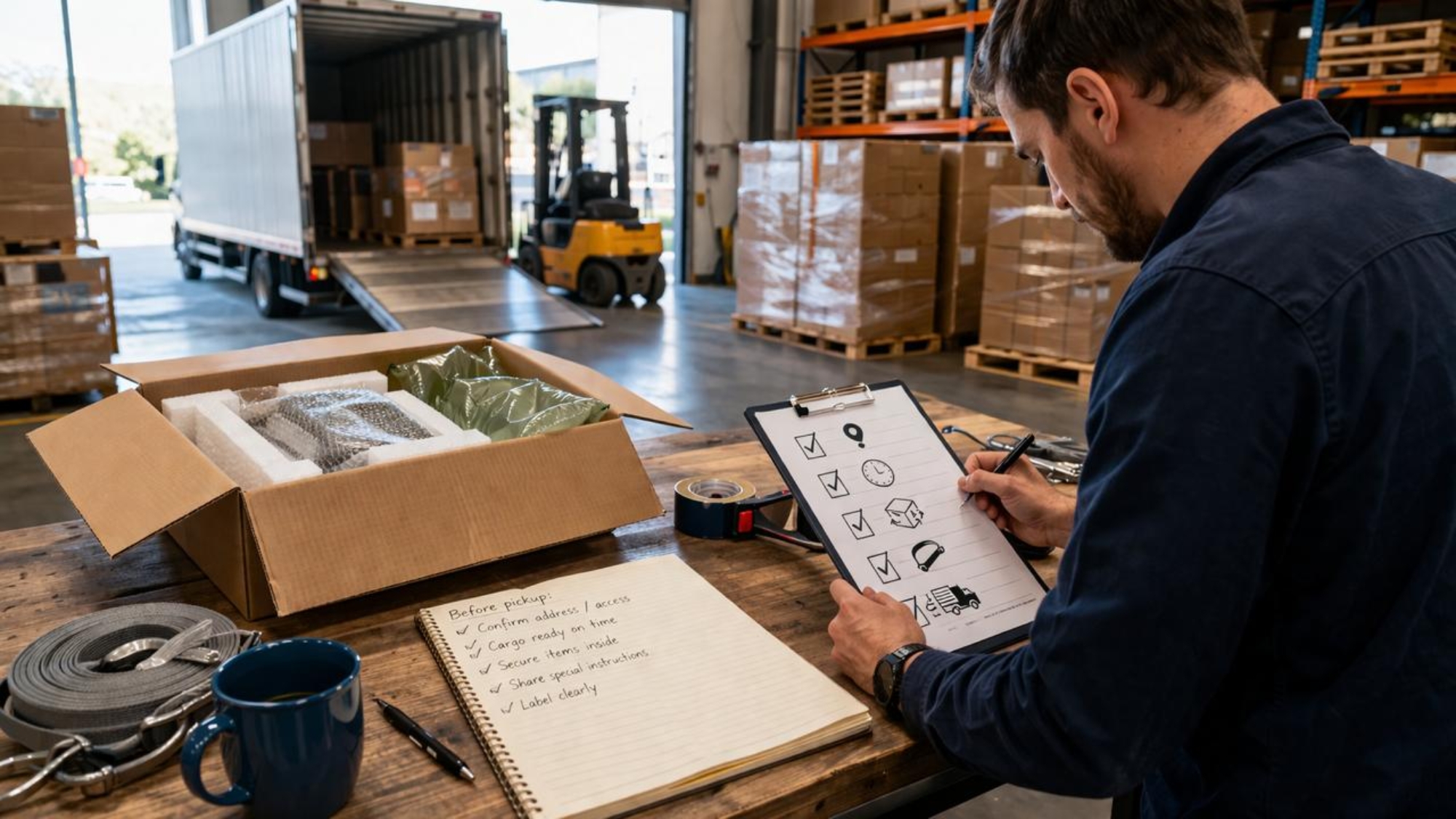
What actually helps is rarely complicated, but it does require attention in the right places:
- Confirm the exact loading point, not just the address
- Make sure cargo is genuinely ready at the agreed time
- Stabilize items inside packaging, not only on the trailer
- Share small access details (ramps, tight turns, restricted entry)
- Flag anything unusual, even if it seems minor
None of this adds cost, but it changes how smoothly things move. The difference shows up in fewer calls, fewer pauses, and fewer last-minute adjustments that no one planned for.
By the time a truck is on the road, most outcomes are already set in motion. From what we’ve seen across Road Freight Company operations, the clients who treat preparation as part of the delivery – not a separate step – tend to get results that feel controlled rather than reactive. And that control is what keeps everything else from slipping.