
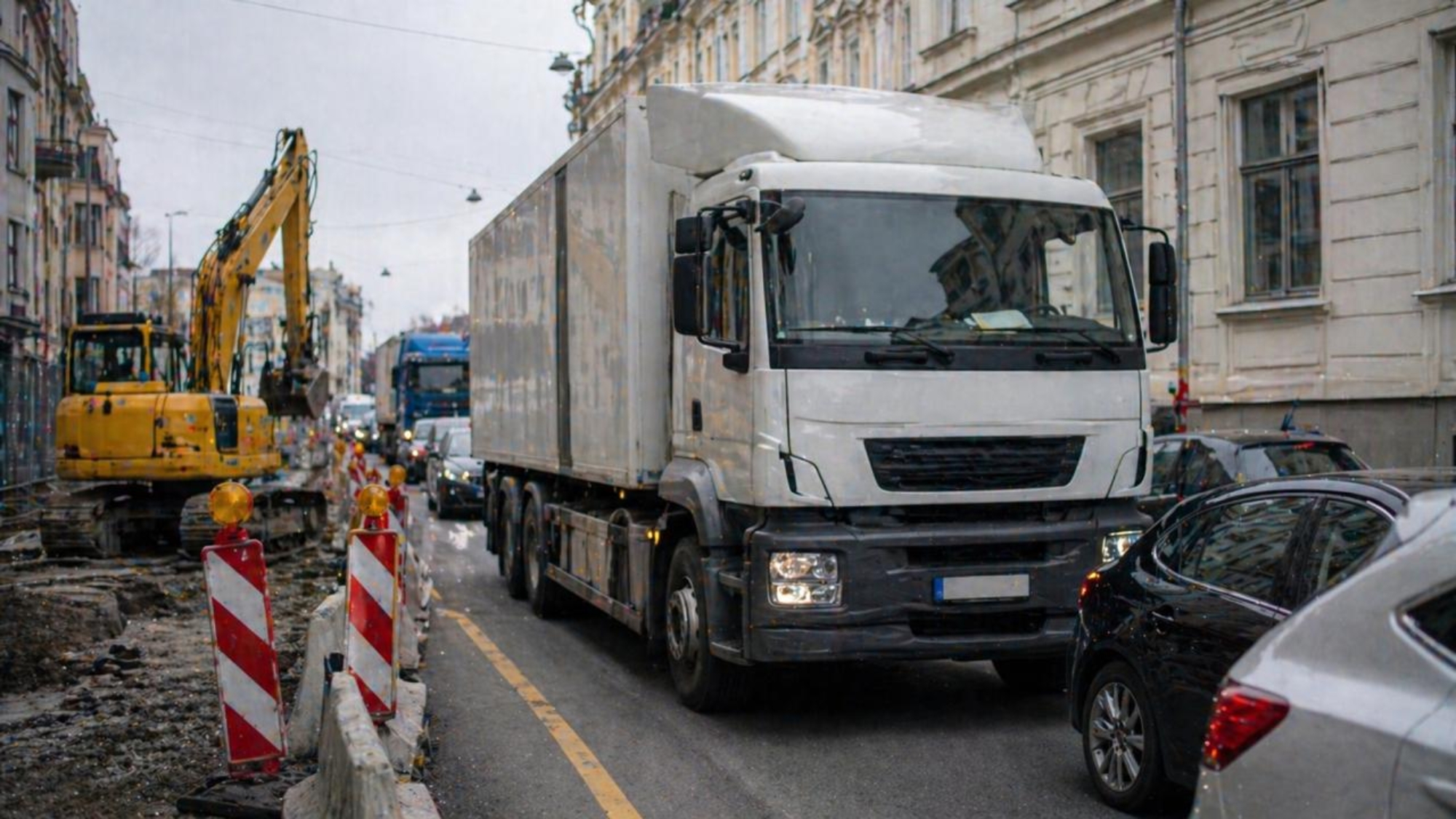
A route can be planned down to the minute and still get pushed off track by something that was not even on the radar an hour earlier. At RoadFreightCompany, we have learned that most disruptions do not come from major failures but from small, temporary obstacles that show up at exactly the wrong moment and force everything else to adjust around them.
It might be a delivery yard that looks clear on arrival, only for a contractor van to block the only usable access point. Or a road that was open during planning suddenly narrowed by short-term works with no proper space for a truck to pass. The driver slows down, tries to figure out a workaround, makes a call, waits for instructions – and the schedule starts slipping without any single obvious reason.
The frustrating part is how quickly these things stack. One delay leads to a slightly rushed unloading, which leads to a missed detail, which then creates another pause at the next stop. We have seen drivers spend more time reacting to changing conditions than actually moving cargo, especially on routes with multiple short-distance deliveries.
A recent situation comes to mind where everything looked under control during dispatch. The first stop was straightforward, but the second had a temporary queue because a forklift had gone out of service. Trucks were being held outside, engines off, drivers waiting for space to free up. By the time the vehicle moved again, the third delivery window was already at risk, and the rest of the day followed that shift. RoadFreightCompany had done the planning right, but the operation had to absorb something no one could have predicted.
Temporary obstacles also tend to expose weak points in how shipments are structured. When goods are split across several small drops, each one creates another chance for something unexpected to interfere. A single blocked entrance or delayed receiver might seem manageable, but repeated across multiple stops, it turns into a pattern that slowly pulls the route apart. That is where consolidation starts making a real difference – fewer handovers, fewer chances for disruption.
There are certain situations that come up again and again:
- short-term parking or access restrictions not visible in advance
- equipment downtime at the receiving site
- temporary site rules changing without notice
- shared spaces where several vehicles compete for the same slot
Each one feels minor in isolation, but together they create a kind of background resistance that is hard to plan around precisely. Road Freight Company often finds that the best response is not trying to predict every obstacle, but leaving enough operational flexibility to deal with them when they appear.
That flexibility can be simple. A bit more time between critical stops, clearer communication with receiving teams, or avoiding overly fragmented delivery plans that depend on everything going perfectly. It does not remove the obstacle, but it reduces the impact when something shifts.
Adrian van Ree once mentioned during a discussion that the problem is not the obstacle itself, but how tightly the schedule is built around ideal conditions. That idea tends to stick, because it reflects what happens on the ground more accurately than any routing software.
Temporary issues are part of daily logistics whether anyone likes it or not. The difference is in how much room the operation has to absorb them without turning one small delay into a chain of problems. When RoadFreightCompany keeps that margin in mind from the start, deliveries feel more controlled, even when the unexpected shows up halfway through the route.